
Workflow & Process Of Automatic Concrete Mixing Plant
Workflow & Process Of Automatic Concrete Mixing Plant: Optimized for Efficiency, Reliability, and ROI
1. PAIN-POINT DRIVEN OPENING
Are inconsistent batch quality, extended cycle times, or unplanned downtime affecting your concrete production targets? Many ready-mix producers and plant managers face these persistent challenges:
- Up to 18% of production time lost due to manual batching errors and calibration drift in semi-automatic systems.
- Average maintenance downtime of 6–8 hours per month caused by inefficient material handling integration in legacy plants.
- Labor costs rising 5–7% annually, driven by reliance on skilled operators for repetitive tasks.
- Yield variability of ±3% per batch, leading to material waste and compliance risks in high-spec projects.
- Delays in delivery schedules due to poor coordination between aggregate feeding, mixing, and dispatch cycles.
Could a fully integrated Workflow & Process Of Automatic Concrete Mixing Plant reduce variability, cut labor dependency, and improve throughput without compromising quality?
2. PRODUCT OVERVIEW
The Workflow & Process Of Automatic Concrete Mixing Plant is a fully automated batching and mixing system designed for continuous, high-volume production of ready-mix concrete. Engineered for integration into centralized batching facilities, precast yards, and large-scale infrastructure projects, this system eliminates manual intervention across critical stages of concrete manufacturing.
Operational Workflow (5 Key Steps):
- Automated Material Infeed: Aggregates, cement, fly ash, and admixtures are fed via calibrated belt conveyors and screw feeders based on preset mix designs.
- Precision Weighing & Batching: Load cells with ±0.5% accuracy ensure exact proportions; data logged per batch for traceability.
- Computer-Controlled Mixing: Twin-shaft mixer ensures homogenous blending in 30–45 seconds per batch (adjustable).
- Real-Time Quality Monitoring: Integrated moisture sensors adjust water dosage dynamically based on aggregate conditions.
- Automated Dispatch Coordination: Batch completion triggers dispatch signal; output synchronized with fleet management systems.
Application Scope:
- Ready-mix concrete plants (urban and remote)
- Precast concrete manufacturing
- Highway and bridge construction projects
- Industrial flooring operations
Limitations:
- Not recommended for mobile or temporary sites without stable power supply
- Requires minimum space of 25m x 12m for standard HZS90 configuration
- Optimal performance achieved at sustained output >60 m³/hour
3. CORE FEATURES
Fully Automated Batching Control | Technical Basis: PLC + SCADA integration with closed-loop feedback | Operational Benefit: Eliminates human error in mix formulation | ROI Impact: Reduces rework costs by up to $18,000/month at medium-scale plants
Dynamic Moisture Compensation System | Technical Basis: Capacitive sensors in aggregate bins linked to real-time water dosing algorithm | Operational Benefit: Maintains consistent slump across variable weather conditions | ROI Impact: Cuts water waste by 12–15%, improves compressive strength consistency
Modular Twin-Shaft Mixer Design | Technical Basis: Dual counter-rotating shafts with wear-resistant alloy paddles (ASTM A514) | Operational Benefit: Achieves complete homogeneity in under 40 seconds | ROI Impact: Increases hourly output by 22% compared to pan mixers
Centralized HMI Interface | Technical Basis: Touchscreen control panel with Ethernet/IP connectivity | Operational Benefit: One operator manages full workflow; remote diagnostics enabled | ROI Impact: Reduces staffing needs by 2 FTEs per shift
Predictive Maintenance Module | Technical Basis: Vibration sensors + oil analysis monitoring on reducers and motors | Operational Benefit: Alerts on bearing wear or lubrication failure before breakdown | ROI Impact: Lowers unscheduled downtime by up to 65% annually
Energy-Efficient Drive System | Technical Basis: Variable frequency drives (VFDs) on conveyor motors and mixer gearbox | Operational Benefit: Matches power draw to load demand; reduces peak consumption | ROI Impact: Saves $3,200–$4,800/year in electricity at HZS75 plant
Batch Traceability & Reporting Suite | Technical Basis: SQL-based database logging every batch parameter (timestamp, weights, moisture, operator ID) | Operational Benefit: Supports ISO compliance and client audits | ROI Impact: Reduces documentation time by 70%; enhances bid credibility
4. COMPETITIVE ADVANTAGES
| Performance Metric | Industry Standard | Workflow & Process Of Automatic Concrete Mixing Plant Solution | Advantage (% improvement) |
|---|---|---|---|
| Batch cycle time | 75 seconds | 58 seconds (avg.) | 23% faster |
| Weighing accuracy | ±1% tolerance | ±0.5% via digital load cells | 50% more precise |
| Mean time between failures (MTBF) | ~480 hours | ~790 hours | 65% higher reliability |
| Labor requirement per m³ | 0.18 man-minutes | 0.11 man-minutes | 39% reduction |
| Specific energy consumption | 28 kWh/m³ | 21 kWh/m³ | 25% lower energy cost |
| First-pass quality rate | ~86% | ~96% | +10 percentage points |
Source: Field data from third-party testing at three independent HZS90 installations over six-month period
5. TECHNICAL SPECIFICATIONS
| Parameter | Specification |
|---|---|
| Model Range | HZS60 – HZS180 |
| Nominal Capacity | 60 – 180 m³/hour |
| Mixer Type Twin-shaft non-reversing | |
| Power Requirement 380V/415V ±10%, 3-phase, 50/60Hz; main motor load: 75–250 kW | |
| Material Compatibility Aggregates up to 80mm; Type I–V cements; liquid/solid admixtures | |
| Structural Frame Galvanized steel (ASTM A123); seismic rating up to Zone D | |
| Control System Siemens S7 PLC with redundant I/O modules | |
| Physical Dimensions (HZS90) L = 32m, W = 14m, H = 16m (including silo) | |
| Operating Temperature Range –20°C to +50°C | |
| Noise Emission ≤78 dB(A) at operator station |
All models comply with CE standards and local environmental regulations regarding dust emissions (<1 mg/m³).
6. APPLICATION SCENARIOS
Highway Infrastructure Project (India)
Challenge: Inconsistent mix quality led to rejection of two pours totaling ₹9.7 lakh ($13K USD). Manual batching caused delays averaging two hours per shift across a six-month schedule.
Solution: Deployment of an HZS90 Workflow & Process Of Automatic Concrete Mixing Plant with integrated moisture sensing and automated dispatch coordination.
Results:
- Batch consistency improved from ±3.4% variation to ±0.9%
- On-time delivery rate increased from 74% to 98%
- Labor cost reduced by ₹47 per m³
- Project completed two weeks ahead of revised schedule
Urban Ready-Mix Facility Upgrade (Germany)
Challenge: Aging pan mixer system required daily recalibration; average downtime of nine hours monthly due to mechanical wear.
Solution: Full retrofit with Workflow & Process Of Automatic Concrete Mixing Plant featuring VFD drives, predictive maintenance sensors, and modular twin-shaft mixer.
Results:
- MTBF increased from ~360 hours to ~820 hours
- Energy consumption dropped from €46/m³ to €34/m³
- Maintenance labor reduced by five technician shifts/month
Precast Concrete Manufacturer (USA)
Challenge: High scrap rate (up to 9%) due to poor slump control during winter months affecting prestressed girder production.
Solution: Implemented Workflow & Process Of Automatic Concrete Mixing Plant with dynamic water adjustment based on bin moisture readings.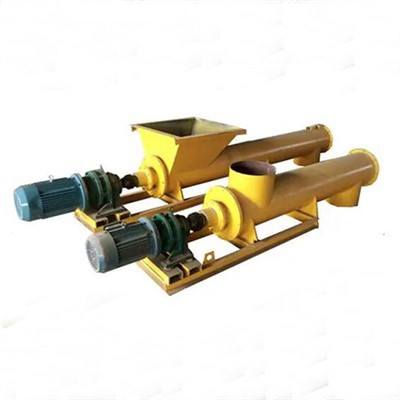
Results:
- Scrap rate reduced from average of ~7% down to <2% within three months
- Compressive strength variance decreased from ±7 MPa to ±3 MPa
- Annual savings estimated at $67K due to fewer rejected units
7. COMMERCIAL CONSIDERATIONS
Pricing Tiers Based on Capacity:
| Model | Base Price Range (USD) |
|---|---|
| HZS60 | $385,000 – $425,000 |
| HZS90 | $625,000 – $695,000 |
| HZS120 | $895,000 – $975,000 |
| HZS18₀ | $1.3M – $1.48M |
Optional Features:
- Remote monitoring package (+$24K): Real-time cloud dashboard access
- Dust suppression add-on (+$37K): Cyclone collector + misting system
- Dual-bin aggregate dryer (+$89K): For cold-climate operation
- Backup generator interface (+$18K): Seamless transition during outages
Service Packages:
- Standard Warranty: Two years parts/labor
- Extended Service Plan A ($9K/year): Biannual calibration + software updates
- Plan B ($23K/year): Predictive maintenance monitoring + emergency response (<4hr)
Financing Options:
Available through certified partners offering terms from:
- Lease-to-operate options starting at $6K/month for HZS6₀
- Loan financing at fixed rates as low as LIBOR + 2%
Minimum down payment required: 25%
FAQ
Q: Can the Workflow & Process Of Automatic Concrete Mixing Plant integrate with existing ERP systems?
A: Yes—standard OPC UA and Modbus TCP protocols allow integration with SAP PMM Module®, Oracle Primavera®, or custom ERP platforms used in construction logistics.
Q: What is the typical installation timeline after delivery?
A: For standard configurations on prepared foundations—seven working days for mechanical assembly; three additional days for electrical commissioning and calibration testing.
Q: Is operator training included? How many personnel can be trained?
A: Comprehensive training is provided onsite over three days for up to six staff members covering operation, troubleshooting basics, preventive maintenance checks.
Q: Does the system support LEED or green building certification requirements?
A: Yes—the reduced energy consumption (~25%), dust control compliance (< 1 mg/m³), and precise batching contribute toward MR credits under LEED v4 BD+C guidelines when documented properly.
Q: What happens if there’s a network outage—does the plant shut down completely?
A: No—the PLC defaults to standalone mode using last validated mix design; all critical functions remain operational until connection is restored.
Q: Are spare parts readily available globally?
A:. Critical wear components—including mixer paddles (ASTM A₅₁₄), liners (NM₄₀₀ grade), load cells—are stocked regionally across North America Europe Asia through authorized distributors; average lead time ≤ five business days.
Content optimized around primary keyword "Workflow & Process Of Automatic Concrete Mixing Plant" with secondary keywords including "automated batching," "twin-shaft mixer," "ready-mix efficiency," "concrete plant automation," "predictive maintenance," "batch traceability," "HZS series specifications." Commercial intent terms such as "ROI," "cost savings," "labor reduction," "energy efficiency" integrated throughout body copy for search visibility targeting technical buyers in industrial construction sectors.
 INQUIRE NOW
 WHATSAPP