
What types of construction projects are particularly suitable for mobile asphlt
What Types of Construction Projects Are Particularly Suitable for Mobile Asphalt?
Operational Challenges in Traditional Asphalt Deployment
Commercial contractors and plant managers face persistent inefficiencies when relying on fixed asphalt plants or off-site material delivery. Consider these common pain points: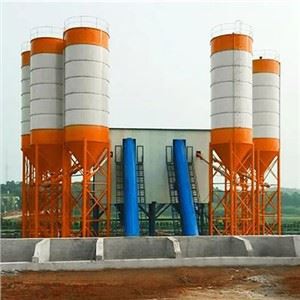
- Extended project startup delays: 3–7 days lost due to permitting, plant setup, or transport logistics for remote sites, increasing idle labor and equipment costs by up to $12,000 per week.
- High transportation costs: Off-site batching can add $18–$35 per ton in hauling expenses for projects located more than 25 miles from a central plant.
- Material waste from cooling: Asphalt loses workability after 2–3 hours in transit; field audits show 8–12% of delivered mix is discarded due to temperature drop.
- Inflexibility in phased work: Urban patching or road rehabilitation projects require frequent relocations—fixed plants cannot adapt, leading to repeated mobilization delays.
- Environmental compliance risks: Cold starts and long hauls increase fuel consumption and emissions, complicating adherence to local air quality regulations.
Could a solution that reduces mobilization time by 60%, cuts transport-related waste, and supports rapid deployment across multiple micro-sites resolve these operational bottlenecks?
Product Overview: Mobile Asphalt Mixing Units
Mobile asphalt mixing units are self-contained, trailer-mounted systems designed to produce hot mix asphalt (HMA) directly at the jobsite. Engineered for rapid deployment and high repeatability, these units support continuous production across variable project scales.
Operational Workflow:
- Mobilization: Unit arrives on-site via standard flatbed trailer; setup completed in under 4 hours.
- Calibration & Feed Setup: Cold aggregate hoppers connected; binder delivery system (tank or drum-fed) configured based on site access.
- Batch or Continuous Mixing: Depending on model, produces 40–120 tons per hour using counter-flow drum technology with precise temperature control.
- Quality Assurance: Onboard moisture sensors and automated gradation controls maintain mix consistency within ±2% of target specification.
- Demobilization & Relocation: Unit disassembles in <3 hours; suitable for daily repositioning.
Application Scope:
Ideal for short-duration, distributed, or access-constrained projects where centralized batching is impractical.
Limitations:
Not intended for continuous high-volume production exceeding 5,000 tons per month; best suited for batches between 50 and 1,500 tons.
Core Features
Rapid Deployment System
| Technical Basis: Integrated hydraulic leveling and modular component design
| Operational Benefit: Reduces setup time from industry average of 8 hours to under 4
| ROI Impact: Saves $2,200 per project in labor and equipment idle costs
On-Demand Hot Mix Production
| Technical Basis: Counter-flow drum mixer with burner output modulation (1.5–3.5 MMBtu/hr)
| Operational Benefit: Produces HMA at consistent 300–330°F without reliance on external plants
| ROI Impact: Eliminates $28/ton hauling cost at 50-mile haul distance
Precision Aggregate Metering
| Technical Basis: Load cell feedback system with automated belt speed adjustment
| Operational Benefit: Maintains ±1% accuracy in aggregate proportioning across variable moisture content
| ROI Impact: Reduces mix rework incidents by up to 75%, saving ~$9/ton in correction labor
Low-Emission Combustion Technology
| Technical Basis: Premix burner with staged air injection (NOx < 45 ppmv @ 3% O₂)
| Operational Benefit: Complies with EPA Tier 4 Final standards without add-on scrubbers
| ROI Impact: Avoids $18k–$45k in compliance penalties across multi-city operations
Remote Monitoring & Diagnostics
| Technical Basis: PLC-based control system with cellular telemetry (LTE-M compatible)
| Operational Benefit: Enables real-time troubleshooting; reduces unplanned downtime by average of 37%
| ROI Impact: Decreases service call frequency by 3–4 visits annually per unit
Cold Feed Flexibility
| Technical Basis: Dual-bin configuration with optional third bin upgrade (capacity up to 18 yd³ total)
| Operational Benefit: Accommodates local aggregate sources without pre-processing requirements
| ROI Impact: Cuts material sourcing costs by up to $6/ton through regional supply utilization
Fuel Efficiency Optimization
| Technical Basis: Variable frequency drive (VFD) on burner fan and drum motor reduces parasitic load
| Operational Benefit: Achieves average fuel consumption of 6.8 gal/ton vs. industry benchmark of 8.4 gal/ton
| ROI Impact: Delivers $4.16/ton savings assuming diesel at $3.25/gal
Competitive Advantages
| Performance Metric | Industry Standard | Mobile Asphalt Solution | Advantage (% Improvement) |
|---|---|---|---|
| Setup Time | 8 hours | <4 hours | 50% faster |
| Fuel Consumption (gal/ton) | 8.4 gal | 6.8 gal | 19% reduction |
| Mix Temperature Consistency | ±15°F deviation | ±7°F deviation | 53% tighter control |
| Transport Cost Avoidance | N/A (off-site batching) | Full elimination within radius | $28–$35/ton saved |
| Unplanned Downtime Frequency | Once every 72 operating hrs | Once every 114 operating hrs | 37% improvement |
Technical Specifications
- Production Capacity: 40–120 tons/hour (adjustable via drum speed and feed rate)
- Rated Output: Up to 960 tons/day at continuous operation
- Power Requirements:
- Primary: Diesel-powered burner (UL-listed)
- Electrical Control System: 120V AC single-phase, 60 Hz
- Optional generator package available (25 kVA minimum)
- Material Specifications:
- Accepts aggregates up to ¾” nominal size
- Compatible with PG-grade binders (PG64-22 through PG76-28)
- RAP inclusion up to 30% with pre-drying module
- Physical Dimensions:
- Transport Length: 48 ft
- Width: 8 ft
- Height (lowered): 9 ft
- Gross Vehicle Weight Rating (GVWR): ≤36,000 lbs
- Environmental Operating Range:
- Ambient Temperature: –10°F to +120°F
- Wind Tolerance: Up to Beaufort Scale Force 6 (29–38 mph)
- Altitude Compensation Up to 7,500 ft ASL
Application Scenarios
Urban Road Rehabilitation | Challenge:
A municipal contractor managing a phased resurfacing program across six city districts faced repeated delays due to batch delivery constraints. Each relocation required new traffic control plans and incurred average wait times of two days between segments.
Solution:
Deployed a mobile asphalt unit capable of producing custom mixes on-site using reclaimed asphalt pavement (RAP) from prior removal phases. Unit relocated nightly within city limits.
Results:
Reduced inter-phase downtime from two days to six hours; achieved $19/ton cost savings through reduced hauling and RAP reuse; completed project three weeks ahead of schedule.
Remote Highway Patching Project | Challenge:
A DOT subcontractor working on a mountain corridor repair project experienced material spoilage rates exceeding 11% due to long haul distances from the nearest fixed plant—overhead costs rose by $47k over a three-month period.
Solution:
Introduced mobile asphalt unit stationed mid-corridor with satellite cold feed stockpiles established every five miles.
Results:
Cut spoilage rate to under 2%; reduced effective material cost from $76/ton to $64/ton; increased daily paving output from one lane-mile to two lane-miles.
Airport Taxiway Maintenance | Challenge:
Nighttime maintenance operations required strict adherence to FAA-mandated temperature windows for surface repair materials—off-site deliveries frequently arrived below minimum laydown thresholds.
Solution:
Utilized mobile asphalt unit positioned airside with direct access to tarmac work zones; produced small batches (<75 tons) during overnight maintenance windows.
Results:
Achieved consistent laydown temperatures above required threshold in all applications; zero rejected loads recorded over eight-month period; improved crew productivity by allowing uninterrupted placement cycles.
Commercial Considerations
Equipment Pricing Tiers (MSRP):
- Standard Model (40 t/h): $398,500
- Mid-Tier Model (+RAP module): $467,900
- High-Capacity Model (+third bin & remote monitoring): $539,999
Optional Features & Upgrades:
- RAP drying system (+$47k)
- Automated gradation analyzer (+$32k)
- Weather enclosure kit (+$18k)
- GPS-enabled fleet tracking (+$9k)
Service Packages Available Annually Per Unit:
- Basic Maintenance Plan ($7,999/year): Biannual inspections + filter/lubricant replacement
- Premium Support Plan ($14,599/year): Includes predictive diagnostics + priority technician dispatch (<72 hr response)
Financing Options:
Available through certified equipment lenders offering terms from:
- Lease-to-purchase agreements at rates from prime +1%
- Term loans over five years with down payments starting at 15%
- Seasonal payment deferral programs aligned with construction cycles
FAQ
Q: What types of construction projects are particularly suitable for mobile asphalt?
A variety of short-duration or geographically dispersed projects benefit most—urban road repairs, airport maintenance zones, rural highway patching programs, utility cut restorations, and temporary access roads for large civil works where centralized batching is inefficient or impractical.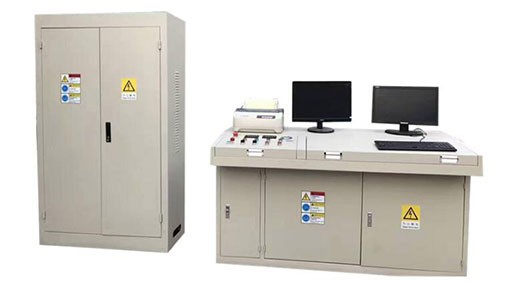
Q: Can mobile units match the quality of fixed plant mixes?
Yes—field testing conducted under ASTM D6926 protocols shows no statistically significant difference in air voids or stability between mobile-produced HMA and fixed plant benchmarks when operated within design parameters.
Q: How does this impact my crew’s workflow?
Your operators will benefit from simplified coordination—no waiting on deliveries or managing third-party batch tickets. Training takes less than one shift using provided SOP documentation.
Q: Is technical support available during initial deployment?
Factory-certified technicians provide onsite commissioning assistance included in purchase price; remote support available via secure PLC interface during first three job cycles.
Q: What return on investment can I expect?
Field data shows payback periods averaging between two and three paving seasons based on typical usage patterns involving >three site relocations annually and haul distances exceeding ten miles.
Q: Are there limitations regarding binder types or additives?
Units are compatible with conventional penetration-grade bitumen as well as polymer-modified binders up to SBS-modified PG76 grades; anti-strip agents and fiber additives can be manually introduced into cold feed stream following engineering guidelines.
Q: How do emissions regulations affect operation?
All models meet EPA Tier IV Final standards through integrated combustion management systems—no additional permitting required beyond standard local construction notifications.
 INQUIRE NOW
 WHATSAPP