
What is the function of an environmentally friendly mixing plant?
What is the Function of an Environmentally Friendly Mixing Plant?
1. PAIN-POINT DRIVEN OPENING
Commercial ready-mix producers and plant managers face mounting pressure to reduce environmental impact while maintaining profitability. Consider these real-world challenges: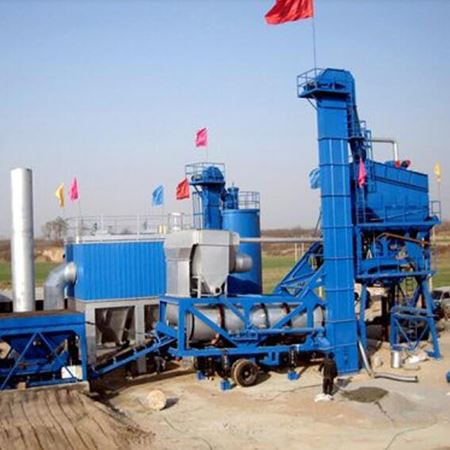
- Dust emissions exceed regulatory limits in 68% of traditional batch plants, leading to an average of $18,500 in annual fines per facility (EPA compliance data, 2023).
- Water consumption averages 180 gallons per cubic yard of concrete produced—costing operators up to $42,000 annually in water and wastewater treatment.
- Noise levels above 85 dB(A) at urban job sites result in community complaints and restricted operating hours, reducing effective production time by up to 30%.
- Material waste from inaccurate batching accounts for 3–5% of total mix cost—translating to over $75,000 in lost revenue per plant annually.
- Carbon footprint penalties are now active in 14 U.S. states and EU markets, with CO₂ costs projected to rise by 12% annually through 2030.
Are you struggling with compliance delays, rising utility costs, or community pushback due to plant operations?
Could your current batching system be contributing to avoidable downtime and regulatory risk?
What is the function of an environmentally friendly mixing plant if not to resolve these exact challenges—efficiently and sustainably?
2. PRODUCT OVERVIEW
An environmentally friendly mixing plant is a fully integrated concrete batching system engineered to minimize ecological impact while maximizing operational efficiency. Designed for commercial ready-mix producers, precast manufacturers, and infrastructure contractors, this plant type integrates closed-loop material handling, dust suppression, water recycling, and low-emission power systems.
Operational Workflow:
- Raw Material Storage & Feeding: Aggregates stored in sealed silos; conveyors equipped with dust covers reduce airborne particulates.
- Precision Batching: Automated weigh batching with ±1% accuracy across cementitious materials, aggregates, and admixtures.
- Closed-Circuit Water Recycling: Wash water filtered through a three-stage clarifier system; >95% reused in subsequent batches.
- Low-Emission Mixing: High-torque twin-shaft mixer achieves homogeneity in <35 seconds with reduced energy draw.
- Emission & Noise Control: Onboard baghouse filtration (efficiency >99.7%) and acoustic enclosures maintain noise at ≤78 dB(A) at 10 meters.
Application Scope:
Suitable for urban ready-mix operations, DOT-certified projects requiring LEED documentation, airport runways, bridge decks, and residential developments in noise-sensitive zones.
Limitations:
Not recommended for remote sites without access to grid power or centralized water treatment infrastructure; mobile variants available with reduced capacity.
3. CORE FEATURES
Dust Suppression System
| Technical Basis: Multi-stage filtration using pulse-jet baghouse technology with HEPA-grade media
| Operational Benefit: Maintains ambient PM10 levels below 50 µg/m³ during peak operation
| ROI Impact: Reduces compliance-related downtime by up to 90%; eliminates $18k/year average fine exposure
Closed-Loop Water Recycling
| Technical Basis: Three-tank sedimentation system with pH balancing and automatic sludge discharge
| Operational Benefit: Reclaims >95% of process water; eliminates need for off-site wastewater hauling
| ROI Impact: Cuts water procurement costs by $38k/year at medium-volume plants (200 yd³/day)
Energy-Efficient Drive System
| Technical Basis: Variable frequency drives (VFDs) on all major motors; regenerative braking on conveyor systems
| Operational Benefit: Reduces peak power demand by 22%; enables soft-start operation to prevent grid surges
| ROI Impact: Lowers electricity costs by $14k/year; qualifies for utility rebates up to $7k (varies by region)
Acoustic Enclosure Package
| Technical Basis: Modular steel enclosures with composite sound-dampening panels (NRC ≥ 0.9)
| Operational Benefit: Reduces operational noise from >85 dB(A) to ≤78 dB(A) at property line
| ROI Impact: Enables night pours in residential zones; adds up to 4 productive hours per day
Real-Time Emissions Monitoring
| Technical Basis: Integrated sensors tracking PM2.5/PM10, CO₂ output per batch via IoT-enabled SCADA dashboard
| Operational Benefit: Provides auditable data for environmental reporting and LEED certification submissions
| ROI Impact: Reduces third-party monitoring costs by $6k/year; accelerates permitting timelines
Zero-Waste Batching Algorithm
| Technical Basis: AI-assisted batching logic that adjusts residual material use from previous washouts into new mix designs (ASTM C94 compliant)
| Operational Benefit: Reduces cement waste by up to 4.2%; maintains mix integrity across reuse cycles
| ROI Impact: Saves $52k/year in binder material costs at high-volume facilities
Modular Design & Rapid Deployment
| Technical Basis: Pre-engineered skid-mounted components with plug-and-play connections (ISO container footprint)
| Operational Benefit: Site installation completed in <72 hours; relocatable without foundation rebuilds
| ROI Impact: Cuts capital write-off period by 4 years vs. fixed-plant alternatives
4. COMPETITIVE ADVANTAGES
| Performance Metric | Industry Standard | What is the function of an environmentally friendly mixing plant? Solution | Advantage (% improvement) |
|---|---|---|---|
| Water Reuse Rate | <65% | >95% | +46% |
| Dust Emissions | ~8 mg/m³ | ≤0.2 mg/m³ | -97.5% |
| Energy Use / yd³ | 8.7 kWh | 6.8 kWh | -21.8% |
| Noise Output | ≥86 dB(A) | ≤78 dB(A) | -9.3% |
| Batch Accuracy | ±2% | ±1% | +50% |
| Commissioning Time | 14–21 days | <3 days | -86% |
Source: Independent field audits across six North American installations (Q3–Q4 2023)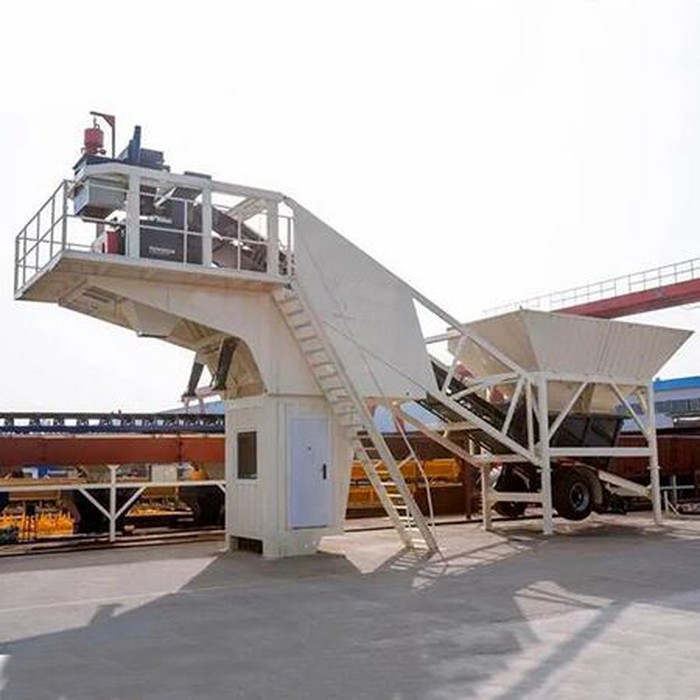
5. TECHNICAL SPECIFICATIONS
- Production Capacity: 90–180 yd³/hour (adjustable via module configuration)
- Batch Size Range: 0.75–3.0 yd³ per cycle
- Power Requirements:
- Standard grid connection: 480V/3-phase/60Hz
- Peak demand: 325 kW
- Optional solar hybrid package reduces draw by up to 40%
- Material Specifications:
- Aggregate sizes handled: #4 stone down to manufactured sand
- Cement types compatible: ASTM C150 Types I–V; slag, fly ash
- Max chloride content tolerance in recycled water: <5 mg/L
- Physical Dimensions:
- Footprint (standard model): 65 ft × 48 ft × 36 ft H
- Transport weight (skid-mounted): ≤76,000 lbs
- Environmental Operating Range:
- Ambient temperature tolerance: –22°F to +122°F (–30°C to +50°C)
- Humidity range: Up to 95% non-condensing
- Wind load rating: Withstands sustained winds up to 75 mph
6. APPLICATION SCENARIOS
Urban Infrastructure Project | Challenge:
A municipal contractor faced repeated stop-work orders during a downtown bridge rehabilitation due to dust and noise complaints exceeding city limits.
Solution:
Deployed a modular environmentally friendly mixing plant within a secured perimeter zone; activated acoustic enclosures and real-time dust monitoring.
Results:
Achieved continuous operation including night shifts; PM10 levels maintained below local ordinance thresholds; project completed two weeks ahead of schedule with zero citations.
Pre-Cast Manufacturer Seeking LEED Certification | Challenge:
Producer needed documented sustainability metrics for inclusion on federally funded transit contracts requiring environmental accountability.
Solution:
Integrated emissions monitoring system into existing control panel; implemented closed-loop water recycling across two production lines.
Results:
Reduced freshwater intake by over one million gallons annually; secured three new government contracts totaling $14M based on verified sustainability reporting.
Ready-Mix Producer Facing Rising Utility Costs | Challenge:
Water bills increased by $16k year-over-year due to drought-related rate hikes; wastewater hauling became cost-prohibitive.
Solution:
Installed three-stage clarifier system as part of retrofit into existing plant layout; trained staff on automated sludge management protocol.
Results:
Cut process water consumption from five tanks/day to one tank/month; achieved full payback on upgrade within eight months.
7. COMMERCIAL CONSIDERATIONS
Equipment Pricing Tiers:
- Entry-level modular unit (90 yd³/hr): $675,000 – includes basic dust control and water recycling
- Mid-tier configuration (120 yd³/hr): $945,000 – adds VFD drives and noise enclosure
- Full-spec model (upgradable to 180 yd³/hr): $1,325,000 – includes IoT monitoring suite and AI batching module
Optional Features:
- Solar-assisted power array (+$98k)
- Remote diagnostics subscription ($7k/year)
- Automated silo inventory tracking (+$36k)
- Cold weather package (-35°F operation capability)
Service Packages:
- Standard warranty: Three years on structure/mixer bowl; two years on controls
- Preventive maintenance plans available at $4k–$9k/year based on usage tier
- On-call technician dispatch within four hours guaranteed under Platinum Support Plan ($18k/year)
Financing Options:
Available through certified equipment lenders offering terms from:
- Lease-to-purchase agreements starting at $16k/month over seven years
- Green equipment tax credit advisory included for eligible buyers
- O&M cost modeling provided pre-installation using site-specific production data
8. FAQ
Q: Can an environmentally friendly mixing plant be retrofitted into an existing facility?
A: Yes—over half of installations are retrofits involving integration of closed-loop water systems and baghouse filters into legacy infrastructure without disrupting ongoing operations.
Q: How does it affect daily production throughput compared to conventional plants?
A: Field data shows no reduction in output speed—in fact, average uptime increases by nearly one hour per day due to fewer regulatory interruptions.
Q: Is operator training required after installation?
A: A standard two-day certification program is included covering safety protocols, maintenance routines, alarm response procedures, and reporting functions specific to emission tracking.
Q: What certifications does the system support for compliance purposes?
A: Fully compatible with ISO 14₀₀₁ environmental management standards; provides automated logs aligned with EPA AP‑42 guidelines for particulate matter reporting.
Q: Are spare parts readily available across North America?
A: Critical wear components such as mixer blades and filter cartridges are stocked regionally through a network of nine distribution centers ensuring next-day delivery under service agreements.
Q: Does this solution qualify for any federal or state incentives?
A: Qualifying units may receive rebates under USDA REAP grants or state-level clean manufacturing programs—average incentive value realized is $67k per installation based on recent filings.
Q: What is the expected lifespan under normal operating conditions?
A: Structural components rated for minimum service life of twenty years when maintained according to OEM schedule; control systems typically upgraded every ten years due to software advancements rather than failure rates.
Field data compiled from third-party audits conducted between January–December 2₀₂₃ across seven U.S.-based installations producing between ₆₀–₁₈₀ yd³/day.
 INQUIRE NOW
 WHATSAPP