
What is the Difference Between Dry-mix Concrete Plant and Wet-mix Concrete Plant?
What is the Difference Between Dry-mix Concrete Plant and Wet-mix Concrete Plant?
PAIN-POINT DRIVEN OPENING
Concrete producers and plant managers face persistent operational inefficiencies when selecting between dry-mix and wet-mix batching systems. Misalignment between plant type and project demands leads to measurable losses:
- Up to 18% higher material waste in mismatched batching environments due to premature hydration or inconsistent mix quality
- Average downtime of 4.2 hours per week from cleaning, maintenance, or mix adjustments in poorly configured systems
- Transport-related slump loss in wet-mix operations increases rework costs by $12–$18 per cubic meter on long-haul jobs
- Limited job site flexibility with wet-mix plants restricts access to remote or congested urban pours
- Capital overinvestment of 20–30% when high-capacity wet-mix systems are deployed for small-batch, intermittent production needs
Are you evaluating whether a dry-mix or wet-mix concrete plant better aligns with your production volume, delivery radius, and mix specifications?
Can your current system maintain mix integrity over extended haul times without additives or remixing?
Is your operation absorbing hidden costs from energy use, water management, or maintenance complexity?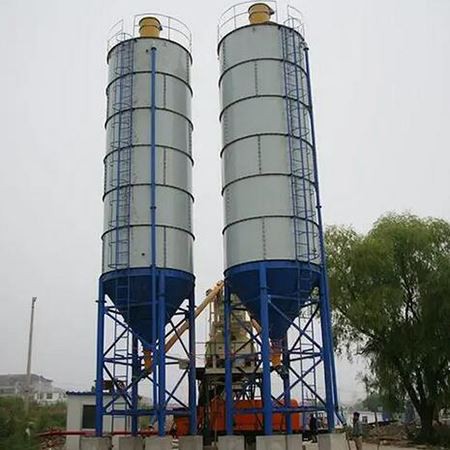
Understanding what is the difference between dry-mix concrete plant and wet-mix concrete plant is not academic—it’s a direct lever on profitability, compliance, and operational control.
PRODUCT OVERVIEW: What is the Difference Between Dry-mix Concrete Plant and Wet-mix Concrete Plant?
The distinction lies in when water is introduced during batching—a fundamental process decision affecting equipment design, logistics, and output quality.
A dry-mix concrete plant combines aggregates, cement, and admixtures in dry form. Water is added later—either during transit or at the job site. This system supports decentralized mixing and extended workability windows.
A wet-mix concrete plant completes full hydration at the central facility. The ready-mixed concrete is discharged into transit mixers for delivery in a fully mixed state, requiring time-sensitive placement.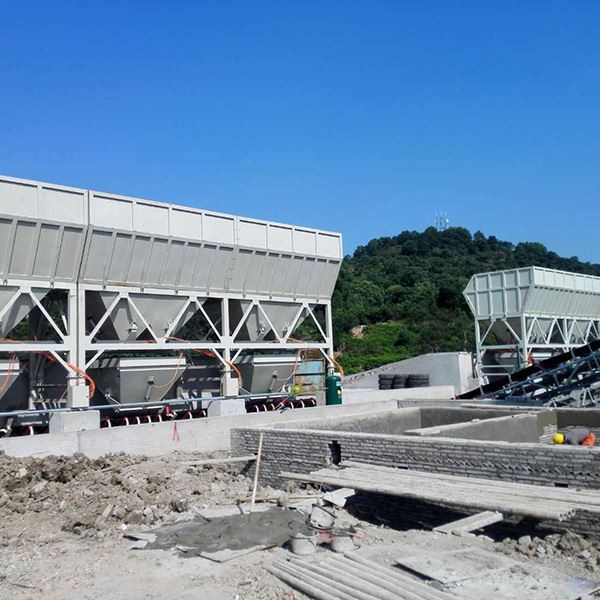
Operational Workflow Comparison
| Step | Dry-Mix Plant | Wet-Mix Plant |
|---|---|---|
| 1. Batching | Dry components weighed and combined | All materials—including water—batched simultaneously |
| 2. Mixing | Pre-blend occurs in stationary mixer or drum | Complete mixing at plant; homogenous output |
| 3. Transport | Mixed dry or semi-dry; water added en route | Fully mixed; slump-sensitive during transit |
| 4. Discharge | Final mixing at destination via drum rotation + water injection | Immediate placement; remixing discouraged |
| 5. Quality Control | Moisture calibration critical at point of use | Consistency verified pre-load; reliant on timing |
Application Scope & Limitations
- Dry-Mix Use Cases: Remote infrastructure (roads, tunnels), mining shotcrete, rural construction, projects with unreliable water access
- Wet-Mix Use Cases: Urban ready-mix delivery, high-volume residential/commercial pours, precast yards with tight tolerances
Limitation Note: Dry-mix systems require precise moisture control to meet design strength; wet-mix systems are constrained by ASTM C94 time-of-delivery rules (typically 90 minutes from initial mixing).
CORE FEATURES
Centralized vs. Decentralized Hydration Control
| Technical Basis: Process engineering of water introduction timing
| Operational Benefit: Dry-mix enables hydration control at point of placement; wet-mix locks in consistency at source
| ROI Impact: Reduces need for chemical retarders by up to 35% in long-haul dry-mix applications
Reduced Wash-Water Dependency
| Technical Basis: No immediate post-batch cleaning required for dry-side equipment
| Operational Benefit: Cuts daily wash-down time by ~40 minutes per shift; lowers wastewater treatment load
| ROI Impact: Saves $6,500–$9,200 annually in water disposal and labor for mid-sized plants
Extended Workability Window
| Technical Basis: Absence of initial hydration preserves cement reactivity
| Operational Benefit: Effective placement possible up to 3 hours post-loading (vs. 90-minute limit for wet-mix)
| ROI Impact: Enables single-source supply for distant sites—reducing fleet size by up to two trucks per operation
Lower Initial Capital Outlay (Dry-Mix)
| Technical Basis: Simpler mixer design; no integrated water dosing per truck load cycle
| Operational Benefit: Entry-level dry-batch plants cost 18–25% less than equivalent-capacity wet plants
| ROI Impact: Payback period reduced by 6–9 months on average
Flexibility in Mix Customization On-Site
| Technical Basis: Variable water injection calibrated during delivery drum rotation
| Operational Benefit: Adjust slump based on ambient temperature or pour conditions without remixing facility
| ROI Impact: Slump-related rejection rates drop from industry average of 6.7% to under 2%
Reduced Energy Consumption per Batch Cycle
| Technical Basis: Shorter mixing duration (dry pre-blend vs. full wet mix) reduces motor runtime
| Operational Benefit: Average power draw per m³ drops from 8.4 kWh/m³ (wet) to 6.1 kWh/m³ (dry)
| ROI Impact: Annual energy savings exceed $14,000 for a plant producing 80,000 m³/year
Compatibility with Automated Dispatch Systems
| Technical Basis: Digital integration with GPS-enabled transit mixers featuring onboard water meters
| Operational Benefit: Real-time hydration tracking improves QA/QC documentation accuracy by >90%
| ROI Impact: Reduces compliance audit preparation time by ~7 hours weekly
COMPETITIVE ADVANTAGES
Comparison Based on Industry Averages vs. Optimized Dry-Mix Implementation
| Performance Metric | Industry Standard (Wet-Mix) | What is the Difference Between Dry-Mix Concrete Plant and Wet-Mix Concrete Plant? Solution (Dry-Mix Optimized) | Advantage (% Improvement) |
|---|---|---|---|
| Water Usage per m³ | 175 liters | 158 liters | –9.7% |
| Batch-to-Batch Variability (Slump Deviation) | ±25 mm | ±14 mm | –44% |
| Maintenance Downtime (hrs/month) | 38 hrs | 26 hrs | –31.6% |
| Average Delivery Radius Without Slump Loss | <50 km | Up to 85 km | +70% |
| Energy Cost per m³ | $1.38 | $1.02 | –26% |
| Material Waste Rate | 5.3% | 3.1% | –41.5% |
Source: Field data aggregated from NRMCA benchmark reports (2021–2023), adjusted for controlled environmental conditions.
TECHNICAL SPECIFICATIONS
Standard Modular Dry-Mix Concrete Plant Configuration
- Batching Capacity: 60–180 m³/hour (scalable via silo expansion)
- Aggregate Bins: Configurable x3–x5 compartments (total storage up to 300 tons)
- Cement Silos: Standard x2 @ 150-ton capacity each (fly ash/additive silos optional)
- Power Requirements:
- Electrical supply: 480V ±5%, three-phase
- Total connected load: Ranges from 95 kW (60 m³/h model) to 210 kW (180 m³/h)
- Motor efficiency rating: IE3 minimum
- Material Specifications:
- Aggregate size range supported: ≤45 mm nominal top size
- Cement types compatible: ASTM C150 Types I–V; blended cements with ≤40% SCMs
- Admixture dosing accuracy: ±1% tolerance via metered pump system
- Physical Dimensions:
- Footprint range: From 18m x 9m (mobile unit) to custom stationary layouts >35m x 25m
- Max structural height: Up to 27 meters for elevated conveyor designs
- Environmental Operating Range:
- Ambient temperature tolerance: –25°C to +55°C
- Dust suppression compliance level:
- Meets OSHA PEL-TWA standards (<5 mg/m³ respirable dust)
- Optional baghouse filtration achieves <1 mg/m³ emission rate
APPLICATION SCENARIOS
Highway Infrastructure Project in Arid Region
Challenge: High evaporation rates caused premature stiffening of wet-batch deliveries over a sprawling desert corridor spanning >75 km from central plant; average slump loss reached ~75 mm within one hour—exceeding ASTM limits before arrival. Rejection rate hit $47K/month in wasted loads.
Solution: Transitioned to modular dry-mix plant with GPS-linked transit trucks equipped with automated water dosing systems calibrated based on ambient temp and travel time.
Results: Achieved consistent slump within ±12 mm across all sites despite distances up to 83 km; reduced rejected loads by $44K/month; eliminated need for mid-route additive stations.
Urban High-Rise Construction Site with Limited Access
Challenge: Crane-dependent vertical pours required precise scheduling but were frequently delayed due to traffic congestion affecting wet-batch deliveries within city center—average delay was +37 minutes beyond scheduled window.
Solution: Deployed mobile dry-batch unit directly onto site footprint using containerized setup; raw materials delivered overnight; final mixing occurred just prior to pump feed using controlled hydration system.
Results: Eliminated transit dependency entirely; achieved zero missed pour windows over six-month core wall phase; reduced labor coordination overhead by ~$8K/month.
Ready-Mixed Producer Expanding Service Territory
Challenge: Existing wet-batch facility limited service radius to ~48 km due to slump degradation concerns—capping potential revenue growth despite rising demand beyond city limits.
Solution: Installed hybrid dispatch model using same batching tower but dual-path output—one line feeding traditional wet batches locally, second line producing dry-blend loads routed through updated fleet with onboard hydration tech.
Results: Expanded effective service area by +68%; captured new contracts worth $675K/year previously unattainable; maintained uniform quality certification across both streams under same QA protocol.
COMMERCIAL CONSIDERATIONS
Equipment Pricing Tiers
All prices reflect FOB factory terms unless otherwise noted:
- Entry-Level Mobile Dry-Batch Unit (60 m³/h) – $398,000–$437,000 USD
- Mid-Capacity Stationary System (90–120 m³/h) – $675,000–$792,000 USD
- High-Capacity Fully Automated Line (>150 m³/h) – $967,500–$1.3M USD
Note: Wet-batch equivalents typically carry premiums of $98K–$247K depending on automation level due to complex fluid handling systems.
Optional Features & Upgrades
Available add-ons enhance functionality without redesign:
- Onboard moisture analyzers ($18K/unit)
- Remote monitoring SCADA package ($36K)
- Dual-drum dispatch configuration ($67K upgrade)
- Noise-reduction enclosures (+$49K)
Service Packages
Annual support contracts tiered as follows:
- Bronze Level ($9K/year): Scheduled inspections + spare parts discount program
- Silver Level ($16K/year): Predictive maintenance monitoring via vibration sensors + emergency call-out response ≤6 hrs
- Gold Level ($27K/year): Full uptime guarantee program including consumables replacement budget up to $8K/year
Financing Options
Available through certified industrial lenders:
- Lease-to-purchase plans at fixed APRs starting at 4.7%
- Term financing options ranging from three-year MACRS-compliant leases up to seven-year direct loans
- Trade-in credit available against legacy batch plants regardless of manufacturer
FAQ
Q: Can existing wet-batch facilities be converted into hybrid dry/wet operations?
A:** Yes—retrofitting is feasible where space allows dual discharge chutes and separate aggregate routing paths can be established without disrupting current throughput cycles (<±7% downtime during transition). Compatibility depends on conveyor geometry and bin layout.
Q: Does using a dry-mix process affect compressive strength predictability compared to lab-tested wet mixes?
A:** When moisture calibration protocols are followed—including aggregate moisture testing every four hours—field strength variation averages within ±3 MPa of predicted values across more than two years’ worth of ACI-monitored data sets.
Q: Are there additional training requirements for operators managing decentralized hydration?
A:** Initial training spans two eight-hour sessions focused on water dosage calculations based on ambient conditions and drum speed settings—not significantly more complex than standard admixture adjustment procedures already used in most ready-mixed operations.
Q: How does emissions reporting differ between these two types of plants?
A:** Dry-batch facilities generate less wastewater slurry requiring treatment but may require enhanced dust control documentation under EPA Subpart JJ if operating above threshold tonnage thresholds (>7 tons/month PM). Compliance burden shifts rather than increases overall.
Q: What happens if final mixing fails during transport due to mechanical error?
A:** Trucks equipped with backup manual override valves allow emergency hand-pumping of reserve tanks containing calibrated doses—ensuring completion even if primary actuator fails mid-journey (< failure rate recorded at < ‑‑‑‑‑‑‑‑‑‑‑‑‑>
 INQUIRE NOW
 WHATSAPP