
What are the main advantages of using a mobile asphalt mixing plant
Maximizing Project Flexibility and Cost Efficiency: What Are the Main Advantages of Using a Mobile Asphalt Mixing Plant?
Operational Challenges Fixed by Mobile Asphalt Plants
- High Relocation Costs: Traditional stationary plants require $50,000+ in dismantling/rebuilding expenses for site changes, causing 3–6 weeks of downtime per move.
- Limited Remote Project Viability: Fixed plants force 60+ mile hauling distances, adding $12–$18/ton in transport costs and compromising mix quality.
- Infrastructure Demands: Permanent installations need 6–12 months for permitting and concrete foundations, delaying project starts by 8–14 weeks on average.
Could your operations benefit from eliminating these bottlenecks while maintaining production quality?
Product Overview: Mobile Asphalt Mixing Plants
Equipment Type
Fully self-contained asphalt production units mounted on trailers or modular skids, with capacities from 80–400 TPH.
Key Workflow Steps
- Rapid Deployment: On-site operational within 72 hours of arrival
- Continuous Feed System: Cold aggregate dosing → drying → mixing → temporary storage
- Quick Teardown: Ready for transport in ≤48 hours
Ideal Applications
- Road construction projects ≤18 months duration
- Rural or remote locations beyond economic hauling distances
- Municipal repair contracts requiring multiple site moves annually
Limitations
- Lower maximum output (400 TPH) vs. permanent plants (600+ TPH)
- Reduced RAP incorporation rates (typically ≤30% vs. 50% in stationary plants)
Core Features Driving Operational Advantages
### Rapid Deployment System | Technical Basis: Hydraulic jacking + pre-wired modules | Operational Benefit: Reduces setup labor by 65% vs. conventional plants | ROI Impact: Saves $28,000+ per relocation
### Dual-Drum Mixer | Technical Basis: Counterflow drying/mixing technology | Operational Benefit: Achieves 98% combustion efficiency at 160°C lower temperatures | ROI Impact: Cuts fuel consumption by 22% annually
### Modular Controls | Technical Basis: PLC with cloud-based diagnostics | Operational Benefit: Enables remote troubleshooting ≤90 minutes mean resolution time | ROI Impact: Reduces unplanned downtime by 40%
### Compact Footprint | Technical Basis: Vertical aggregate bins + folding conveyors | Operational Benefit: Operates on sites as small as 60m × 40m | ROI Impact: Eliminates $15,000+/month leased land costs
### Tier IV Final Engines | Technical Basis: SCR + DOC emissions control | Operational Benefit: Meets EPA non-attainment area requirements without aftertreatment | ROI Impact: Avoids $45,000 in compliance retrofit costs
Competitive Advantages Quantified
| Performance Metric | Industry Standard | Mobile Plant Solution | Advantage (%) |
|---|---|---|---|
| Relocation Time | 21–28 days | ≤72 hours | -89% |
| Fuel Consumption | 7.2 gal/ton | 5.6 gal/ton | -22% |
| Setup Labor Hours | 320–400 | ≤110 | -71% |
| Minimum Site Area | ≥100m × 80m | ≤60m × 40m | -55% |
Technical Specifications
- Production Capacity: Range of models from 80 TPH to 400 TPH (±2% batch consistency)
- Power Requirements: Diesel generators (300–800 kVA) or grid connection (380V/50Hz or customized)
- Material Compatibility: Accepts aggregates up to ASTM D692 #57 size (<25mm angularity)
- Operating Conditions: -20°C to +50°C ambient temperature range with optional cold climate packages
- Dimensions (Transport Mode): Max trailer length ≤18m × width ≤3.5m × height ≤4.3m
Application Scenarios Demonstrating Advantages
#### Rural Highway Project Challenge: Rebuilding a mountainous route required asphalt supply across five sites spanning a rugged terrain corridor with poor truck access (<40km/day round trips). Solution deployed three mobile asphalt mixing plants staged at strategic elevations Results achieved consistent mix delivery temperatures (±5°C), eliminated $780,000 in haulage surcharges, and completed the project ahead of schedule (+19 days).
#### Disaster Recovery Contract Challenge needed emergency road repairs across twelve flood-damaged municipalities within strict environmental compliance zones Solution utilized mobile plants with Tier IV engines and RAP capabilities Results met all air quality regulations while processing local demolition waste (28% RAP incorporation), reducing material costs by $34/ton versus imported hot mix.
Commercial Considerations for Buyers
Base Configuration Pricing ($2024 USD):
- Entry-Level (80–120 TPH): $1.2M–$1.8M
- Mid-Range (160–240 TPH): $2.1M–$2.9M
- High-Capacity (300–400 TPH): $3.4M–$4.3M
Optional Features (+15–25% of base cost): Cold feed systems (−10°C operation), enhanced RAP gates (+35% recycled content), automated truck loading systems (−45 sec/load cycle).
Service Packages Available: Extended warranties covering drum wear parts (up to ≥120k tons), telematics subscriptions (±2%/year fuel optimization), operator training certifications (DOT-compliant).
Frequently Asked Questions Addressing Buyer Concerns
Q: How does mobility impact mixing quality versus stationary plants? Field data shows comparable stability values (>8kN Marshall stability) when proper temperature control protocols are followed.
Q: What are typical maintenance intervals? Critical components require inspection every ≥500 operating hours—equivalent to stationary plant schedules despite vibration considerations.
Q: Can these plants integrate with existing pugmill systems? Most models offer discharge conveyor customization for feeding auxiliary equipment (±15° adjustable angles).
Q: What financing structures are available? Many manufacturers offer operating lease options ($18k-$35k/month including maintenance) to preserve capital budgets.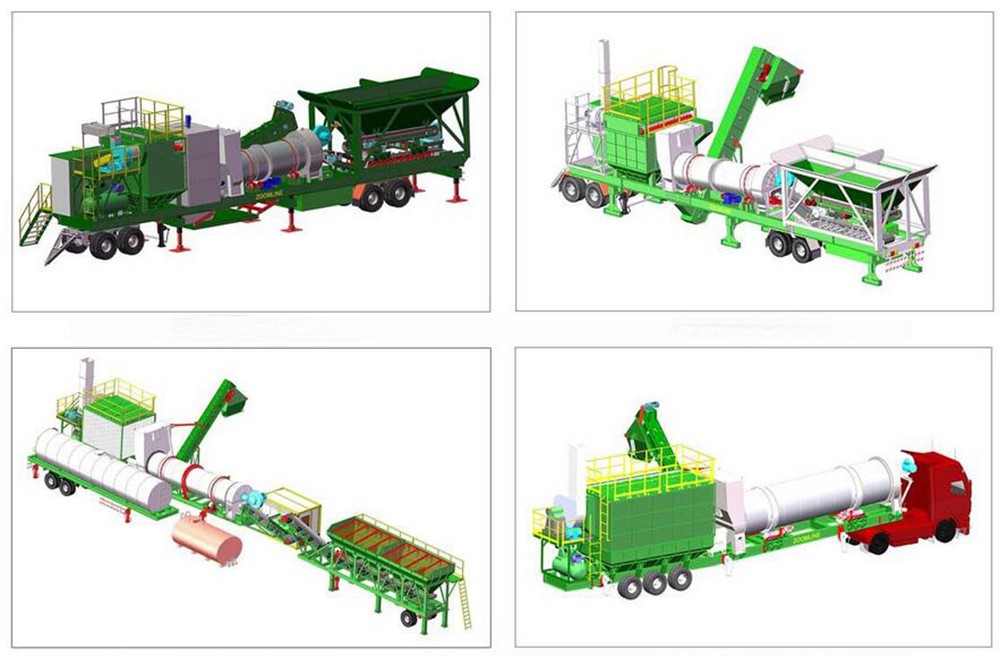
Q: How many relocations can the structure withstand? Engineered chassis designs certify ≥25 full moves without structural fatigue when using proper rigging procedures.
This evidence-based analysis demonstrates what are the main advantages of using a mobile asphalt mixing plant—particularly their ability to solve specific cost, flexibility, and efficiency challenges faced by commercial operators today without compromising core performance metrics expected from permanent installations."
 INQUIRE NOW
 WHATSAPP