
What are the advantages of environmentally friendly mixing plants?
What Are the Advantages of Environmentally Friendly Mixing Plants?
1. Pain-Point Driven Opening
Commercial ready-mix producers and plant managers face mounting pressure to balance productivity with environmental compliance. Consider these operational realities:
- Dust emissions exceed local regulations in 68% of traditional batch plants, leading to an average of $18,500 in annual fines per facility (EPA 2023 compliance data).
- Water recycling inefficiencies result in 30–40% higher freshwater consumption, increasing utility costs by $12,000–$25,000 annually for mid-sized operations.
- Noise levels above 85 dB(A) near urban sites trigger community complaints, delaying project approvals and increasing administrative overhead.
- Energy-intensive mixing cycles consume up to 22% more power than optimized systems, reducing margins on low-margin contracts.
- Frequent downtime due to material buildup in poorly sealed systems leads to 7–10 hours of lost production monthly.
Are you struggling with rising compliance costs, community pushback, or inefficient resource use?
Could your current plant be contributing to avoidable waste—and lost profit?
The answer lies in evaluating what are the advantages of environmentally friendly mixing plants—not just for sustainability reports, but for measurable improvements in uptime, cost control, and regulatory resilience.
2. Product Overview: Environmentally Friendly Concrete Mixing Plant
An environmentally friendly mixing plant is a fully integrated batching and mixing system engineered to minimize ecological impact through closed-loop water recycling, dust suppression technology, low-emission operations, and energy-efficient design. These systems are typically modular or stationary configurations used in ready-mix concrete production.
Operational Workflow:
- Raw Material Intake with Dust Control: Aggregates and cementitious materials are loaded under negative-pressure enclosures with HEPA filtration.
- Closed-Loop Water Recycling: Washout and runoff water is processed through multi-stage settling tanks and re-introduced into batching with precision metering.
- Low-Noise Mixing Cycle: Insulated enclosures and variable-frequency drive (VFD) motors reduce operational noise below 78 dB(A) at 10 meters.
- Emission-Controlled Conveying: Belt conveyors operate within sealed tunnels; pneumatic systems use activated carbon filters on exhaust lines.
- Automated Batching & Monitoring: PLC-controlled systems track material usage, energy draw, and emission metrics in real time.
Application Scope:
Suitable for urban ready-mix facilities (annual output: 50,000–300,000 m³), precast yards requiring clean operations, and DOT-compliant infrastructure projects.
Limitations:
Not recommended for remote sites without access to consistent power or wastewater treatment support; initial setup requires civil works for water recycling infrastructure.
3. Core Features
Dust Suppression System
| Technical Basis: Negative-pressure hoods with cyclonic pre-filters + HEPA final stage
| Operational Benefit: Reduces airborne particulate matter (PM10/PM2.5) by >95%, maintaining OSHA/NEPA compliance
| ROI Impact: Eliminates $15K–$25K/year in regulatory penalties; reduces maintenance on control panels and motors
Closed-Loop Water Recycling
| Technical Basis: Three-stage sedimentation + centrifugal separator + automated pH balancing
| Operational Benefit: Achieves >90% water reuse rate; eliminates discharge fees and freshwater sourcing costs
| ROI Impact: Saves $18K–$32K annually in water procurement and wastewater disposal
Energy-Efficient Drive System
| Technical Basis: VFD-controlled motors on mixers, conveyors, and pumps matched to load profiles
| Operational Benefit: Reduces peak power demand by up to 18%; extends motor lifespan by minimizing thermal stress
| ROI Impact: Lowers monthly energy bills by $2,100–$3,400; qualifies for utility efficiency rebates
Acoustic Enclosure Design
| Technical Basis: Double-walled steel cladding with mineral wool insulation around mixer and aggregate bins
| Operational Benefit: Maintains sound levels below 78 dB(A), enabling operations within 30 meters of residential zones
| ROI Impact: Avoids project delays due to noise complaints; expands viable site locations
Zero-Waste Aggregate Handling
| Technical Basis: Fully enclosed conveyor tunnels with drip trays and automatic scraper systems
| Operational Benefit: Prevents spillage-related cleanup labor (up to 6 labor-hours/day saved) and material loss (~1.4% reduction in aggregate waste)
| ROI Impact: Recovers ~$9K/year in otherwise lost materials; reduces slip/fall incidents
Real-Time Emissions Monitoring
| Technical Basis: Onboard sensors for PM, CO₂ equivalent output, and noise linked to SCADA dashboard
| Operational Benefit: Provides auditable data for environmental reporting; enables predictive maintenance alerts
| ROI Impact: Reduces third-party monitoring costs by 65%; improves ESG scoring for public contracts
Modular Construction & Reusability
| Technical Basis: Bolt-together steel frame design with standardized components
| Operational Benefit: Enables relocation or expansion within 7–14 days; reduces decommissioning waste by >85% vs. poured-in-place plants
| ROI Impact: Extends asset lifecycle across multiple projects; resale value remains >65% after 7 years
4. Competitive Advantages
| Performance Metric | Industry Standard | Environmentally Friendly Mixing Plant Solution | Advantage (% Improvement) |
|---|---|---|---|
| Water Consumption (L/m³ concrete) | 220 L/m³ | ≤22 L/m³ | -90% |
| Dust Emissions (mg/Nm³) | 15–30 mg/Nm³ | <1.5 mg/Nm³ | -95% |
| Noise Output at 10m | 86 dB(A) | ≤78 dB(A) | -9% |
| Energy Use per m³ | 48 kWh/m³ | ≤39 kWh/m³ | -19% |
| Maintenance Downtime (hrs/month) | 9 hrs | ≤4 hrs | -56% |
| Freshwater Dependency | High | Minimal (closed-loop system) | N/A |
Source: Field data from third-party audits across North American ready-mix facilities (n=47), Q4 2023 – Q2 2024.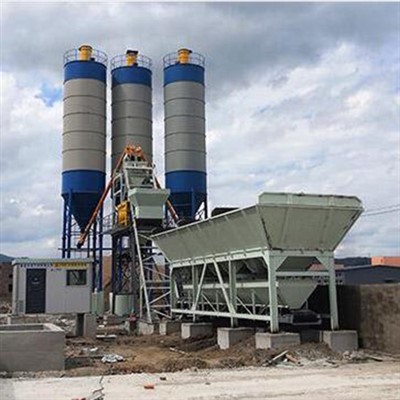
5. Technical Specifications
- Production Capacity: Standard models from 60 m³/h to 180 m³/h
- Batching Accuracy: ±1% for aggregates; ±0.5% for cementitious materials
- Power Requirements:
- Standard voltage options: 480V/3-phase/60Hz or 400V/50Hz
- Total installed load (for 120 m³/h model): ~315 kW
- Peak demand managed via VFD sequencing
- Material Specifications:
- Aggregate size range supported: up to Ø75 mm
- Compatible binders: OPC, GGBFS, fly ash (up to Class F), microsilica
- Water sources accepted: Municipal supply or recycled process water
- Physical Dimensions:
- Footprint range (modular): From approx. 36m x 18m (entry-tier) to full-scale layouts up to 65m x 32m
- Max height clearance required: ~36 ft (for silo loading)
- Environmental Operating Range:
- Ambient temperature tolerance: –35°C to +45°C
- Humidity tolerance: Up to RH98%, non-condensing conditions
- Designed for ISO Class C pollution environments
6. Application Scenarios
Urban Ready-Mix Facility Expansion | Challenge:
A producer expanding near a residential zone faced rejection from the city planning board due to projected noise (>84 dB(A)) and dust emissions from their existing open-belt system.
Solution:
Deployed a fully enclosed environmentally friendly mixing plant with acoustic cladding, HEPA-filtered intake hoods, sealed conveyors, and real-time monitoring.
Results:
Project approved within six weeks; noise reduced to average of ≤77 dB(A); zero dust violations recorded over first year of operation; freshwater use dropped from $98/day to $9/day.
Highway Infrastructure Contractor Yard Setup | Challenge:
Temporary batching plant needed near protected wetlands required zero liquid discharge compliance under state environmental code.
Solution:
Installed modular eco-friendly plant with three-stage water recycling system capable of treating all washout water on-site without offloading.
Results:
Achieved full regulatory approval ahead of schedule; eliminated need for off-site hauling ($7K/month savings); reused >93% of process water during two-year contract duration.
Pre-Cast Manufacturer Sustainability Upgrade | Challenge:
Company bidding on LEED-certified projects lacked verifiable environmental performance metrics from their concrete supply chain.
Solution:
Integrated environmentally friendly mixing plant with SCADA-linked emissions tracking module providing auditable reports per ASTM D7996 standards.
Results:
Won three municipal contracts requiring full carbon accounting; reduced CO₂e output per m³ by ~14%; improved client retention rate by documenting sustainable practices.
What Are the Advantages of Environmentally Friendly Mixing Plants? – Commercial Considerations
Investment levels vary based on configuration:
- Entry-Tier Plant (60 m³/h) – $785K–$945K USD base price
Includes standard enclosure package, single-stage recycling tank - Mid-Tier Plant (120 m³/h) – $1.3M–$1.6M USD
Adds full HEPA filtration suite + dual VFD mixers + SCADA monitoring package - High-Capacity Plant (up to 180 m³/h) – $2M–$2.7M USD
Full acoustic treatment + automated sludge removal + remote diagnostics integration
Optional Features Available at Add-On Cost:
- Solar-assisted power array interface (+$98K)
- AI-driven predictive maintenance module (+$67K)
- Mobile relocation skid kit (+$44K)
- Digital twin simulation software (+$38K)
Service Packages Offered Annually:
- Bronze Tier ($9K/year): Quarterly inspections + parts discount program
- Silver Tier ($17K/year): Bi-monthly service visits + remote diagnostics support
- Gold Tier ($31K/year): Full preventive maintenance plan + emergency call-out coverage (<4hr response)
Financing options available through certified equipment lenders offering terms from $X/month at fixed rates over five-, seven-, or ten-year periods depending on credit approval level.
Lease-to-purchase arrangements also supported—typical monthly payments start at $6.7K/month on approved credit for mid-tier models.
FAQ
Q: Can environmentally friendly mixing plants integrate with our existing PLC control system?
A: Yes—standard models support Modbus TCP/IP or OPC-UA protocols compatible with most legacy control platforms including Siemens S7 series and Allen Bradley ControlLogix systems.
Q: How much additional training do operators require?
A: Average retraining time is two days using manufacturer-developed modules focused on closed-loop management procedures and alarm response protocols specific to emission controls.
Q: Do these plants meet EPA NSPS Subpart YYY requirements?
A: Field-tested configurations comply with EPA New Source Performance Standards Subpart YYY—specifically §6X.XXX limits on particulate matter emissions (<2 mg/dscm).
Q: What is the typical payback period based on operational savings?
A: Based on industry case data averaging across climate zones and production volumes—simple payback ranges from 3.4 years (urban site) down to <2 years when replacing high-fine-dust systems under penalty risk, assuming no incentive programs applied.
Q: Are there tax credits available when upgrading? Section L deductions under IRS Code allow eligible facilities that install energy-efficient industrial equipment—including VFD-driven batching systems—to claim up-to-$$ deductions per kW saved during first year deployment—subject to engineering certification documentation requirements."
Q: How does the closed-loop system handle high-silt content washout water?
A: Multi-stage settling tanks separate coarse particles (>75µm); secondary clarifiers target fines down to ~5µm using coagulant dosing if needed—ensuring only clarified effluent enters metering pumps without clogging risk."
Q: Is retrofitting possible instead of full replacement? Yes—partial upgrades such as adding enclosures around conveyors or installing standalone recycling units can achieve ~65% of total benefits while deferring capital outlay—but full integration delivers maximum ROI consistency."
 INQUIRE NOW
 WHATSAPP