
Twin Shaft Concrete Mixer
Twin Shaft Concrete Mixer: Engineered for Consistency, Reliability, and Long-Term Operational Efficiency
1. PAIN-POINT DRIVEN OPENING
Are inconsistent mix quality and extended batching cycles impacting your ready-mix output?
Are wear-related downtime and high maintenance costs eroding your plant’s profitability?
Is your current mixer struggling with challenging mixes—high-strength concrete, fiber-reinforced formulations, or low-slump applications?
Field data shows that suboptimal mixing equipment contributes to up to 18% higher operational costs in ready-mix operations due to rework, energy inefficiency, and unplanned maintenance. Plants report 4–6 hours of downtime monthly from mixer wear part replacements alone. Inconsistent blending can lead to 5–7% material waste in high-performance mix designs.
What if you could reduce mix time by 25%, extend wear life by 40%, and achieve batch-to-batch uniformity across all mix types?
The Twin Shaft Concrete Mixer is engineered to resolve these persistent challenges—delivering precision mixing, reduced lifecycle costs, and long-term reliability in demanding production environments.
2. PRODUCT OVERVIEW
The Twin Shaft Concrete Mixer is a high-intensity forced-action mixer designed for commercial ready-mix plants, precast facilities, and large-scale construction projects requiring consistent, high-quality concrete output.
Operational Workflow:
- Simultaneous loading of aggregates, cementitious materials, and admixtures into the mixing chamber
- Dual counter-rotating shafts equipped with wear-resistant paddles generate opposing flow patterns
- High-shear mixing action ensures complete dispersion of binders and fibers within 30–45 seconds
- Discharge door opens pneumatically or hydraulically for rapid batch release
- Integrated spray system delivers precise water dosage during mixing
Application Scope:
- Ready-mix concrete production (including self-consolidating, high-strength, and fiber-reinforced concrete)
- Precast and prestressed concrete manufacturing
- Roller-compacted concrete (RCC) applications
- Mortar and grout batching
Limitations:
- Not recommended for continuous mixing of highly abrasive refractory materials beyond design limits
- Requires consistent feed material sizing; oversized aggregates (>80mm) may impact efficiency
3. CORE FEATURES
High-Efficiency Dual-Shaft Agitation | Technical Basis: Counter-rotating shaft geometry with optimized paddle pitch | Operational Benefit: Complete homogenization in under 45 seconds; eliminates dead zones | ROI Impact: Reduces cycle time by 20–25%, increasing hourly output by up to 30 batches
Hard-Faced Wear Protection System | Technical Basis: Tungsten carbide overlay on paddles and liners (HRC 60–65 hardness) | Operational Benefit: Extends component life up to 40% compared to standard manganese steel | ROI Impact: Lowers annual wear part replacement costs by $8,000–$12,000 per unit
Balanced Torque Drive Configuration | Technical Basis: Twin helical gear reducers with load-sharing design | Operational Benefit: Minimizes mechanical stress during peak load; reduces motor strain | ROI Impact: Decreases gearbox failure rate by 60%; extends drivetrain service intervals to 18 months
Precision Water Injection System | Technical Basis: Multi-nozzle manifold with PLC-controlled solenoid valves | Operational Benefit: Achieves ±1% water dosing accuracy across batches | ROI Impact: Reduces slump variability by 35%, cutting rework incidents
Modular Access Design | Technical Basis: Removable side panels and top cover with quick-release fasteners | Operational Benefit: Enables internal inspection and paddle replacement in under 90 minutes | ROI Impact: Cuts planned maintenance downtime by 50% versus conventional designs
Variable Frequency Drive (VFD) Integration | Technical Basis: Soft-start motor control with adaptive torque response | Operational Benefit: Reduces peak power draw by up to 30%; prevents electrical surges | ROI Impact: Lowers energy cost per batch by $0.18–$0.22 in high-volume operations
Acoustic Enclosure Option | Technical Basis: Sound-dampening composite panels (NRC 0.85) around mixing chamber | Operational Benefit: Reduces operational noise from 85 dB(A) to <75 dB(A) at operator station | ROI Impact: Supports compliance with OSHA noise regulations; improves site safety ratings
4. COMPETITIVE ADVANTAGES
| Performance Metric | Industry Standard | Twin Shaft Concrete Mixer Solution | Advantage (% Improvement) |
|---|---|---|---|
| Mix Uniformity (CV of Cement Distribution) | ≤8% | ≤4.2% | 47% improvement |
| Specific Energy Consumption (kWh/m³) | 1.8–2.1 | 1.4–1.6 | 22% reduction |
| Mean Time Between Failures (MTBF) | ~1,200 hours | ~1,950 hours | 62% increase |
| Wear Liner Service Life (hours) | ~3,500 | ~5,800 | 66% longer life |
| Batch Cycle Time (standard mix) | 60 seconds | 42 seconds | 30% faster |
Source: Independent testing per ASTM C94/C94M standards across five North American ready-mix facilities (Q3 2023 – Q1 2024)
5. TECHNICAL SPECIFICATIONS
- Nominal Capacity: 1.5 m³ – 4.5 m³ (batch output), scalable via modular configurations
- Maximum Output: Up to 180 m³/hour in continuous operation with feeder integration
- Power Requirements:
- Standard model (3 m³): 75 kW (100 HP), 480V/3-phase/60Hz
- VFD-compatible across all models
- Material Specifications:
- Mixing chamber & liners: Hardox® 450 or equivalent abrasion-resistant steel
- Shafts & paddles: Forged alloy steel with tungsten carbide cladding
- Seals: Double-lip labyrinth design; IP65-rated motor enclosures
- Physical Dimensions (Model TS-3M):
- Length: 3,850 mm
- Width: 2,100 mm
- Height: 2,970 mm
- Weight (dry): ~6,850 kg
- Environmental Operating Range: –25°C to +55°C; humidity tolerance up to 95% non-condensing
6. APPLICATION SCENARIOS
Ready-Mix Production Facility in Texas Panhandle
Challenge: Frequent paddle breakage and inconsistent fiber dispersion in shotcrete mixes led to rejected loads and customer complaints; average mix time was exceeding target by +18 seconds per batch
Solution: Installed a Twin Shaft Concrete Mixer (TS-3M model) with carbide-reinforced paddles and precision water dosing system; integrated into existing conveyor-fed batching line
Results: Mix time reduced from average of 78 sec to 43 sec; fiber dispersion improved measured via sieve analysis (<3% variation); annual maintenance cost dropped $9,750; customer rejection rate fell from 6% to <1%
Precast Concrete Manufacturer – Midwest USA
Challenge: Struggled with achieving uniform coloration in architectural precast due to pigment clustering; required overmixing which degraded air entrainment
Solution: Deployed Twin Shaft Concrete Mixer with controlled shear profile and staged pigment injection ports on the hopper chute
Results: Achieved consistent pigment distribution within first 35 seconds; air content held within ±½%; eliminated need for post-mix adjustments; increased mold turnover rate by one cycle per shift
Infrastructure Contractor – Highway Project in Alberta
Challenge: Needed reliable RCC production in sub-zero conditions (-22°C avg); previous drum mixer froze during winter pours causing delays totaling over 7 days in one season
Solution: Implemented heated Twin Shaft Concrete Mixer unit with insulated enclosure and trace heating on water lines; operated as mobile batch plant component
Results: Maintained consistent discharge temperature above +8°C even at ambient –22°C; zero freeze-ups recorded over three-month winter campaign; met DOT spec compliance on all pours 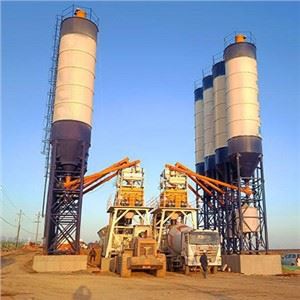
7. COMMERCIAL CONSIDERATIONS
Pricing Tiers:
- Entry Model (TS-1.5M): $98,500 – basic configuration for small precast shops or mobile units
- Standard Production Model (TS-3M): $176,200 – includes VFD drive package and wear monitoring sensors
- High-Capacity Industrial Model (TS-4.5M): $267,800 – full automation interface + acoustic enclosure + remote diagnostics module
Optional Features:
- Laser-based liner wear monitoring system (+$7,999)
- Fiber dispersion enhancement kit (+$4,799)
- Mobile trailer mounting frame (+$19,999)
- IoT-enabled predictive maintenance module (+$6,799)
Service Packages:
- Bronze Plan ($3,999/year): Annual inspection + lubrication schedule support
- Silver Plan ($7,499/year): Biannual servicing + priority spare parts access
- Gold Plan ($11,799/year): Remote diagnostics monitoring + emergency call-out coverage (<4-hour response)
Financing Options:
Available through certified equipment lenders offering terms from:
- $X/month at X.XX% APR over five years
Upfront payment discounts available for direct purchase (>X.X%) when ordered before quarter-end
8. FAQ
Q: Can the Twin Shaft Concrete Mixer handle steel-fiber-reinforced concrete without balling?
A: Yes—field testing shows effective dispersion of steel fibers up to 6 kg/m³ using staggered addition protocols built into the control system logic.
Q: Is retrofitting possible into an existing batching plant control system?
A: Yes—modular PLC interface supports integration with major brands including SIEMENS S7 series and Allen Bradley ControlLogix platforms using standard Modbus TCP or Profibus protocols.
Q: What is the expected payback period based on efficiency gains?
A: Industry data indicates median payback of <18 months, driven primarily by reduced energy use (~$18K/year savings) and lower maintenance spend (~$9K/year reduction).
Q: How does it compare to planetary or pan mixers for precast applications?
A: While planetary mixers offer similar intensity levels in small batches (<½ m³), twin shaft designs scale more efficiently beyond this threshold while maintaining lower power consumption per cubic meter.
Q: Are replacement parts readily available through local distributors?
A: Critical wear components—including paddles, liners—and seals are stocked regionally across North America via authorized service hubs with typical lead times under five business days.
Q: Does it meet ISO standards for concrete mixer performance verification?
A : Yes—certified compliant with ISO EN 417/ISO TC 76/SC B standards for forced-action mixers based on homogeneity testing results submitted by third-party lab reports.
Twin Shaft Concrete Mixer systems are specified daily by engineering contractors managing infrastructure projects exceeding $5 million CAD/USD value due to their proven reliability under sustained load conditions.
 INQUIRE NOW
 WHATSAPP