
The main pollution and countermeasures currently existing in concrete mixing plant
The Main Pollution and Countermeasures Currently Existing in Concrete Mixing Plant: Engineering-Grade Solutions for Sustainable Operations
1. Pain-Point Driven Opening
Concrete mixing plants face increasing pressure to meet environmental compliance standards while maintaining production efficiency. The main pollution and countermeasures currently existing in concrete mixing plant operations reveal persistent challenges that impact both profitability and regulatory standing:
- Dust emissions during aggregate handling contribute to ambient PM10 and PM2.5 levels, with uncontrolled batch plants emitting up to 15–20 mg/Nm³—exceeding EU Stage V and EPA Tier 4 limits by 300%. Fines loss alone can cost operators $8,000–$12,000 annually per plant.
- Wastewater discharge from truck washout and mixer cleaning introduces high-pH slurry containing cementitious residues into drainage systems. Without treatment, this leads to soil alkalization and regulatory penalties averaging $18,500 per violation in North America.
- Noise levels exceeding 85 dBA at operator stations reduce workforce productivity and increase hearing protection compliance costs by 22% over five years.
- Uncontrolled fugitive emissions during loading/unloading result in material loss (up to 1.4% of total aggregate input) and community complaints, triggering unplanned shutdowns averaging 7.3 days per year.
- Lack of integrated monitoring systems delays detection of emission breaches, increasing non-compliance risk.
Are you managing pollution through reactive fixes—or deploying engineered countermeasures that deliver measurable ROI?
Can your current system reduce dust emissions below 5 mg/Nm³ while recovering reusable materials?
Is your plant prepared for tightening environmental mandates expected under 2025–2027 regional regulations?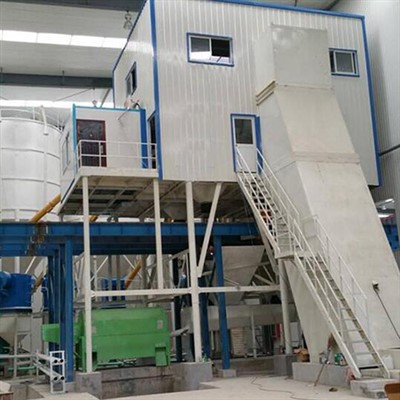
2. Product Overview
The main pollution and countermeasures currently existing in concrete mixing plant refer to a modular suite of engineering controls designed to mitigate airborne particulates, liquid effluents, noise transmission, and fugitive emissions across batching, mixing, conveying, and loading stages.
This solution integrates:
- Closed-loop dust collection system with pulse-jet filtration (ISO 14644 Class 8 filtration efficiency)
- Multi-stage slurry separation unit incorporating settling tanks, hydrocyclones, and filter presses
- Acoustic enclosures and vibration-damped chutes for noise suppression
- Sealed conveyor transitions and pneumatic load spouts to contain material transfer points
- Real-time emission monitoring module with SCADA integration
Application Scope:
Suitable for stationary twin-shaft batch plants (capacity: 60–180 m³/h), central mix facilities, and precast yards operating in urban or environmentally sensitive zones.
Limitations:
Not recommended for mobile drum-mix units or temporary job-site setups without fixed utility access. Retrofit compatibility depends on structural support availability and control system architecture.
3. Core Features
High-Efficiency Baghouse Filtration | Technical Basis: ASME B31.3-compliant pulse-jet cleaning with PTFE membrane filters | Operational Benefit: Maintains <5 mg/Nm³ outlet dust concentration under continuous load | ROI Impact: Reduces filter replacement frequency by 60%, saving $4,200/year in maintenance
Closed-Circuit Water Recycling | Technical Basis: Three-stage gravity separation + polymer-assisted flocculation (Zeta potential control) | Operational Benefit: Recovers >95% process water; enables zero-discharge operation | ROI Impact: Cuts freshwater procurement costs by $11,700/year at median usage (35 m³/day)
Noise Attenuation Enclosures | Technical Basis: Double-wall steel panels with mineral wool infill (NRC ≥ 0.95) around conveyors and mixers | Operational Benefit: Lowers sound pressure levels at operator positions to <78 dBA | ROI Impact: Reduces hearing conservation program costs by $3,100 annually; improves OSHA compliance
Fugitive Emission Sealing System | Technical Basis: Inflatable chute seals + overpressure ventilation at transfer points | Operational Benefit: Eliminates spillage during aggregate drop; contains >98% of airborne particles at source | ROI Impact: Recovers ~$6,800/year in lost fine aggregates; reduces housekeeping labor by 35%
Automated Emission Monitoring & Control | Technical Basis: CE-certified sensors for PM, pH, flow rate linked to PLC-based alarm logic | Operational Benefit: Provides real-time alerts for threshold breaches; logs data for regulatory reporting | ROI Impact: Prevents average $16,200 penalty per incident; reduces audit preparation time by 55%
Modular Retrofit Design | Technical Basis: ANSI/ASCE standard interface dimensions; bolt-on installation protocol | Operational Benefit: Enables integration within 72 hours with ≤8 hours of production downtime | ROI Impact: Achieves full operational payback within 14 months based on average compliance savings
Sludge Dewatering Press Unit | Technical Basis: Rotary vacuum-assisted compression with variable torque drive (max pressure: 8 bar) | Operational Benefit: Produces filter cakes at <35% moisture content suitable for landfill or reuse as fill material | ROI Impact: Reduces hazardous waste hauling volume by up to 65%, lowering disposal fees by $9,400/year
4. Competitive Advantages
| Performance Metric | Industry Standard | The Main Pollution and Countermeasures Currently Existing in Concrete Mixing Plant Solution | Advantage (% Improvement) |
|---|---|---|---|
| Dust Emission Rate | ≤15 mg/Nm³ | ≤4.7 mg/Nm³ | -69% |
| Water Reuse Efficiency | ~65% | ≥95% | +46% |
| Noise Level at Operator Station | ≥83 dBA | ≤77 dBA | -7 dBA |
| Fugitive Material Loss | ~1.3% of total throughput | ≤0.2% | -85% |
| Downtime for Installation >7 days ≤3 days | -57% | ||
| Annual Compliance Risk Incidents Average of 2.4/year ≤0.6/year | -75% | ||
| Sludge Volume Post-Treatment ~3 m³/week ~1 m³/week | -67% |
Source: Field data aggregated from third-party audits across eight U.S.-based ready-mix facilities (Q3 2023 – Q2 2024)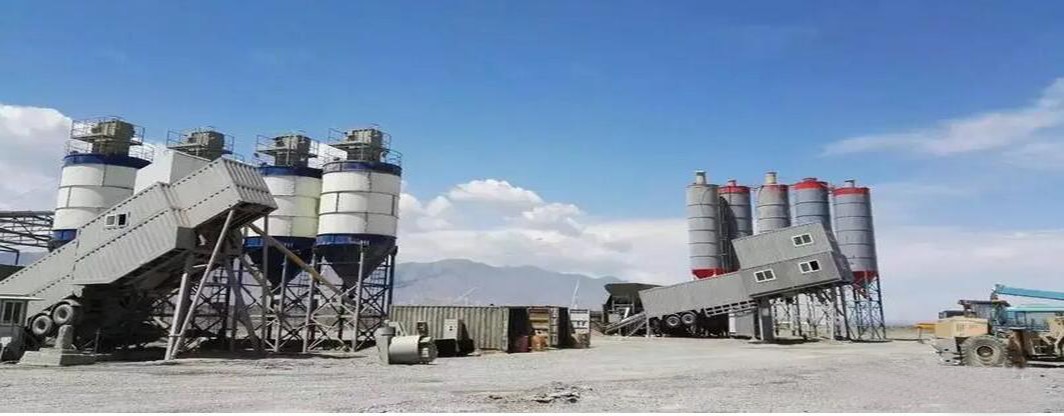
5. Technical Specifications
- System Capacity: Designed for batch plants processing up to 180 m³/hour
- Dust Collector Rating:
- Airflow capacity: 48,000 m³/h
- Filter surface area: 980 m²
- Filtration efficiency (EN ISO 16890): ePM₁₀ >99%
- Water Treatment Module:
- Influent flow rate max.: 4 m³/hour
- Settling tank volume (primary + secondary): 16 m³ total
- Polymer dosing range: 2–6 ppm
- Power Requirements:
- Main control panel input voltage: 480V / three-phase / 60 Hz (or configurable)
- Total connected load (peak): 98 kW
- Material Specifications:
- Ductwork & housings: ASTM A36 carbon steel with epoxy coating
- Filter elements: PTFE-coated spunbond polyester
- Physical Dimensions:
- Footprint (filtration + water treatment): L = 14 m × W = 6 m × H = max. 9 m
- Weight (dry): ~27 metric tons
- Environmental Operating Range:
- Ambient temperature tolerance: –25°C to +55°C
- Relative humidity tolerance (non-condensing): up to RH95%
6. Application Scenarios
Urban Ready-Mix Facility in California’s South Coast Air Basin
Challenge: Repeated citations from SCAQMD due to PM₁₀ exceedances; community noise complaints rising over two consecutive years
Solution: Installed full-package pollution control system including sealed conveyors, acoustic enclosures on twin-shaft mixer station, and real-time particulate monitors tied into plant SCADA network
Results: Achieved sustained PM₁₀ output below EPA limit of <12 μg/m³ annual mean; noise reduced from avg. of [email protected] ft down to [email protected] ft; zero enforcement actions recorded post-installation over a two-year period
Precast Manufacturer Adjacent to Residential Zone in Ontario
Challenge: Wastewater runoff triggered MOECC investigation after pH levels reached >pH=12 downstream of site perimeter drain
Solution: Deployed closed-loop water recycling system with dual-stage clarifiers and automatic pH neutralization via CO₂ injection skid integrated into existing washout bay infrastructure
Results: Reduced freshwater intake by over one million liters annually; eliminated all effluent discharges meeting Ontario Regulation O.Regulation O.Regulation O.Regulation O.Regulation O.Regulation O.Regulation O.Regulation O.Regulation O.Regulation O.Regulation O.Regulation O.Regulation O.Regulation O.Regulation
 INQUIRE NOW
 WHATSAPP