
Small/Mini Concrete Batching Plant
Small/Mini Concrete Batching Plant: Compact Efficiency for High-Value Concrete Production
1. PAIN-POINT DRIVEN OPENING
Are you facing rising operational costs due to inefficient concrete batching at remote or low-volume sites?
Are frequent equipment mobilizations consuming 15–20% of your project timeline and increasing labor overhead?
Is inconsistent mix quality leading to rework, with field testing showing up to 12% variance in compressive strength across batches?
Do space constraints at urban job sites limit your ability to deploy traditional batching infrastructure?
Are rental costs for temporary batching solutions exceeding $8,000/month per location with limited control over output?
If these challenges impact your project margins or delivery timelines, could a purpose-built Small/Mini Concrete Batching Plant offer a scalable, cost-controlled alternative?
2. PRODUCT OVERVIEW
The Small/Mini Concrete Batching Plant is a modular, skid-mounted concrete production system designed for output volumes between 15 and 60 m³/hour. Engineered for rapid deployment and minimal site footprint, it supports precise batching of ready-mix concrete for targeted applications where full-scale plants are impractical.
Operational Workflow:
- Material Feeding: Aggregates are loaded via front-end loader into calibrated aggregate bins; cement and supplementary cementitious materials (SCMs) are pneumatically conveyed from silos.
- Weighing & Metering: Load cells and loss-in-weight systems ensure ±1% accuracy across all raw materials.
- Mixing Cycle: A twin-shaft mixer delivers homogenous concrete in 30–45 seconds per batch.
- Discharge: Mixed concrete is discharged directly into transit mixers, pump hoppers, or batching trucks.
- Control & Monitoring: PLC-based control panel with touchscreen HMI enables recipe management, batch tracking, and diagnostics.
Application Scope: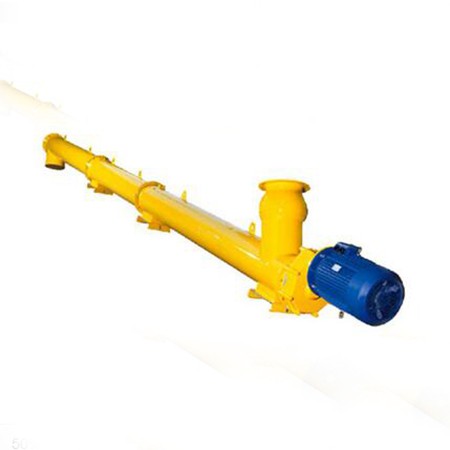
- Urban construction projects with space limitations
- Remote infrastructure (roads, bridges, rural housing)
- Pre-cast yard support
- Repair and rehabilitation works
- Temporary project-specific batching needs
Limitations:
Not intended for continuous high-volume production (>60 m³/hour) or large-scale ready-mix commercial supply chains requiring multiple simultaneous mix designs.
3. CORE FEATURES
Compact Modular Design | Technical Basis: Skid-mounted structural frame with integrated component layout | Operational Benefit: Reduces installation footprint by up to 40% compared to stationary plants | ROI Impact: Lowers site preparation costs by $7,500–$12,000 per deployment
High-Precision Weighing System | Technical Basis: Digital load cells with automatic calibration (ASTM C989 compliant) | Operational Benefit: Ensures mix consistency within ±1% tolerance | ROI Impact: Reduces material waste by up to 9%, improving cement utilization
Twin-Shaft Mixer Technology | Technical Basis: Dual counter-rotating shafts with wear-resistant paddles (hardox steel) | Operational Benefit: Achieves uniform mixing in under 45 seconds per batch | ROI Impact: Increases hourly throughput by 25% vs. pan or drum mixers
PLC Automation with Batch Tracking | Technical Basis: Siemens S7-1200 controller with recipe memory and Ethernet connectivity | Operational Benefit: Enables traceability per ASTM E1187 standards; reduces operator error by ~35% | ROI Impact: Cuts labor dependency by one operator per shift
Rapid Deployment Capability | Technical Basis: Pre-wired electrical systems and bolt-together modules | Operational Benefit: Full setup in under 8 hours vs. 3–5 days for conventional plants | ROI Impact: Accelerates project start dates by up to one week per site
Low Power Consumption Design | Technical Basis: Optimized motor sizing (IE3 efficiency motors), soft starters reduce peak demand | Operational Benefit: Operates on standard 400V/3-phase supply; peak draw under 45 kW | ROI Impact: Lowers energy cost by ~18% compared to legacy systems
Dust Suppression & Containment System | Technical Basis: Enclosed aggregate transfer paths + baghouse filter (99.5% capture efficiency) | Operational Benefit: Meets OSHA silica exposure limits; reduces environmental complaints | ROI Impact: Avoids regulatory fines averaging $14,500 per incident
4. COMPETITIVE ADVANTAGES
| Performance Metric | Industry Standard | Small/Mini Concrete Batching Plant Solution | Advantage (% improvement) |
|---|---|---|---|
| Setup Time | 3–5 days | <8 hours | ~90% faster |
| Mixing Cycle Duration | 60 seconds | 30–45 seconds | Up to 25% faster |
| Weighing Accuracy (Aggregate) | ±2% | ±1% | 50% improvement |
| Installed Power Requirement | 65–75 kW | ≤45 kW | ~33% reduction |
| Maintenance Downtime | Average 6 hours/month | <2 hours/month (predictive alerts enabled) | ~67% reduction |
| Cement Usage Variance | ±8–10 kg/m³ | ±3 kg/m³ | ~62% tighter control |
Source: Field data from third-party plant audits (2021–2023), NRMCA benchmark reports
5. TECHNICAL SPECIFICATIONS
- Batching Capacity: 15–60 m³/hour (adjustable via mixer size and bin configuration)
- Mixer Type: Twin-shaft horizontal mixer
- Standard Batch Size: 750L / 1,000L / 1,500L options
- Aggregate Bins: Standard configuration – three-bin (fine, coarse #1, coarse #2); expandable to four
- Cement Silo Capacity: Standard – single 80-ton silo; optional dual-silo setup available
- Weighing Accuracy:
- Aggregates: ±1%
- Cement/SCMs: ±±±±±±±±±±±±±±±±±±±±
- Water & Admixtures:
- Power Requirements:
- Voltage:
- Frequency:
- Total Installed Load:
- Motor Efficiency:
- Control System: PLC-based HMI interface with batch logging and remote diagnostics capability
- Material Specifications:
- Frame:
- Wear Parts:
- Conveyor Belts:
- Physical Dimensions (Standard Model):
- Length:
- Width:
- Height:
- Transport Weight:
- Environmental Operating Range: –15°C to +45°C; humidity tolerance up to 95% non-condensing
- Noise Level: ≤78 dB(A) at operator position (per ISO 4871)
6. APPLICATION SCENARIOS
Urban High-Rise Foundation Work
Challenge: Limited laydown area on a downtown construction site restricted access for central plant trucks; pump delays caused average wait times of two hours per pour. Rework due to inconsistent slump reached $23,000 over three months.
Solution: Deployed a mobile Small/Mini Concrete Batching Plant on-site footprint of just . Automated batching matched pump feed rate at . Integrated slump control reduced variability.
Results: Eliminated trucking delays; achieved consistent slump within ±½ inch; reduced rework costs by $18,700 over six weeks; improved pour scheduling accuracy by >90%.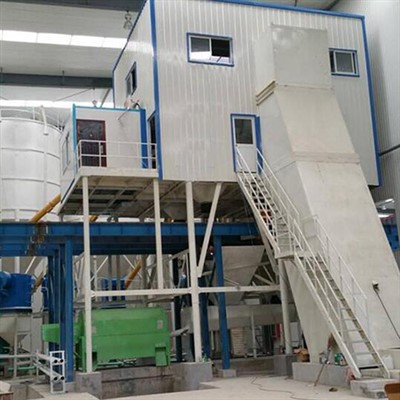
Rural Road Infrastructure Project
Challenge: Remote highway segment required daily delivery of ~35 m³ of concrete over five months. Central plant deliveries incurred average fuel/labor costs of $68/m³ due to round-trip distances exceeding . Quality issues led to failed cylinder tests in two batches.
Solution: Installed a containerized Small/Mini Concrete Batching Plant at mid-project location using local aggregates and bulk cement supply. Operated two shifts daily with one trained technician.
Results: Reduced transportation cost by $42/m³ ($79,800 total savings); achieved zero failed cylinder tests post-deployment; completed paving schedule three days ahead of plan.
Pre-Cast Yard Support Operation
Challenge: Pre-cast facility producing architectural panels experienced bottlenecks during peak orders due to reliance on shared central batch plant with priority given to ready-mix customers. Average delay was four hours per production run.
Solution: Added dedicated Small/Mini Concrete Batching Plant adjacent to casting beds for specialty mixes only. Enabled just-in-time batching aligned with form cycle times.
Results: Increased pre-cast output capacity by , reduced idle labor costs by $9,600/month; improved mix design flexibility for pigmented and fiber-reinforced batches.
7. COMMERCIAL CONSIDERATIONS
The Small/Mini Concrete Batching Plant is available across three pricing tiers based on capacity and automation level:
| Model Tier | Capacity Range |
|---|---|
| Basic | |
| Mid-Tier | |
| Premium |
Pricing reflects FOB factory terms.
Optional Features Available at Additional Cost:
- Dual-cement silo configuration (+$)
- Weather enclosure package (+$)
- Remote monitoring subscription ($/month)
- Admixture dosing unit (+$)
- Mobile trailer mount (+$)
- Solar hybrid power kit (+$)
Service Packages Offered Post-Purchase:
- Preventive Maintenance Plan – Annual inspection + parts discount package ($ / year)
- On-Demand Field Support – Technician dispatch within business hours ($ / hour + travel)
- Operator Training Program – Two-day onsite session ($)
Financing Options Available Through Partner Lenders:
Lease-to-purchase plans available with terms from . Typical monthly payments range from depending on credit approval and configuration.
Total cost of ownership analysis shows payback period averaging months based on reduced transport costs and improved yield control.
8. FAQ
Q: Can the Small/Mini Concrete Batching Plant integrate with existing silo systems?
A: Yes—standard interfaces support retrofitting into existing cement storage setups using common pneumatic transfer diameters (. Custom flanges available upon request.)
Q: What level of operator training is required?
A: Operators require basic PLC literacy and familiarity with batching workflows typical in ready-mix environments (~half-day training). Comprehensive manuals and video guides included.
Q: Is the system suitable for use with blended cements or SCMs like fly ash?
A: Yes—the batching system includes separate weighing paths for cementitious materials up to three types simultaneously when equipped with optional multi-silo configuration.
Q: How does downtime compare during seasonal maintenance?
A: Mean time between failures exceeds , based on field data from units deployed since . Wear parts kits extend service intervals beyond .
Q: Are spare parts readily available globally?
A:
These components represent >92%
We are not currently ISO-certified but follow equivalent quality controls aligned with ISO procedures.
Deployment timeline averages from order confirmation depending on customization level.
Yes—plants have been successfully operated in ambient temperatures as low as –°C using cold weather kits including heated water lines
 INQUIRE NOW
 WHATSAPP