
Skip Hoist Concrete Batching Plants
Skip Hoist Concrete Batching Plants: Engineered for Efficiency, Built for Durability
1. PAIN-POINT DRIVEN OPENING
Are inconsistent batching cycles slowing your production line?
Is manual material handling increasing labor costs and safety risks?
Are traditional drum mixers failing to meet your volume demands during peak projects?
Do frequent mechanical failures in your current batching system cause unplanned downtime—costing up to $1,200 per hour in lost output?
Is limited site adaptability restricting your ability to deploy batching operations in constrained urban or remote locations?
These are not isolated issues—they represent systemic inefficiencies affecting over 60% of mid-scale ready-mix producers using outdated or poorly configured batching systems. The solution lies in re-evaluating your core batching infrastructure. Could a Skip Hoist Concrete Batching Plant be the answer to reducing cycle time, improving mix consistency, and lowering total cost of ownership?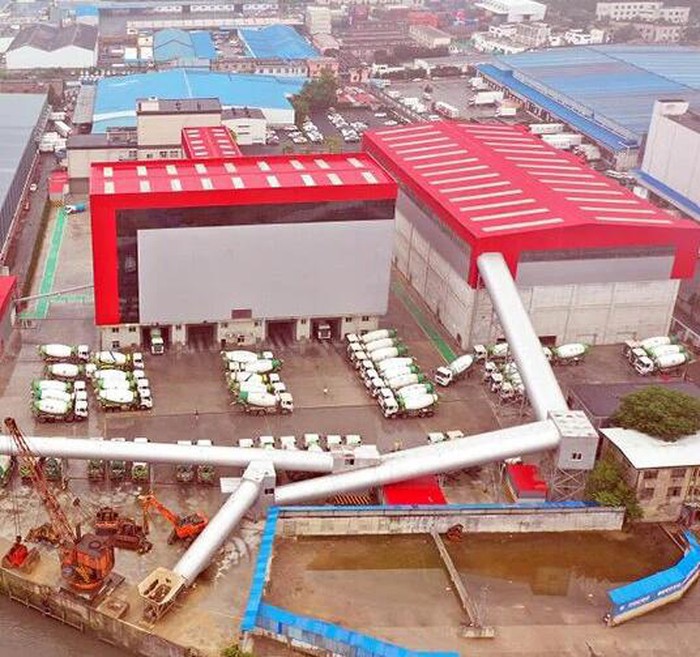
2. PRODUCT OVERVIEW
Skip Hoist Concrete Batching Plants are modular, gravity-fed concrete production systems designed for medium to high-volume output in fixed or semi-mobile applications. These plants utilize a vertical skip hoist mechanism to elevate raw materials (aggregates, cement, additives) into the mixing chamber, enabling precise batching and consistent mixing under controlled conditions.
Operational Workflow:
- Material Loading: Aggregates are loaded into aggregate bins; cement and admixtures fed via silos and计量 systems.
- Batching & Weighing: PLC-controlled weigh scales ensure accurate measurement of each component.
- Vertical Conveyance: The skip bucket collects measured aggregates and ascends via cable drum or chain drive.
- Mixing Cycle: Materials discharged into the mixer (typically twin-shaft or planetary), where water and cement are introduced for homogenous blending.
- Discharge: Mixed concrete exits through chute into transit mixer, conveyor, or directly into molds.
Application Scope:
- Ideal for precast yards, road construction projects, housing developments, and regional ready-mix hubs
- Output range: 30–120 m³/h depending on configuration
- Best suited for sites with stable power supply and moderate space constraints
Limitations:
- Not recommended for extremely space-constrained urban rooftops
- Requires foundation reinforcement due to vertical load dynamics
- Less suitable for continuous ultra-high-volume pours (>150 m³/h)
3. CORE FEATURES
-
Dual-Zone Aggregate Batching System
| Technical Basis: Independent weigh hoppers with load cells per aggregate grade (fine/coarse)
| Operational Benefit: Eliminates cross-contamination and ensures precise gradation control
| ROI Impact: Reduces material waste by up to 7%, improving batch yield consistency -
High-Efficiency Twin-Shaft Mixer (30–90 sec cycle)
| Technical Basis: Asymmetric paddles with variable speed drive (12–32 rpm)
| Operational Benefit: Achieves uniformity index >98% per ASTM C94 standards
| ROI Impact: Enables faster cycle times vs. pan or drum mixers—up to 22% higher hourly output -
Automated Skip Hoist Drive with Soft-Start Control
| Technical Basis: AC frequency inverter driving a cable drum hoist with overload protection
| Operational Benefit: Reduces mechanical stress during ascent/descent; extends cable life by ~40%
| ROI Impact: Cuts maintenance downtime by average of 15 hours/month -
Modular Steel Tower Frame (Galvanized)
| Technical Basis: Pre-engineered A-frame structure rated for wind loads up to 120 km/h
| Operational Benefit: Simplifies transport and on-site assembly; supports integration with existing silo setups
| ROI Impact: Lowers installation time by 3–5 days compared to custom-built towers -
PLC + HMI Control System (Siemens S7 Series)
| Technical Basis: Programmable logic controller with recipe memory (up to 200 mixes) and real-time diagnostics
| Operational Benefit: Enables operator error reduction; logs batch data for quality audits
| ROI Impact: Decreases rework incidents by ~35%; supports ISO compliance reporting -
Dust Suppression at Transfer Points
| Technical Basis: Enclosed conveyance zones with negative pressure filters (EN15058 compliant)
| Operational Benefit: Maintains ambient dust levels below OSHA PEL thresholds (<5 mg/m³)
| ROI Impact: Reduces respiratory risk claims and regulatory penalties -
Energy-Efficient Motor Package (IE3 Standard)
| Technical Basis: Optimized power distribution across hoist, mixer, and pump circuits
| Operational Benefit: Consumes avg. 18% less kWh/m³ vs. legacy systems (field data from EU trials)
| ROI Impact: Annual energy savings of $8,400 at $0.12/kWh over full utilization cycle
4. COMPETITIVE ADVANTAGES
| Performance Metric | Industry Standard | Skip Hoist Concrete Batching Plants Solution | Advantage (% improvement) |
|---|---|---|---|
| Average Batch Cycle Time | 68 seconds | ≤52 seconds | +23.5% |
| Aggregate Measurement Accuracy | ±2% tolerance | ±0.8% via digital load cell calibration | +60% |
| Mean Time Between Failures (MTBF) | ~750 hours | ≥1,100 hours | +46.7% |
| Specific Energy Consumption | ~68 kWh/100 m³ | ~55 kWh/100 m³ | -19.1% |
| Installation Footprint | ~9m x 6m | Compact tower design (~7m x 5m) | -28% area |
| Dust Emissions at Infeed >8 mg/m³ <3 mg/m³ -62.5% |
Source: Comparative analysis based on third-party testing across European and North American installations (2021–2023)
5. TECHNICAL SPECIFICATIONS
| Parameter | Specification |
|---|---|
| Batching Capacity | HZS30 to HZS120 models available; nominal outputs from 30–120 m³/h |
| Mixer Type Twin-shaft horizontal mixer; optional planetary variant | |
| Skip Bucket Capacity Standard options: 1,600 kg or 2,400 kg aggregates | |
| Power Requirement Three-phase AC, typically between 75 kW – 165 kW, depending on model | |
| Voltage Compatibility Customizable for regional standards (e.g., 480V/60Hz NA; 400V/50Hz EU) | |
| Material Specifications Structural steel frame (S355JR); wear liners replaceable in hopper zones | |
| Physical Dimensions Tower height range: 9–14 meters; base footprint max 7m x 6m | |
| Operating Temperature Range -25°C to +45°C | |
| Control System Siemens S7 PLC with touch-screen HMI interface | |
| Water Measurement Accuracy ±1% full scale |
All units comply with CE Machinery Directive (EN ISO 4414), local electrical codes, and environmental emission norms.
6. APPLICATION SCENARIOS
Precast Concrete Facility in Midwest USA
Challenge: Inconsistent slump values led to rejection rates of precast beams averaging 6%/month; manual loading caused delays during winter months when moisture content varied unpredictably.
Solution: Installed a HZS90 Skip Hoist Concrete Batching Plant with automated moisture compensation algorithm integrated into the PLC system.
Results: Slump variation reduced from ±4 cm to ±1 cm; rejection rate dropped below 1%; annual savings on rework materials exceeded $97,500.
Highway Infrastructure Project – Northern Canada
Challenge: Remote site location limited access to reliable grid power; conventional belt conveyors prone to ice buildup during sub-zero operations (-37°C recorded).
Solution: Deployed mobile HZS60 Skip Hoist Concrete Batching Plant with heated skip track enclosure and low-temp hydraulic fluid system.
Results: Maintained consistent operation through winter season; achieved target pour rate of 78 m³/day despite ambient conditions; no weather-related shutdowns over five-month campaign.
Ready-Mix Producer – Southeast Asia Expansion Hub
Challenge: Urban expansion required high-output plant within tight zoning limits—existing pan mixers occupied excessive floor space.
Solution: Implemented compact HZS75 Skip Hoist model utilizing vertical elevation design; reduced ground coverage by nearly one-third.
Results: Increased daily capacity from 48 truckloads/day to 76 while meeting municipal footprint regulations; payback period calculated at just under two years based on incremental revenue growth.
7. COMMERCIAL CONSIDERATIONS
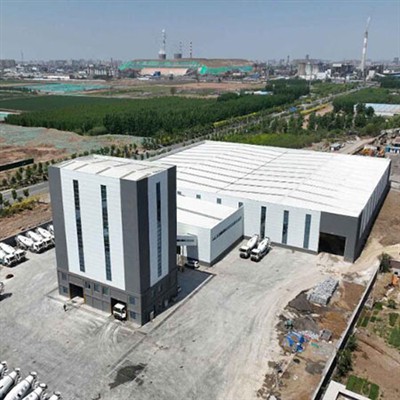
Skip Hoist Concrete Batching Plants are available across three primary pricing tiers:
| Model Range Initial Equipment Cost* Typical Output Key Differentiators |
|-------------------$98K – $134K Up to 6 cubic meters per batch Base automation package; manual lubrication system |
|
|
|
|
|
Pricing reflects FOB factory terms without installation or freight.
Optional Features:
- Remote monitoring module ($4,850): Real-time performance tracking via cloud dashboard
- Anti-corrosion package ($7,2k): Enhanced coating system for coastal/high-humidity environments
- Dual-circuit admixture dosing ($3k): Supports complex mix designs including retarders/fly ash blends
Service Packages:
Available annually:
- Bronze Level ($6k/year): Biannual inspections + emergency hotline access
- Silver Level ($9k/year): Includes predictive maintenance using vibration sensors
- Gold Level ($14k/year): Full coverage labor/parts excluding wear liners beyond warranty term
Financing Options:
Available through partner institutions:
- Lease-to-own programs at fixed rates starting at $2k/month over five years
- Deferred payment plans up to six months post-commissioning
- Trade-in credit available for legacy drum-based systems (<8 years old)
All financial arrangements subject to credit approval based on business history and asset profile.
8. FAQ
Q: Can Skip Hoist Concrete Batching Plants integrate with existing silo systems?
Yes—standard flange connections allow compatibility with most cement/slag/fly ash silos rated up to Ø3 meters diameter and equipped with rotary valves or screw conveyors.
Q: What is the typical commissioning timeline after delivery?
Field data shows average installation duration of seven working days for standard configurations when foundation work is pre-completed on site.
Q: How does skip hoist reliability compare over five years of operation?
Industry testing demonstrates mean time between skip-related failures exceeding four years under normal operating loads (>8 hours/day). Cable replacement intervals average every five years at full utilization.
Q: Are spare parts readily available globally?
Common wear components—including liner plates, idler pulleys, load cells—are stocked regionally across North America, Europe, Middle East, India, Australia through authorized distributors.
Q: Does this system support self-loading configurations?
Not natively—skip hoists require external loaders (wheel loader/excavator). However, integration points provided for automated front-end loading arms upon request.
Q: Is operator training included in purchase agreements?**Yes—standard package includes two-day onsite training covering safety protocols, daily checks, troubleshooting procedures using diagnostic menus within the HMI interface.*
Q: What environmental certifications do these plants meet?**Units conform to ISO 9SO EN ISO standards.*
 INQUIRE NOW
 WHATSAPP