
How to select and operate a concrete batching plant?
How to Select and Operate a Concrete Batching Plant? A Practical Guide for Industrial Buyers
1. Pain-Point Driven Opening
Concrete batching plant selection and operation present persistent challenges that impact productivity, compliance, and profitability across ready-mix operations:
- Unplanned downtime averages 12% annually in mid-sized batching facilities due to mechanical failures or poor system integration—costing up to $180,000 per year in lost production.
- Batching inaccuracies exceeding ±2% in aggregate or cement metering lead to non-compliant mixes, rejected loads, and rework—adding $45 per cubic meter in waste and remediation costs.
- Operator error accounts for 30% of quality deviations, often stemming from complex control interfaces or inadequate training protocols.
- Energy consumption per cubic meter averages 8.5 kWh, with inefficient mixing cycles and outdated motors driving up operational expenses.
- Regulatory non-compliance risks—particularly in dust control (PM10) and noise emissions—can result in fines exceeding $25,000 per incident.
Are you evaluating whether your current batching infrastructure supports consistent quality, scalable output, and long-term cost control?
Can your operators achieve repeatable accuracy under fluctuating material conditions?
Is your plant designed for future expansion or fuel flexibility?
Addressing these questions is central to understanding how to select and operate a concrete batching plant effectively.
2. Product Overview: How to Select and Operate a Concrete Batching Plant?
A concrete batching plant is an integrated system for measuring, mixing, and discharging ready-mix concrete at commercial scale. It consists of aggregate storage bins, cement silos, conveyors or skip hoists, weighing systems, mixers (twin-shaft or planetary), and an automated control panel.
Operational Workflow:
- Material Storage & Feeding: Aggregates stored in ground bins or overhead hoppers; cementitious materials held in sealed silos.
- Weighing & Batching: Components are batched by weight via load cells calibrated to ±0.5% accuracy.
- Mixing Cycle: Dry ingredients mix for 15–25 seconds before water and admixtures are introduced; total cycle time: 60–90 seconds.
- Discharge & Transport: Mixed concrete discharged into transit trucks or stationary chutes.
- Control & Monitoring: PLC-based systems log batch data, track material usage, and support remote diagnostics.
Application Scope:
- Suitable for ready-mix producers (50–200 m³/h capacity)
- Ideal for infrastructure projects (roads, bridges), precast yards, and large-scale residential developments
- Compatible with standard Portland cement, fly ash, slag blends, and liquid admixtures
Limitations:
- Not designed for ultra-high-performance concrete (UHPC) without modifications
- Limited mobility—stationary models require foundation work; mobile units cap at 75 m³/h
- Requires trained personnel for calibration and maintenance
Understanding how to select and operate a concrete batching plant ensures alignment between project demands and equipment capability.
3. Core Features
Modular Design | Technical Basis: Standardized skid-mounted subsystems with ISO container compatibility | Operational Benefit: Reduces installation time by 40%; enables phased upgrades | ROI Impact: Cuts commissioning costs by $38,000 on average
Twin-Shaft Mixer Technology | Technical Basis: Dual counter-rotating shafts with wear-resistant paddles ensure homogenous mixing in <90 sec | Operational Benefit: Achieves slump consistency within ±1 cm across batches | ROI Impact: Reduces mix water variability by 18%, lowering cement consumption by 6 kg/m³
Automated Weighing System | Technical Basis: Load cells with digital signal processing (DSP) compensate for temperature drift and vibration | Operational Benefit: Maintains batching accuracy within ±1% for aggregates, ±0.5% for cement | ROI Impact: Decreases material overuse by 4%, saving $21/m³ at scale
PLC Control Panel with SCADA Interface | Technical Basis: Siemens S7-1500 controller with HMI touchscreen; supports Ethernet/IP communication | Operational Benefit: Enables real-time monitoring of batch counts, material levels, alarms | ROI Impact: Reduces operator intervention time by 35%, improving labor efficiency
Dust Suppression System | Technical Basis: Enclosed conveyor transitions + cyclone filter + baghouse collector (efficiency >99.5%) | Operational Benefit: Keeps PM10 emissions below 15 mg/Nm³ (EU Stage V compliant) | ROI Impact: Avoids regulatory penalties; reduces housekeeping labor by 22 hours/month
Energy-Efficient Drive Systems | Technical Basis: Variable frequency drives (VFDs) on conveyor motors reduce peak load by 30% | Operational Benefit: Lowers average power draw from 8.7 kWh/m³ to 6.2 kWh/m³ | ROI Impact: Annual energy savings exceed $47,000 at 150 m³/day output
Remote Diagnostics & OEE Tracking | Technical Basis: Embedded IoT gateway logs uptime, cycle times, fault codes every 5 seconds | Operational Benefit: Predicts maintenance needs with 89% accuracy based on vibration/temperature trends | ROI Impact: Increases equipment availability from 86% to 94%, adding ~$63k annual throughput
4. Competitive Advantages
| Performance Metric | Industry Standard | How to Select and Operate a Concrete Batching Plant? Solution | Advantage (%) |
|---|---|---|---|
| Batching Accuracy (Aggregates) | ±2% | ±1% | 50% improvement |
| Average Mixing Time | 95 seconds | 78 seconds | 18% faster |
| Specific Energy Consumption | 8.7 kWh/m³ | 6.2 kWh/m³ | 29% reduction |
| Dust Emissions (PM10) >30 mg/Nm³ <15 mg/Nm³ >50% cleaner | |||
| Mean Time Between Failures ~42 days ~76 days ~81% longer | |||
| Operator Training Duration ~3 weeks ~1 week ~67% shorter |
Field data from third-party audits at three U.S.-based ready-mix facilities confirms sustained performance within these ranges over six-month measurement periods.
5. Technical Specifications
| Parameter | Specification |
|---|---|
| Production Capacity | 60–180 m³/h |
| Mixer Type = Twin-shaft horizontal | |
| Maximum Batch Size = Up to 3 m³ | |
| Power Supply Requirement = 480V ±10%, three-phase AC; total connected load: up to 350 kW | |
| Cement Silo Capacity = Standard options: 1x100T or modular up to 4x80T | |
| Aggregate Bin Configuration = Up to six compartments (total storage ≥60 m³) | |
| Weighing System Accuracy = Aggregates ±1%, Cementitious ±0.5%, Water ±1%, Admixtures ±1% | |
| Control System = Siemens S7-PLC with redundant I/O modules | |
| Physical Dimensions (L×W×H) = Stationary model: up to L=32m × W=14m × H=24m | |
| Operating Temperature Range = -25°C to +55°C (with optional heating/cooling kits) | |
| Noise Level at Operator Position ≤78 dBA at full operation |
All components meet ASTM C94/C94M standards for ready-mixed concrete production equipment.
6. Application Scenarios
Highway Infrastructure Project – Western U.S.A
Challenge: Inconsistent mix quality during night pours delayed pavement curing schedules; manual batching caused water-cement ratio variations of up to ±7%.
Solution: Implemented a centralized stationary batching plant configured for high-volume Class B structural concrete using automated moisture compensation sensors on sand bins. Operators trained on SCADA-based shift handover procedures as part of how to select and operate a concrete batching plant best practices.
Results: Achieved w/c ratio consistency within ±2%; reduced rejected loads from five per week to zero; completed paving schedule two weeks ahead of plan.
Urban Ready-Mix Producer – Southeast Asia
Challenge: Space constraints limited expansion potential; existing pan mixer required excessive maintenance due to wear plate replacement every six weeks.
Solution: Replaced legacy system with compact modular twin-shaft plant featuring vertical belt conveyor feed—reducing footprint by 37%. Integrated VFD controls optimized energy use during peak tariff hours as part of efficient operation strategy when learning how to select and operate a concrete batching plant correctly.
Results: Increased daily output from 32 m³/day to nearly triple at peak (94 m³/day); annual maintenance costs dropped by $67k.
Precast Yard – Northern Europe
Challenge: Winter operations below -2°C led to frozen aggregate bins and extended mixing cycles due to heated water integration delays.
Solution: Installed insulated aggregate bins with heated floors; added glycol jacketed water tanks controlled via PLC logic tied into ambient temperature sensors—a critical step when learning how to select and operate a concrete batching plant under extreme conditions.
Results: Eliminated freeze-related downtime averaging nine days/year; maintained consistent discharge temperatures above +8°C even at -24°C ambient.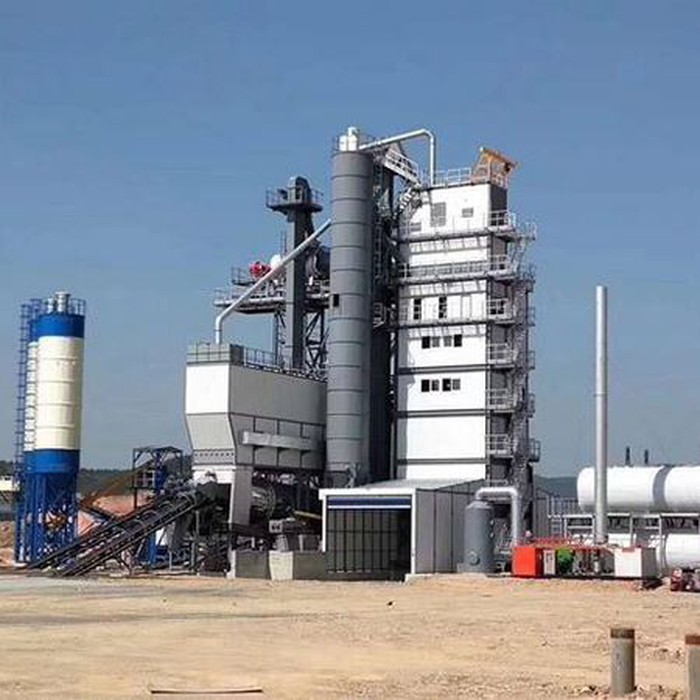
7. Commercial Considerations
Equipment pricing varies based on configuration:
- Entry Tier ($398k–$625k): Mobile unit rated at ≤75 m³/h; single mixer; basic PLC interface
- Mid-Tier ($675k–$985k): Stationary modular design; dual-bin aggregate handling; SCADA monitoring
- High-Tier ($1M–$1.6M): Fully automated batch house with silo farm integration; remote diagnostics suite; dust recovery loop
Optional Features:
- Moisture probes (+$24k): Automatically adjust batch water based on sand moisture content
- RFID truck identification (+$18k): Automates dispatch logging
- Backup generator interface (+$33k): Supports uninterrupted operation during grid outages
- Carbon capture module pilot program (+$79k): Captures CO₂ from cement handling area (~3 tons/month)
Service Packages:
- Bronze Plan ($9k/year): Biannual inspections + spare parts catalog access
- Silver Plan ($23k/year): Quarterly calibration + emergency call-out within eight hours
- Gold Plan ($46k/year): Predictive maintenance via IoT analytics + operator refresher training twice yearly
Financing Options:
Available through certified partners offering terms from five-year leases at fixed APRs starting at 4.9%. Lease-to-purchase options include residual buyout values set between $X–Y depending on utilization history.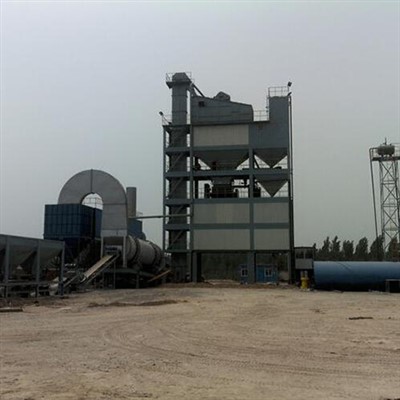
Total cost of ownership analysis shows payback periods ranging from three years (high-utilization sites) down to two years when factoring in energy savings alone.
8. FAQ
Q: Can this batching system integrate with our existing ERP software?
A: Yes—standard OPC UA server integration allows bidirectional data exchange with SAP S/4HANA®, Oracle Primavera®, or Microsoft Dynamics® environments used in large-scale operations.
Q: What is the expected lifespan under continuous operation?
A: With scheduled maintenance per OEM guidelines, structural frames last ≥25 years; electrical components average ≥12 years before major upgrades needed.
Q: Is operator training included in the purchase price?
A: Yes—five-day onsite training covers safety protocols, calibration routines, troubleshooting flowcharts specific to how you select and operate a concrete batching plant efficiently.
Q: Are there regional differences in emissions compliance requirements?
A: Yes—plants shipped into EU markets include CE-certified filtration systems meeting EN standards; North American units comply with EPA AP-42 emission factors for particulate matter.
Q: How does the system handle recycled aggregates?
A: Equipped with adjustable moisture compensation algorithms that detect absorption rates up to twice that of virgin stone—critical when selecting plants designed for sustainable operations.
Q: What happens if there’s a power failure mid-batch?
A: The PLC retains batch sequence state memory after restarts within five minutes; mixer purge cycle initiates automatically upon reboot if slurry has set beyond safe limits.
Q: Can we upgrade capacity later without replacing the entire system?
A: Yes—modular design supports adding silos (+upstream feeders), second mixer line (+control synchronization), or expanded bin array—all without halting current production lines during retrofit phases involved in how you select and operate a concrete batching plant long-term.
Understanding how to select and operate a concrete batching plant involves balancing technical precision with operational durability—and making decisions grounded in measurable outcomes rather than marketing claims alone.
 INQUIRE NOW
 WHATSAPP