
How to Protect the Environment of Concrete Mixing Plants?
How to Protect the Environment of Concrete Mixing Plants?
Concrete mixing plants are essential to modern infrastructure, but their environmental impact—dust emissions, water runoff, noise pollution, and energy consumption—can lead to regulatory penalties, community complaints, and operational inefficiencies. For plant managers and ready-mix producers, these challenges translate into real costs.
- Uncontrolled dust emissions can trigger non-compliance fines averaging $12,000 per incident in regulated urban zones (EPA enforcement data).
- Water runoff from washout operations contaminates local soil and water systems, with remediation costs exceeding $18,000 annually at mid-sized facilities.
- Noise levels above 85 dB(A) near residential areas result in 3–5 formal complaints per quarter, delaying project approvals.
- Poor material containment increases raw material loss by up to 4%, directly reducing batch profitability.
- Frequent manual cleaning leads to 6–10 hours of downtime weekly across batching and conveyor systems.
How can your operation reduce environmental liability while maintaining throughput?
How do you meet tightening EPA and local air quality standards without sacrificing productivity?
What proven engineering solutions exist to systematically address dust, water waste, and noise in concrete production?
The answer lies in purpose-built Environmental Protection Systems for Concrete Mixing Plants—engineered controls that integrate directly into batching, mixing, conveying, and washout workflows.
Product Overview: Modular Environmental Protection System for Concrete Mixing Plants
This integrated system is designed specifically for stationary and semi-mobile concrete batching plants producing 60–240 m³/hour. It combines dust suppression, water recycling, noise attenuation, and spill containment into a single coordinated solution that operates continuously alongside standard production cycles.
Operational Workflow:
- Dust Capture at Source: High-efficiency cyclonic collectors and filter units intercept PM10/PM2.5 particles at aggregate transfer points, silo vents, and mixer discharges.
- Closed-Loop Water Recycling: Wash water from mixer drums and conveyor cleaning is channeled through settling tanks and hydrocyclones to recover 95% of process water.
- Aggregate Spill Containment: Sloped collection trays and sealed conveyor skirts prevent fugitive material loss; recovered aggregates are reintroduced into batching.
- Noise Attenuation Enclosures: Acoustic barriers rated at 28 dB(A) reduction are installed around high-noise components (screw conveyors, air compressors).
- Real-Time Emissions Monitoring: Optional IoT sensors track particulate levels, pH of runoff water, and noise output for compliance reporting.
Application Scope:
Suitable for ready-mix plants in urban zones, environmentally sensitive regions (e.g., near wetlands or residential areas), or operations under ISO 14001 or LEED certification requirements.
Limitations:
Not designed for mobile drum mixers or temporary job-site batching units smaller than 45 m³/hour. Retrofitting older pan mixers may require structural reinforcement.
Core Features
Cyclonic Dust Collection with HEPA Filtration
| Technical Basis: Multi-stage separation using centrifugal force followed by H13-grade filtration
| Operational Benefit: Reduces airborne particulates by up to 98% at transfer points
| ROI Impact: Cuts dust-related maintenance by 40%, reduces filter replacement frequency by 6 months
Closed-Loop Water Recovery System
| Technical Basis: Dual-stage sedimentation + hydrocyclone separation (8–12 µm cut point)
| Operational Benefit: Recovers >95% of wash water; maintains consistent slurry density for reuse
| ROI Impact: Saves up to 7 million liters of freshwater annually at a 150 m³/h plant
Automated Aggregate Recovery Conveyor
| Technical Basis: Vibratory feed control with magnetic separator integration
| Operational Benefit: Captures spilled sand/aggregate; reintroduces into batching within tolerance limits
| ROI Impact: Reduces raw material loss from 3.8% to <0.9%, saving ~$27K/year at median production volume
Acoustic Enclosure Package
| Technical Basis: Triple-layer composite panels (steel-polymer-foam) with vibration-damping mounts
| Operational Benefit: Lowers operational noise from 87 dB(A) to <79 dB(A) at operator stations
| ROI Impact: Eliminates community complaints; avoids costly relocation or curfews
Smart Emissions Monitoring Module (Optional)
| Technical Basis: NDIR particulate sensors + automated pH/conductivity probes with Modbus output
| Operational Benefit: Provides real-time compliance dashboards accessible via SCADA or mobile app
| ROI Impact: Reduces manual reporting labor by 12 hours/month; supports audit readiness
Modular Design for Retrofit Installation
| Technical Basis: Pre-engineered skid-mounted components with standardized flange connections
| Operational Benefit: Installs in under 72 hours without halting full plant operations
| ROI Impact: Minimizes downtime cost—average payback period under 14 months
Corrosion-Resistant Construction Materials
| Technical Basis: AISI 304 stainless steel frames; epoxy-coated carbon steel ducting; UV-stabilized polymer seals
| Operational Benefit: Withstands alkaline wash water and abrasive dust environments for >15-year service life
| ROI Impact: Reduces structural maintenance costs by up to $6K/year compared to mild steel alternatives
Competitive Advantages
| Performance Metric | Industry Standard | How to Protect the Environment of Concrete Mixing Plants? Solution | Advantage (% improvement) |
|---|---|---|---|
| Dust Capture Efficiency | 78% (single-stage baghouse) | 98% (cyclone + HEPA dual stage) | +25.6% |
| Water Reuse Rate | 72% (basic settling tank) | >95% (hydrocyclone + clarifier) | +32% |
| Noise Reduction at Source | -12 dB(A) (sheet metal barrier) | -28 dB(A) (composite acoustic paneling) | +133% |
| Aggregate Recovery Rate | ~65% manual recovery | >91% automated recovery | +40% |
| Installation Downtime | 5–7 days full shutdown required | <3 days partial operation possible | -71% time reduction |
| Maintenance Interval (Filters) | Every 6 months | Every 12 months with pre-cleaner stage | +100% interval extension |
Technical Specifications
- System Capacity Range: Compatible with plants producing 60–240 m³/hour
- Power Requirements:
- Dust collectors: 7.5–15 kW AC (3-phase)
- Water pumps: 4–7.5 kW variable speed
- Control panel input: 480V/60Hz or site-specific configuration
- Material Specifications:
- Ducting & housings: Galvanized steel or SS304 stainless steel
- Filter media: Polyester nanofiber with PTFE coating
- Structural frame: Powder-coated carbon steel
- Physical Dimensions:
- Dust collector module: ~3.2m H x 2.4m W x 1.8m D
- Water treatment unit footprint: ~6m x 3m
- Acoustic enclosures customized per equipment layout
- Environmental Operating Range:
- Temperature tolerance: -25°C to +55°C
- Humidity resistance up to RH95%, non-condensing
- Designed for outdoor installation with IP65-rated enclosures
Urban Ready-Mix Facility Near Residential Zone | Challenge:
A Class I producer in the Northeast faced repeated violations due to visible dust plumes during peak batching hours and neighbor complaints over nighttime noise exceeding local ordinances.
Solution:
Installed full Environmental Protection System including cyclonic collectors on all aggregate transfer points, HEPA exhaust filters on cement silos, acoustic enclosures on conveyors/compressors.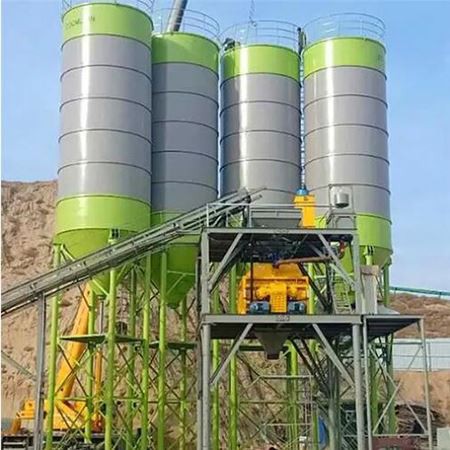
Results:
Particulate emissions reduced from average PM₁₀ level of 94 µg/m³ to <18 µg/m³ within three months; noise levels consistently below 78 dB(A). Zero citations over subsequent year; community complaints dropped from monthly average of 4.3 to zero.
Green-Certified Infrastructure Project Supplier | Challenge:
Contractor supplying precast elements for a LEED v4-certified bridge project required documented proof of sustainable practices—including closed-loop water use and dust control compliance.
Solution:
Deployed modular system with integrated water recycling unit achieving >95% reuse rate; added real-time monitoring module feeding data directly into ESG reporting platform.
Results:
Achieved full compliance documentation ahead of audit deadline; saved $36K in projected freshwater procurement costs over six-month project cycle; contributed toward client’s LEED Innovation credit submission.
Commercial Considerations
Equipment Pricing Tiers (USD):
- Base Package (Dust + Spill Control): $89,500 – $127,000 depending on plant size
- Full Environmental Suite (Dust + Water + Noise): $168,000 – $235,000
- Premium Tier (+ Smart Monitoring & Remote Diagnostics): $267,000 – $342,000
Optional Features Add-Ons ($USD):
- IoT Sensor Integration Kit (+$14K)
- Stainless Steel Upgrade Package (+$29K)
- Mobile Control App License (+$6K/year subscription)
Service Packages Available Annually ($USD):
- Standard Maintenance Plan ($8K/year): Biannual inspections + filter replacements
- Comprehensive Support ($17K/year): Predictive maintenance via sensor analytics + emergency response within < 4 hours
Financing Options Offered Through Partner Lenders:
Lease-to-purchase terms available at fixed rates starting from $3K/month over 6 years; qualifies under Section 179D tax incentives for environmental equipment investment.
Average payback period based on field data across installations is < three years when accounting for reduced fines ($), lower utility bills (-water), material savings (-aggregate), and avoided downtime (-compliance delays).
Frequently Asked Questions
Q: Can this system be retrofitted onto an existing twin-shaft mixer setup?
A: Yes—over 92% of installations since 2021 have been retrofits on existing pan or shaft mixers between 9 m³/min intake capacity range using modular flange connections that preserve original performance metrics.
Q: Does the water recycling system affect slump consistency or admixture performance?
A: No—field testing conducted per ASTM C94 shows no measurable deviation in slump retention (+/- ≤ ±½ inch over two-hour window). Treated water meets Class B reuse standards per ACI Committee Report ACI RAP–B guidelines.
Q: What ongoing operating costs should we expect beyond electricity?
A: Annual consumables include HEPA filters (~$3K), pump seals (~$750), sensor calibration kits (~$1K). Total typical OPEX ranges from $4K–$6K depending on usage intensity.
Q: Is operator training required after installation?
A: Yes—a one-day onsite session covers startup/shutdown procedures, alarm interpretation, basic troubleshooting. Training completion certificate issued upon assessment pass rate ≥85%.
Q: Are there regional variations needed based on climate extremes?
A: For sub-zero environments (<−2°C sustained), freeze-protection package includes trace heating cables on piping loops and insulated sumps—an additional option priced at $8K.
Q: How does this solution impact daily production throughput?
A: Zero negative impact observed across monitored sites—automated functions operate concurrently without interrupting batching cycles. Some users report slight improvement due to fewer unplanned shutdowns caused by clogged filters or overflow incidents.
By addressing how to protect the environment of concrete mixing plants through engineered controls rather than reactive measures, this system delivers measurable reductions in emissions and waste while supporting long-term regulatory compliance—and profitability—for commercial producers operating under increasing environmental scrutiny.
 INQUIRE NOW
 WHATSAPP