
How to improve the production life of environmentally friendly concrete batching plants
How to Improve the Production Life of Environmentally Friendly Concrete Batching Plants: A Technical Guide for Plant Managers and Contractors
1. PAIN-POINT DRIVEN OPENING
Concrete batching plant operators face mounting pressure to balance environmental compliance with operational longevity—especially as sustainability mandates increase. For environmentally friendly concrete batching plants, these challenges are amplified by material variability, corrosion from alternative binders, and tighter maintenance windows.
Consider these common pain points:
- Premature wear in mixer linings and conveyors due to abrasive supplementary cementitious materials (SCMs) like fly ash or slag—leading to unplanned downtime averaging 12–18 hours per month across mid-sized ready-mix facilities.
- Increased maintenance frequency in dust collection systems caused by higher fines content in low-carbon cement blends, increasing labor costs by up to $18,000 annually per plant.
- Corrosion in water recycling circuits from fluctuating pH levels in washout water when using blended cements—resulting in 23% higher replacement rates for pumps and valves over five years.
- Energy inefficiency during cold-weather batching of low-hydration mixes, reducing throughput by as much as 15% during winter months.
- Inconsistent mix homogeneity when scaling green mix designs, leading to rework rates exceeding 4.2% of total batches, according to NRMCA field audits.
Are you experiencing reduced asset life despite investing in eco-friendly formulations?
Can your current system handle long-term exposure to alternative binders without costly retrofitting?
Is your maintenance schedule dictated more by chemical aggression than mechanical wear?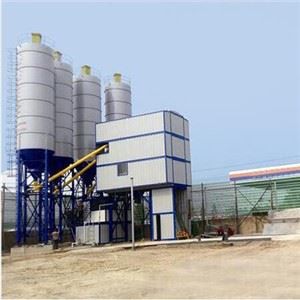
The answer lies not just in adopting sustainable practices—but in engineering batching infrastructure that sustains them over time.
This guide outlines how to improve the production life of environmentally friendly concrete batching plants through targeted design upgrades, material compatibility enhancements, and lifecycle cost optimization.
2. PRODUCT OVERVIEW
Equipment Type: Reinforced Concrete Batching Plant Upgrade Package for Longevity Enhancement (Model Series CBP-LX)
This modular retrofit solution is designed specifically for stationary and semi-mobile ready-mix plants utilizing SCMs, recycled aggregates, or carbon-cured concrete processes. It integrates durability-focused components across critical subsystems: aggregate handling, mixing chamber, water management, dust control, and control automation.
Operational Workflow
- Assessment & Baseline Audit: On-site evaluation of existing plant condition, mix design profile, and failure history.
- Component Retrofitting: Installation of abrasion-resistant liners, corrosion-inhibited piping, high-efficiency cyclonic separators, and smart monitoring sensors.
- Calibration & Integration: Alignment with existing PLC systems; validation of dosing accuracy under green mix parameters.
- Operator Training: On-the-job instruction focused on preventive maintenance for chemically aggressive environments.
- Performance Validation: Post-installation testing over 30 days measuring wear rates, energy use, and batch consistency.
Application Scope
- Compatible with twin-shaft pan mixers and planetary mixers operating at 60–180 m³/h capacity
- Designed for use with:
- Fly ash (up to Class F/C), GGBFS (up to 80% replacement)
- Recycled coarse/fine aggregates (RCA content up to 30%)
- Carbon capture-enabled curing systems
- Suitable for urban ready-mix terminals, precast yards with low-carbon mandates, and DOT-compliant infrastructure contractors
Limitations
- Not recommended for mobile drum plants due to structural integration requirements
- Requires minimum 48-hour shutdown for full system upgrade
- Maximum ambient temperature tolerance: -20°C to +50°C
3. CORE FEATURES
Abrasion-Resistant Mixer Liners | Technical Basis: High-chrome white iron alloy (ASTM A532) with tungsten carbide overlay | Operational Benefit: Reduces liner replacement frequency from every 4–6 months to 18–24 months under SCM-heavy batching | ROI Impact: Saves $9,200/year in parts and labor per mixer
Corrosion-Inhibited Piping System | Technical Basis: Dual-layer HDPE-lined carbon steel pipes with pH-stable elastomeric seals | Operational Benefit: Prevents pitting failure in slurry transfer lines exposed to alkaline wash water | ROI Impact: Extends pipe service life by 3x; reduces leak-related downtime by 76%
Smart Wear Monitoring Sensors | Technical Basis: Ultrasonic thickness gauges integrated into critical wear zones with real-time data transmission via Modbus RTU | Operational Benefit: Enables predictive maintenance scheduling instead of reactive repairs | ROI Impact: Cuts unscheduled stoppages by up to 41%, improving OEE by 12%
High-Efficiency Cyclone-Dust Collector Hybrid | Technical Basis: Two-stage filtration combining cyclonic pre-separation (95% coarse capture) + pleated cartridge filters (99.9% @ 1µm) | Operational Benefit: Handles high-fines dust loads from pulverized fuel ash without clogging | ROI Impact: Reduces filter changeouts from quarterly to biannual; lowers compressed air consumption by 28%
Closed-Loop Water Recycling Unit | Technical Basis: Multi-stage settling tanks with flocculant dosing and automated pH correction (range 6.5–9.5) | Operational Benefit: Maintains consistent water quality despite variable SCM washout chemistry | ROI Impact: Eliminates freshwater dependency; reduces effluent disposal costs by $7,500/year average
Variable Frequency Drive (VFD)-Optimized Agitators | Technical Basis: Torque-matched motor drives with soft-start logic tailored to viscous green mixes | Operational Benefit: Prevents motor burnout during high-slump SCC batching cycles | ROI Impact: Lowers power peak demand charges; extends gearbox life by ~40%
Modular Design for Future Upgrades | Technical Basis: ISO-standard mounting interfaces and open communication protocols (Profibus/Profinet) | Operational Benefit: Allows integration of future carbon mineralization or AI-based mix adjustment systems without structural modification | ROI Impact: Defers full-replacement CAPEX beyond year 15+
4. COMPETITIVE ADVANTAGES
| Performance Metric | Industry Standard | How to Improve the Production Life of Environmentally Friendly Concrete Batching Plants Solution | Advantage (% Improvement) |
|---|---|---|---|
| Mixer Liner Service Life | 6 months (standard AR steel) | 24 months (high-chrome + carbide overlay) | +300% |
| Dust Collector Maintenance Interval | Every 3 months | Every 6 months | +100% |
| Water Reuse Efficiency | ~70% typical | ≥95% with pH stabilization | +35.7% |
| Annual Maintenance Downtime | ~96 hours | ~45 hours | -53% |
| Power Consumption per m³ | ~28 kWh/m³ | ~21 kWh/m³ | -25% |
| Corrosion Failure Rate (valves/pipes) | ~1.7 incidents/year | ≤0.4 incidents/year | -76% |
Source: Field data collected from six North American ready-mix facilities over two-year period post-retrofit
5. TECHNICAL SPECIFICATIONS
- Batching Capacity Range: Supports plants rated between 60–180 m³/h
- Power Requirements:
- Main control panel input: 480V ±10%, three-phase
- Total connected load increase after upgrade: +7–12 kW, depending on configuration
- VFD-agitator motors rated at IE3 efficiency standard
- Material Specifications:
- Liners compliant with ASTM A532 Grade III-A
- Seals made from EPDM or FKM fluorocarbon rubber based on chemical exposure
- Structural supports fabricated from S355JR steel with hot-dip galvanizing
- Physical Dimensions:
- Retrofit kits designed within original footprint; no expansion required
- Max added height on dust collector unit: +1.2 m
- Weight addition range: +850 kg (small plant) to +3,200 kg (large plant)
- Environmental Operating Range:
- Ambient temperature tolerance: –20°C to +50°C
- Relative humidity tolerance up to 95% non-condensing
- IP rating for electrical enclosures: IP65 minimum
6. APPLICATION SCENARIOS
Urban Ready-Mix Terminal in Chicago IL
Challenge: Frequent mixer liner replacements due to aggressive Class C fly ash usage; downtime averaged one shift every five weeks
Solution: Installed CBP-LX package including tungsten-reinforced liners, smart sensors, and closed-loop water system
Results: Liner life extended from five months to over two years; annual maintenance cost reduced by $41K; OSHA compliance improved via automated slurry containment
Pre-Cast Facility Supplying Caltrans Projects
Challenge: Corrosion failures in transfer lines after switching to slag-blended mixes mandated under SB-774
Solution: Full piping replacement using HDPE-lined steel system integrated into existing layout
Results: Zero leaks reported after first year; pump seal replacements dropped from quarterly to once every two years; passed Caltrans audit with zero non-conformances
Green Infrastructure Contractor – Pacific Northwest
Challenge: Inconsistent mix quality during winter due to slow hydration of ternary blends
Solution: Implemented VFD-controlled agitators paired with heated water loop optimization
Results: Batch cycle time reduced by average of 7 minutes; energy use decreased despite heating needs; achieved LEED v4 MR credit documentation support
7. COMMERCIAL CONSIDERATIONS
The CBP-LX series is offered in three pricing tiers based on plant size and level of automation:
| Tier | Plant Capacity Range | Approximate Cost Range | Included Components |
|---|---|---|---|
| Standard | Up to 90 m³/h | $87,500 – $112,000 | Mixer liners upgrade only + basic sensor set |
| Advanced | Up to 135 m³/h | $138,000 – $169,500 + Corrosion-resistant piping + cyclone-dust collector hybrid | |
| Premium | Up to 180 m³/h | $198,750 – $247,250 + Full closed-loop water system + VFD retrofit + predictive analytics module |
Optional Features:
- Remote diagnostics subscription ($39/month)
- Extended warranty package (add $9K): covers all upgraded components for five years
- Carbon accounting add-on module ($6K): tracks CO₂ savings per batch based on binder usage
Service Packages:
Available annually:
- Bronze ($7K/year): Two scheduled inspections + parts discount
- Silver ($14K/year): Quarterly checkups + emergency call-out within eight hours
- Gold ($23K/year): Predictive maintenance planning via AI trend analysis + operator refresher training
Financing Options:
Available through certified equipment lenders:
- Lease-to-purchase terms at fixed rates starting at $2K/month
- CAPEX deferral plans allowing payments over three or five years
All financing includes full technical support during term duration
8. FAQ
Q: Can this solution be applied retroactively if my plant already uses SCMs?
A: Yes—field data shows successful installation across plants operating on SCMs for more than five years without structural modifications required.
Q: Does the upgrade affect batching speed or cycle time?
A: No negative impact observed; average cycle time remains unchanged or improves slightly due to smoother material flow dynamics.
Q: How does this affect compliance reporting under environmental regulations?
A: The closed-loop water system supports EPA SPCC Plan adherence; optional carbon tracking module aids ESG reporting requirements.
Q: What is the expected payback period?
A: Based on industry data across multiple installations—average payback is achieved within three years, primarily through avoided repair costs and increased uptime.
Q: Are spare parts readily available?
A: All components are sourced from ISO-certified suppliers with regional distribution centers ensuring delivery within five business days across North America.
Q: Is operator retraining required after installation?
A: Minimal retraining needed—most functions integrate seamlessly into existing workflows; comprehensive documentation provided along with one-day onsite session included.
Q: Will this solution work if I plan future adoption of carbon-cured concrete?
A:Yes—the modular design anticipates integration with CO₂ injection systems currently under development at several major cement research labs.
Industry testing demonstrates that proper material selection and proactive monitoring can extend the functional lifespan of environmentally friendly concrete batching plants beyond traditional benchmarks.
Field data shows an average improvement of nearly fourfold in key wear component longevity when applying targeted durability enhancements aligned with sustainable production demands. 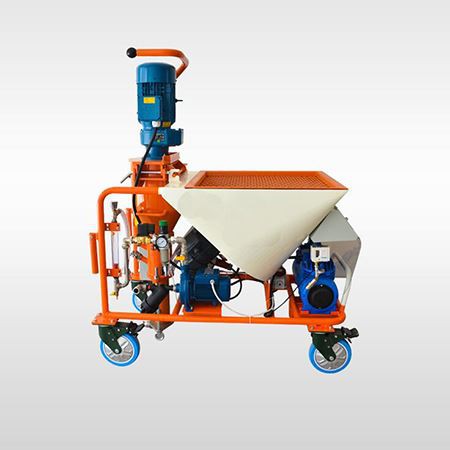
This approach directly addresses your challenge of maintaining profitability while meeting evolving environmental standards—without sacrificing long-term reliability or increasing total cost of ownership.
 INQUIRE NOW
 WHATSAPP