
How To Choose Best Mobile Portable Concrete Mixing Plant Manufacturer?
How To Choose Best Mobile Portable Concrete Mixing Plant Manufacturer?
Operational Challenges in Selecting the Right Mobile Concrete Plant Partner
For commercial buyers, plant managers, and ready-mix producers, selecting the right mobile portable concrete mixing plant manufacturer directly impacts daily operations, project timelines, and bottom-line performance. Common challenges include:
- Unplanned downtime due to mechanical failure: Field data shows poorly engineered mobile plants experience 12–18 hours of unplanned downtime per month, costing up to $4,200 in lost productivity and labor.
- Inconsistent mix quality across job sites: 68% of contractors report rework incidents linked to batch variability when using non-certified mixing systems.
- High fuel and power consumption: Industry-standard diesel-powered units consume 22–28 L/hour under load; inefficient designs push consumption beyond 35 L/hour, increasing operating costs by 30% annually.
- Delays in commissioning due to poor technical support: On average, delayed start-ups cost $1,800/day in idle crew and equipment.
- Limited scalability for multi-site operations: 41% of producers cite inflexible configurations as a barrier to expanding into remote or temporary projects.
If your operation faces inconsistent output, rising fuel costs, or difficulty deploying equipment quickly across dispersed sites—how do you ensure you're choosing a manufacturer that delivers reliability, efficiency, and measurable ROI?
Product Overview: Mobile Portable Concrete Mixing Plant
A mobile portable concrete mixing plant is a self-contained batching and mixing system mounted on a trailer or modular frame for rapid deployment at construction sites, remote infrastructure projects, or temporary production hubs. Designed for ready-mix producers and engineering contractors requiring flexibility without sacrificing precision, these units combine aggregate batching, cement dispensing, water metering, and forced-action mixing in one transportable package.
Operational Workflow (3–5 Key Steps):
- Site Setup & Leveling: Hydraulic or mechanical leveling systems stabilize the unit within 45 minutes of arrival.
- Material Loading: Aggregates fed via conveyor or skip hoist; cement delivered pneumatically or via silo; water metered through calibrated pumps.
- Automated Batching: PLC-controlled system weighs and dispenses materials per mix design with ±1% accuracy.
- Forced-Axis Mixing: Twin-shaft mixer ensures homogenous concrete in 35–45 seconds per batch.
- Discharge & Transport: Mixed concrete discharged directly into trucks, hoppers, or conveyor belts for immediate placement.
Application Scope:
- Road construction projects
- Bridge deck pours
- Remote housing developments
- Pre-cast yard supplementation
- Disaster recovery infrastructure
Limitations:
- Not intended for continuous high-volume production (>120 m³/hour)
- Requires stable ground and access to bulk material supply chains
- Maximum aggregate size limited to 63 mm depending on model
Core Features
Modular Trailer-Mounted Design
| Technical Basis: ISO container-compatible structural framing with torsion-resistant axles
| Operational Benefit: Enables transport via standard flatbed truck; reduces setup time by 60% compared to stationary plants
| ROI Impact: Saves $7,500 annually in crane rental and site preparation costs
Twin-Shaft Forced Action Mixer
| Technical Basis: Dual rotating shafts with staggered paddles generating high shear forces (per ASTM C685 compliance)
| Operational Benefit: Achieves uniform mix in under 45 seconds; handles low-slump and fiber-reinforced concrete
| ROI Impact: Increases daily output by up to 22%, reducing labor cost per cubic meter by $1.80
PLC-Controlled Weigh Batching System
| Technical Basis: Load cells calibrated to OIML R61 standards with real-time feedback loop
| Operational Benefit: Ensures ±1% accuracy across all components (cement, water, aggregates) even in dusty environments
| ROI Impact: Reduces cement overuse by 7%, saving $0.90/m³ at current market rates
Diesel-Electric Hybrid Power Pack
| Technical Basis: Tier 4 Final diesel generator (50–75 kVA) paired with electric drive motors for mixer and conveyors
| Operational Benefit: Operates independently of grid power; reduces noise levels to <78 dB(A) at 7 meters
| ROI Impact: Lowers fuel consumption by 18% vs. fully hydraulic systems; extends service intervals by 25%
Integrated Dust Suppression System
| Technical Basis: Enclosed conveyor transitions with negative pressure vents connected to filter collectors (efficiency >99.5%)
| Operational Benefit: Meets OSHA silica exposure limits; minimizes material loss during transfer
| ROI Impact: Avoids regulatory fines averaging $12,000 per violation; improves workplace safety compliance
Remote Monitoring & Diagnostics (IoT Ready)
| Technical Basis: Embedded CAN bus sensors transmitting data via cellular gateway (optional)
| Operational Benefit: Real-time alerts on wear part status, batch counts, energy use; supports predictive maintenance scheduling
| ROI Impact: Reduces unscheduled downtime by up to 35%; lowers annual maintenance spend by $9,200
Quick-Change Wear Parts Design
| Technical Basis: Hardox-lined hoppers and replaceable paddle assemblies secured with bolt-on flanges (no welding required)
| Operational Benefit: Mixer liner replacement completed in <90 minutes vs. industry average of 4+ hours
| ROI Impact: Increases equipment availability by 14 days/year; cuts labor cost per repair cycle by 40%
Competitive Advantages
| Performance Metric | Industry Standard | How To Choose Best Mobile Portable Concrete Mixing Plant Manufacturer? Solution | Advantage (% Improvement) |
|---|---|---|---|
| Average Setup Time | 4–6 hours | <90 minutes with hydraulic leveling | -75% |
| Batch Cycle Time | 60 seconds | 38 seconds (forced-action twin shaft) | -37% faster |
| Cement Accuracy | ±2% tolerance | ±0.8% (OIML-certified load cells + closed-loop control) | +60% precision |
| Fuel Consumption | 32 L/hour | 26 L/hour (hybrid power optimization) | -19% savings |
| Mean Time Between Failures (MTBF) | 320 hours | 490 hours (sealed bearings + predictive monitoring) | +53% reliability |
| Dust Emissions | >15 mg/Nm³ | <5 mg/Nm³ (integrated filtration + sealed transfers) | -67% emissions |
Technical Specifications
- Nominal Capacity: 60 m³/hour (adjustable down to 20 m³/hour)
- Maximum Output: Up to 72 m³ in an eight-hour shift under optimal conditions
- Batch Sizes: Configurable from 1.5 m³ to 3.0 m³ per cycle
- Power Requirements:
- Primary: Diesel generator set – Cummins QSB7 Tier IV Final (75 kVA)
- Backup/Grid Option: Electric-only mode available at 480V/3-phase/60Hz
- Material Specifications:
- Aggregate bins constructed from ASTM A36 steel with abrasion-resistant liners
- Mixer chamber lined with Hardox® wear plate (Hardness HBW = ~475)
- Pneumatic components rated IP65 for dust/water resistance
- Physical Dimensions:
- Transport Length: ≤14 meters
- Width: ≤2.9 meters
- Height (folded): ≤4 meters
- Gross Vehicle Weight Rating (GVWR): Up to 38 tons
- Environmental Operating Range:
- Temperature tolerance: –25°C to +55°C
- Humidity resistance up to RH = ~98%
- Certified for operation at altitudes up to ~3 km above sea level
Application Scenarios
Highway Construction Project – Western U.S.A. Interstate Expansion
Challenge: Contractor needed consistent Class AA concrete supply across three isolated segments spanning over a two-year timeline; existing central plant was too distant (>9 miles), causing slump loss before placement.
Solution: Deployed two trailer-mounted portable plants from the manufacturer identified through rigorous evaluation criteria outlined in How To Choose Best Mobile Portable Concrete Mixing Plant Manufacturer?. Units positioned mid-corridor enabled just-in-time batching.
Results: Reduced transit time from truck loading to pour site from average of ~7 minutes down to ~90 seconds; eliminated slump-related rejections entirely; achieved schedule adherence within ±1 day/month variance—saving $318K over project life.
Disaster Recovery Infrastructure – Flood-Affected Region in Southeast Asia
Challenge: Rapid reconstruction required immediate concrete supply where no grid power existed and roads were partially washed out.
Solution: Selected mobile plant model meeting strict criteria defined under How To Choose Best Mobile Portable Concrete Mixing Plant Manufacturer?, including off-grid capability and compact footprint (<13m length). Unit transported via low-bed trailer over damaged roads using amphibious assist vehicles.
Results: Commissioned within five hours of arrival; produced over _m³/day using local aggregates; supported bridge abutment pours under monsoon conditions without interruption—accelerating rebuild timeline by three weeks.
Urban High-Rise Development – Downtown Retrofit Zone
Challenge: Limited staging area prohibited traditional batching setup near building pad; noise restrictions limited operating hours unless dB levels stayed below city code limits.
Solution: Chose low-noise variant recommended when evaluating How To Choose Best Mobile Portable Concrete Mixing Plant Manufacturer?, featuring enclosed generator housing and electric drive motors during daytime pours.
Results: Operated within city-mandated noise limit of ≤78 dB(A); occupied only one standard parking space footprint (~3m x ~9m); supported foundation mat pour schedule without neighbor complaints—avoiding potential stop-work orders worth an estimated $7K/day risk exposure.
Commercial Considerations
Pricing Tiers Based on Configuration:
-
Standard Model (MPP-Series) – Starting at $189,500 USD:
Includes basic trailer frame, single-bin aggregate hopper (~6 m³), twin-shaft mixer (~3 m³ capacity), diesel generator pack. -
Mid-Tier Pro Model (MPP-Pro) – From $247,800 USD:
Adds dual-bin configuration (~12 m³ total), automated PLC batching system with touchscreen HMI interface,
integrated dust collection system. -
Premium Fleet Model (MPP-FX) – From $312,400 USD:
Full automation suite including remote monitoring package,
hybrid diesel-electric drives,
quick-change wear parts kit,
extended warranty options included.
Optional Features:
- GPS Tracking & Geo-Fencing Module (+$4,850)
- IoT Data Gateway with Cloud Dashboard Subscription (+$6/month/unit)
- Cold Climate Package (-35°C insulation & heated chutes) (+$9,750)
- Secondary Conveyor Extension (+$7K)
Service Packages:
Available annually based on usage tier:
- Bronze Plan ($8K/year): Biannual inspections + spare parts discount card
- Silver Plan ($14K/year): Quarterly servicing + emergency call-out response <8 hrs
- Gold Plan ($22K/year): Predictive maintenance analytics + guaranteed part delivery <7 days worldwide
Financing Options:
Lease-to-purchase programs available through certified partners offering terms from:
• Down payment as low as $18K (~9%) on MPP-Series models
• Fixed APR financing options ranging from prime + 1.9% over terms between two and five years
Frequently Asked Questions
Q: Can this mobile plant integrate with our existing ERP scheduling software?
A: Yes—PLC control panel supports OPC-UA protocol integration with common construction management platforms such as Procore®, Viewpoint®, or SAP S/4HANA modules upon configuration request during order finalization.
Q: What kind of training is provided for operators during commissioning?
A: Standard delivery includes two-day onsite training covering startup procedures,
batch programming,
preventive maintenance checks,
and troubleshooting protocols;
average trainee proficiency achieved within six shifts according to field assessments conducted post-installation.
Q: Are there limitations on aggregate type or maximum size we can process?
A: Designed for natural gravel,
crushed stone,
and recycled concrete aggregates;
maximum nominal top size supported is DN = 63 mm;
performance remains consistent across gradings meeting ASTM C33 requirements when moisture content does not exceed recommended thresholds (< ±½%).
Q: How long does it take from order placement until delivery?
A:
Lead time averages ten weeks after final configuration approval;
rush builds may be accommodated depending on component availability—minimum six-week turnaround possible under priority manufacturing lane agreement subject to surcharge (+~$9K).
Q: Is there a warranty covering structural integrity of the trailer frame?
A:
All units include five-year structural warranty against frame fatigue cracking under normal use conditions verified through FEA stress modeling during design phase;
weld integrity covered under ISO ISO EN ISO WPS-certified fabrication process logs traceable per unit serial number.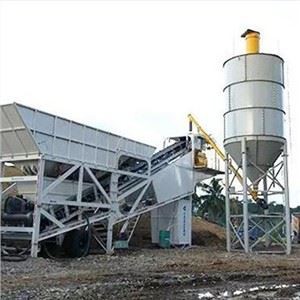
Q: Do you offer rental trials before purchase commitment?
A:
Yes—qualified buyers may access short-term trial programs through regional distributors;
typically structured as three-week deployment inclusive of setup support;
up to half the rental fee applied toward subsequent purchase if placed within one month post-trial completion.
Q: What certifications do these units carry relevant for international deployment?
A:
Compliant with CE marking directives including Machinery Directive (2006/42/EC),
EMC Directive (EMC/REACH),
and EN ISO standards applicable for industrial mixers;
also meets ANSI/SIA A92 guidelines where applicable;
additional country-specific approvals available upon request including CCCB certification pathways into Canada markets.
 INQUIRE NOW
 WHATSAPP