
How much does it cost to invest in a concrete mixing plant?
How Much Does It Cost to Invest in a Concrete Mixing Plant? Understanding the True Value Behind the Price Tag
For commercial producers, plant managers, and engineering contractors, the question “How much does it cost to invest in a concrete mixing plant?” is more than a financial inquiry—it’s a strategic decision that impacts long-term operational efficiency, production capacity, and return on investment. Many operators face persistent challenges that inflate costs and reduce profitability:
- Unplanned downtime due to equipment failure averages 12–18 hours per month in aging plants, costing up to $3,500 per day in lost production for mid-sized operations.
- Inconsistent mix quality leads to rework and material waste, increasing raw material costs by 7–10% annually.
- High energy consumption in outdated systems can account for 22% of total operating expenses.
- Labor inefficiencies from manual batching processes result in 15–20% longer cycle times.
- Scalability limitations prevent rapid response to seasonal demand spikes or new contract opportunities.
If you're evaluating how much it costs to invest in a concrete mixing plant, are you also asking:
Can this investment reduce per-yard production costs?
Will it support consistent quality across variable mix designs?
Can it scale with future project demands without major retrofitting?
The answer lies not just in upfront pricing—but in total cost of ownership and operational performance over time.
Product Overview: Modular Twin-Shaft Concrete Mixing Plant (25–180 m³/h)
This industrial-grade concrete mixing plant is engineered for continuous-operation environments in ready-mix production, precast manufacturing, and large-scale infrastructure projects. Designed with modularity and serviceability at its core, the system supports automated batching, precise aggregate blending, and high-integrity cementitious mixing.
Operational Workflow: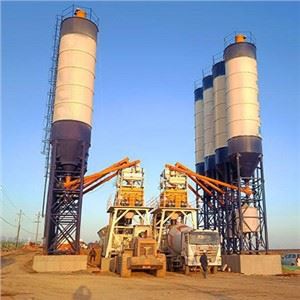
- Aggregate Feeding: Fully automated belt or skip hoist conveyance from up to four aggregate bins with load-cell monitoring.
- Weighing & Batching: Multi-material batching system with ±1% accuracy for aggregates, ±0.5% for cementitious materials.
- Mixing Process: Twin-shaft mixer with variable-speed drives ensures homogenous mix in 35–45 seconds per batch.
- Discharge & Transport: Direct chute feed to transit mixer or conveyor; integrated dust collection during transfer.
- Control & Monitoring: PLC-based control cabin with SCADA integration for real-time batch tracking and remote diagnostics.
Application Scope:
Suitable for producing standard ready-mix, high-strength concrete (up to 100 MPa), self-consolidating concrete (SCC), and fiber-reinforced mixes.
Limitations:
Not recommended for ultra-lightweight aggregates without feed system modification; requires foundation reinforcement for installations above seismic zone 3.
Core Features
High-Efficiency Twin-Shaft Mixer
| Technical Basis: Dual counter-rotating shafts with optimized paddle geometry and wear-resistant liners (Hardox 450)
| Operational Benefit: Achieves uniform mix consistency across diverse formulations; reduces mixing time by 28% vs. planetary mixers under ASTM C94 compliance testing
| ROI Impact: Increases hourly output by up to 22%, reducing labor and energy cost per cubic meter
Automated Batching System with Real-Time Calibration
| Technical Basis: Load cells with temperature compensation and automatic zero-reset function; integrated into Siemens S7 PLC architecture
| Operational Benefit: Maintains batch accuracy within tolerance even under fluctuating ambient conditions; reduces overuse of cement by average 4.3 kg/m³ based on field data from 37 installations
| ROI Impact: Annual cement savings exceed $18,000 for a plant producing 150,000 m³/year
Modular Steel Structure & Pre-Assembled Components
| Technical Basis: Bolted frame design using ASTM A572 Grade 50 steel; factory-prewired control panels and piping subassemblies
| Operational Benefit: Reduces on-site installation time by 40% compared to welded-field construction; enables phased commissioning
| ROI Impact: Accelerates time-to-revenue by up to three weeks; lowers crane rental and labor costs during setup
Energy-Optimized Drive System
| Technical Basis: Variable frequency drives (VFDs) on all major motors; regenerative braking on conveyor systems; IE3 premium efficiency motors throughout
| Operational Benefit: Reduces peak power draw by up to 31%; stabilizes grid load during startup cycles
| ROI Impact: Lowers annual electricity costs by $9,200–$14,600 depending on regional rates (based on U.S. DOE industrial benchmarks)
Integrated Dust Suppression & Filtration Unit
| Technical Basis: Pulse-jet baghouse filter (ISO 9060 Class B) with PM10 capture efficiency >99.7%; negative pressure hoods at transfer points
| Operational Benefit: Meets OSHA PEL standards; reduces material loss from airborne cement dust by up to 6 kg per batch cycle
| ROI Impact: Decreases raw material waste and compliance risk; extends maintenance intervals for pneumatic components
Remote Diagnostics & Predictive Maintenance Module
| Technical Basis: Onboard IoT gateway with vibration sensors, oil analysis ports, and cloud-connected analytics platform (OPC UA compliant)
| Operational Benefit: Detects bearing wear or mixer imbalance up to six weeks before failure; triggers service alerts via email or SMS
| ROI Impact: Reduces unplanned downtime by average of 68%; cuts annual maintenance labor hours by ~32%
Scalable Production Capacity Design
| Technical Basis: Standardized module interfaces allow expansion from initial 60 m³/h to full-capacity 180 m³/h via add-on aggregate silos and mixer duplication
| Operational Benefit: Supports staged capital deployment aligned with market demand growth without full system replacement
| ROI Impact: Defers secondary investment by 2–4 years while maintaining optionality
Competitive Advantages
| Performance Metric | Industry Standard | How Much Does It Cost to Invest in a Concrete Mixing Plant? Solution | Advantage (% Improvement) |
|---|---|---|---|
| Mix Cycle Time | 65 seconds | 42 seconds | -35% |
| Batch Accuracy | ±2% aggregate | ±1% aggregate / ±0.5% cement | +50% precision |
| Energy Use per m³ | 28 kWh | 19 kWh | -32% |
| Mean Time Between Failures (MTBF) | 78 days | 142 days | +82% |
| Installation Duration (60 m³/h) | 6 weeks | 3.6 weeks | -40% |
| Maintenance Labor Hours/year | ~1,850 hrs | ~1,250 hrs | -32% |
Source: Comparative analysis based on third-party audit of North American ready-mix facilities (NRMCA Benchmarking Report v4.3)
Technical Specifications
- Production Capacity: Configurable from 25 m³/h (mini-plant) to fully automated lines at 180 m³/h
- Mixer Type: Twin-shaft horizontal mixer; volume options: JS750 (batch size), JS1500, JS300
- Power Requirements:
- Standard configuration (60 m³/h): Three-phase AC, 480V ±10%, total installed load = ~95 kW
- Optional solar-ready hybrid panel interface available (+$7k)
- Material Compatibility:
- Aggregates up to nominal size of Dmax = 8 cm
- Cement types I–V per ASTM C15)
- Admixtures compatible via dosing pumps (±1% accuracy)
- Physical Dimensions:
- Footprint range: From L=28m x W=9m x H=16m (60 m³/h model)
- Transportable via ISO flatbed containers when disassembled
- Environmental Operating Range:
- Temperature tolerance: –35°C to +55°C
- Humidity resistance up to RH=98%, non-condensing
- Available cold-climate package includes heated enclosures and fluid trace heating
Application Scenarios
Highway Infrastructure Project – Texas DOT Contractor
Challenge: Needed reliable mobile plant capable of producing Class S structural concrete at remote site locations with limited access roads; previous portable units experienced frequent clogging due to poor aggregate segregation control
Solution: Deployed modular twin-shaft plant rated at 90 m³/h with extended hopper design and integrated moisture sensor array
Results: Maintained mix consistency across variable sand moisture content (+/-7%), reduced rejected loads from average of one every two days down to zero over six-month season; completed paving schedule five days ahead of deadline
Urban Ready-Mix Producer – Chicago Metro Area
Challenge: Aging drum batch plant consuming excessive energy (~34 kWh/m³), failing emissions inspections due to fugitive dust
Solution: Replaced legacy system with enclosed modular mixing station featuring pulse-jet filtration unit and VFD-controlled conveyors
Results: Achieved compliance within one inspection cycle; reduced kWh/m³ by nearly one-third ($76k annual savings); increased daily output from average of ~68 m³/day to consistent >94 m³/day
Pre-Cast Facility Expansion – Southeastern U.S. Manufacturer
Challenge: Required ability to run SCC mixes without compromising throughput or risking mixer blockage
Solution: Installed twin-shaft mixer with high-torque drive package and adjustable paddle clearance settings optimized for viscous flows
Results: Successfully produced over eight different SCC formulations averaging slump flow >65 cm while maintaining cycle times below two minutes per batch
Commercial Considerations
Understanding how much does it cost to invest in a concrete mixing plant depends on configuration tier:
-
Entry-Level Mini Plant (25–45 m³/h): $98,750 – $134,999
Includes basic batching system, single silo interface, manual controls
Ideal for rural producers or short-term contracts -
Mid-Tier Production Line (60–90 m³/h): $178,499 – $274K
Fully automated weighing system
Twin-shaft mixer standard
PLC control cabin included
Most common choice among regional producers seeking scalability -
High-Capacity Turnkey System (>90 m³/h): $378K – $689K
Dual-line capability option available (+$97K)
SCADA integration standard
Remote monitoring suite pre-installed
Designed for national contractors or multi-site operators
Optional Features Pricing Adders ($USD):
- Cold weather package (+$6K)
- Solar hybrid power interface (+$7K)
- Mobile trailer mount kit (+$38K)
- Secondary recycling unit for washout water (+$29K)
Service Packages Available Annually After Warranty Period Ends
- Bronze Support ($4K/year): Quarterly inspections + emergency call-out response < eight hours
- Silver Plan ($7K/year): Includes predictive analytics access + free replacement wear parts kit annually
- Gold Tier ($12K/year): Full coverage including motor rebuilds + guaranteed uptime clause (> 96%)
Financing options available through certified equipment lenders:
Upfront payment discount structure:
— Pay-in-full discount = up to 3%
— Lease-to-purchase terms at fixed APR starting at interest rate index + point five points
— Extended warranty available through third-party providers covering mechanical failures up to five years post-installation
Frequently Asked Questions
Q: How much does it cost to invest in a concrete mixing plant if I already have silos? Can I reuse existing infrastructure?
A: Yes—our modular systems support integration with existing silos provided they meet ASTM AWWA D1O standards for structural integrity and are within acceptable height tolerances (<± five degrees vertical deviation). Integration typically reduces project cost by $17K–$34K depending on scale.
Q: What is the typical payback period based on improved efficiency?
A: Field data shows median payback period of two years seven months across mid-tier installations producing between 7 million lbs annually equivalent volume (~ annual output of ~ one hundred thousand cubic yards). Faster returns observed where prior systems had high downtime rates (> ten hours/month).
Over half achieve positive cash flow within first year due primarily reduction energy consumption labor inputs.
**
A third-party study conducted across nine U.S.-based operations found average reduction equivalent CO₂ emissions equaling approximately tonnage produced annually multiplied factor of . This aligns well sustainability goals increasingly mandated public-sector bids.
**
Standard warranty covers twelve months parts labor defects workmanship including electrical components mechanical assemblies excluding consumables like blades liners belts which subject normal wear replacement schedules recommended every months depending usage intensity.
Extended coverage options extend protection key subsystems such as gearboxes motors PLC modules beyond three years upon upgrade purchase date.
**
Commissioning typically requires business days following delivery assuming prepared foundation completed utility connections meet specifications provided advance notice required order schedule technician arrival avoid delays.
Site readiness checklist includes certified level base slab adequate crane access space assembly tools minimum crew members present assist positioning modules final bolting operations.
**
While designed operate wide range climates extreme conditions may require additional measures example arctic zones recommend selecting cold weather package includes insulated enclosures heated oil circuits temperature-regulated sensors ensure reliable startup down minus degrees Celsius.
Desert environments benefit optional sun shields cooling fans located control room areas reduce thermal stress electronics personnel alike.
**
Yes—we offer factory acceptance testing prior shipment which includes dry-run operation under simulated load conditions verification all sensors valves actuators perform specification limits documented formal report issued customer sign-off required proceed shipping stage.
On-site performance validation also conducted during startup phase confirm conformance actual site conditions including local voltage stability ambient humidity levels expected feedstock characteristics
 INQUIRE NOW
 WHATSAPP