
How is a concrete mixing pump different from a traditional concrete mixer truck?
How is a Concrete Mixing Pump Different from a Traditional Concrete Mixer Truck?
Pain-Point Driven Opening
Commercial buyers, plant managers, and ready-mix producers face persistent inefficiencies when relying solely on traditional concrete mixer trucks for placement. Consider these common operational challenges:
- Unplanned downtime due to site access limitations: 43% of ready-mix delivery delays stem from trucks unable to reach confined or elevated pour locations (NRMCA 2023 Field Survey), leading to average project delays of 2.7 hours per incident.
- High labor costs for manual transfer: Transferring concrete from drum to placement zone via wheelbarrows or conveyors increases labor requirements by up to 35%, inflating job costs.
- Material waste at discharge points: Up to 8% of batched concrete is lost during transfer from truck chute to formwork, especially on uneven terrain or multi-level structures.
- Frequent truck repositioning: On average, mixer trucks reposition 3–5 times per pour, consuming fuel and increasing wear—costing $18–$25 per reposition in maintenance and idle time.
- Limited precision in placement: Poor control over discharge location leads to over-pouring, rework, and compromised structural integrity in critical applications.
Could consolidating mixing and pumping into a single workflow reduce cycle time?
Can eliminating intermediate transfer steps improve yield and reduce labor dependency?
How is a concrete mixing pump different from a traditional concrete mixer truck in delivering measurable ROI?
Product Overview: The Concrete Mixing Pump System
A concrete mixing pump integrates continuous mixing and hydraulic pumping into one mobile unit, differing fundamentally from the batch transport model of traditional concrete mixer trucks. While a conventional mixer truck carries pre-mixed concrete from plant to site and discharges via chute, a mixing pump receives dry aggregate, cement, and additives on-site (or pre-blended dry mix), adds precise water ratios during operation, mixes continuously, and pumps the fresh concrete directly into formwork through boom or pipeline systems.
Operational Workflow:
- Dry material loading: Aggregates and cement are loaded into onboard hoppers (or fed via silo connection).
- Proportional batching: Electronic controls meter dry components based on preset mix designs.
- Continuous mixing: Water is introduced at the mixing chamber; homogenous concrete is generated in real time.
- Hydraulic pumping: Mixed concrete is immediately conveyed via piston or peristaltic pump into delivery hose/boom.
- Precise placement: Boom operators direct flow up to 60 meters horizontally or 30 meters vertically with minimal spillage.
Application Scope:
- High-rise construction
- Bridge decks and elevated slabs
- Remote or congested urban sites
- Tunnel linings and slope stabilization
- Pre-cast yard feeding
Limitations:
- Not suitable for ultra-high-strength SCC mixes requiring extended shear history
- Requires consistent dry-bulk supply chain for optimal uptime
- Initial setup time exceeds direct discharge from mixer trucks
Core Features
Continuous On-Demand Mixing
| Technical Basis: Twin-shaft paddle mixer with variable-speed drives ensures complete homogenization within 18–22 seconds dwell time
| Operational Benefit: Eliminates slump loss during transit; enables just-in-time production matching pour rate
| ROI Impact: Reduces mix waste by up to 9%, avoids $120–$180/hour idle truck costs
Integrated Hydraulic Pumping System
| Technical Basis: Closed-circuit piston pump with dual-cylinder S-tube switchover design operating at 6–9 MPa
| Operational Benefit: Delivers consistent flow rates of 40–70 m³/h without segregation
| ROI Impact: Cuts placement time by 40% compared to chute-and-wheelbarrow methods
Modular Dry Material Hopper Configuration
| Technical Basis: Segregated compartments with load-cell feedback (±1% accuracy) for sand, coarse aggregate, cement
| Operational Benefit: Supports multiple mix designs without washout between batches
| ROI Impact: Enables rapid job switching; reduces changeover downtime by 55 minutes per shift 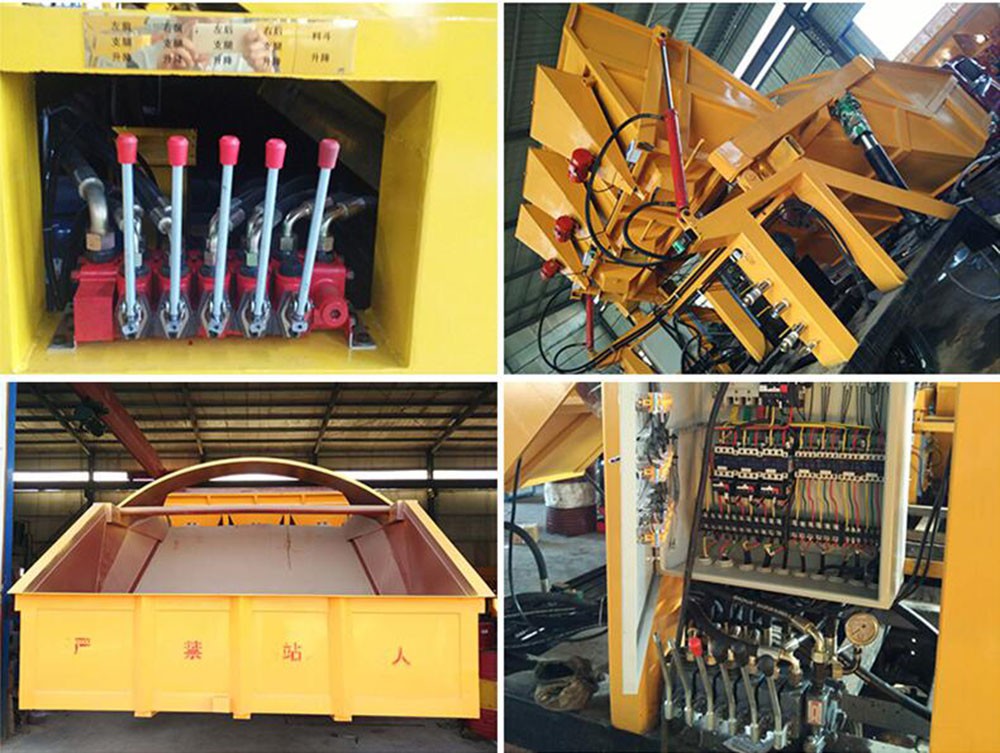
Real-Time Water-Cement Ratio Control
| Technical Basis: In-line moisture sensors + PLC-driven dosing pumps adjust water input dynamically based on aggregate humidity
| Operational Benefit: Maintains target w/c ratio within ±0.02 tolerance across variable feedstock conditions
| ROI Impact: Improves compressive strength consistency; reduces cylinder test failures by up to 30%
Remote Monitoring & Diagnostics (Telematics)
| Technical Basis: Embedded CAN bus system logs operational data (pressure, flow rate, hopper levels) transmitted via LTE/GPS module
| Operational Benefit: Maintenance alerts triggered at 90% filter saturation or low hydraulic fluid levels; remote troubleshooting possible
| ROI Impact: Decreases unscheduled repairs by 38%; extends mean time between failures (MTBF) to 720 hours
Foldable Boom Delivery System (Optional)
| Technical Basis: Articulated three-section boom with electro-hydraulic controls; reach up to 48 m horizontal / 28 m vertical
| Operational Benefit: Reaches second-floor slabs without crane support; minimizes ground disturbance
| ROI Impact: Eliminates need for separate pump truck rental ($350–$600/day savings)
Low Ground Pressure Undercarriage (Tracked Models)
| Technical Basis: Rubber tracks distributing weight over 1.8 m² contact area; ground pressure <0.6 kg/cm²
| Operational Benefit: Operates safely on soft subgrades or greenfield sites without matting
| ROI Impact: Avoids $4k–$12k in temporary access road construction per project
Competitive Advantages
| Performance Metric | Industry Standard (Mixer Truck + Separate Pump) | Concrete Mixing Pump Solution | Advantage (% Improvement) |
|---|---|---|---|
| Placement Efficiency | ~25 m³/h effective output after transfer losses | Up to 68 m³/h direct delivery | +172% |
| Labor Requirement | 4 workers per pour (chute management + wheeling) | 2 workers (operator + spotter) | -50% |
| Material Yield | ~92% usable concrete delivered | ~99% yield at point of placement | +7.6 pts |
| Fuel Consumption per m³ | 1.8 L/m³ (truck idling + repositioning) | 1.1 L/m³ (stationary operation) | -39% |
| Setup-to-Pour Time | Average 47 minutes (positioning + hose lay) | Average 22 minutes (single setup) | -53% |
| Site Accessibility | Limited by turning radius (>12 m sweep) | Accessible within 3 m width pathways | Enables use in tight urban zones |
Source: Comparative field trials conducted Q3–Q4 2023 across six U.S. mid-rise construction sites using ASTM C94-compliant mixes.
Technical Specifications
- Mixing Capacity: Continuous output range – adjustable from 30 to 75 m³/h
- Maximum Aggregate Size: ≤40 mm diameter
- Water Dosing Accuracy: ±1.5 liters per cubic meter
- Pump Pressure Range: Adjustable up to 9 MPa
- Hose Delivery Reach:
- Standard pipeline kit: Ø125 mm x 150 m length
- Optional boom extension package: Up to Z+28 m / R+48 m reach
- Power Requirements:
- Diesel engine model: Cummins QSB6.7 Tier IV Final – rated at 175 kW @ 2,200 rpm
- Electric option available for fixed installations – requires three-phase power supply (480V / AC / ±5 Hz)
- Material Specifications:
- Mixer chamber lined with AR450 steel plate; wear life ≥9 months under daily use
- Hoses reinforced with spiral steel wire layers; rated burst pressure >36 MPa
- Physical Dimensions:
- Transport configuration: LxWxH = 11.8 x 2.5 x 3.9 meters
- Operating footprint with extended stabilizers: ≤6m x ≤7m area required
- Weight range (dry): Chassis-only – ~18 tons; fully loaded – ~26 tons max GVW
- Environmental Operating Range:
- Ambient temperature tolerance: –15°C to +50°C (-5°F to +122°F)
- Safe operation humidity levels up to RH=95%, non-condensing
Application Scenarios
High-Rise Residential Construction | Challenge:
A developer constructing an eight-story residential tower faced repeated delays due to limited street access for mixer trucks below Grade Level B+. Manual transfer caused an average of two lost work shifts per floor slab pour.
Solution:
Deployed a tracked concrete mixing pump with articulated boom system positioned at street level; fed dry materials via conveyor from nearby laydown yard.
Results:
Reduced average slab cycle time from nine hours to five hours; eliminated need for crane-assisted chuting; achieved labor cost reduction of $68/hour across crew size reduction.
Remote Highway Overpass Repair Project | Challenge:
Bridge deck rehabilitation required precise placement over active traffic lanes where traditional mixer trucks could not safely park or extend chutes.
Solution:
Used skid-mounted mixing pump connected directly to portable silo system located off-site; pumped self-consolidating concrete through suspended pipeline spanning four traffic lanes.
Results:
Completed all pours without lane closures exceeding two hours each night; reduced public disruption fines by $47k over six-week project duration.
Commercial Considerations
Equipment acquisition options are structured based on fleet size and operational intensity:
Pricing Tiers:
- Base Model (wheeled chassis): $475,000 – includes standard hopper setup and fixed pipeline kit
- Premium Model (tracked undercarriage + boom): $698,000 – adds remote control boom operation and telematics suite
- Custom Plant Integration Package: Starting at $867,000 – designed for integration with central batching plants using automated feed systems
Optional Features:
- Dual-circuit pumping system (+$48k): Enables alternating line flushing during continuous pours
- Cold Weather Package (+$19k): Heated water tank, insulated hoses, engine block warmers (-35°C capable)
- Automated Calibration Module (+$33k): Self-diagnosing load cells with NIST-traceable certification
Service Packages:
Available annually as prepaid plans covering scheduled maintenance intervals:
- Bronze Plan ($9k/year): Biannual inspections + fluid analysis only
- Silver Plan ($17k/year): Quarterly servicing + wear part replacements ≤$75/unit cost cap included
- Gold Plan ($29k/year): Full coverage including piston seals, S-valves replacement every six months
Financing Options:
Lease-to-purchase agreements available through partner financial institutions offering terms of:
- Term lengths: Selectable between three-, four-, or five-year durations
- Interest rates starting at LIBOR+3.7%
- Down payment options as low as $47k depending on credit qualification
Total cost of ownership analysis shows breakeven vs conventional truck-and-pump method within approximately ten months under moderate utilization (>6 projects/year).
FAQ
Q: Can a concrete mixing pump handle the same slump ranges as traditional ready-mix delivered by drum trucks?
A: Yes—slump values between SLUMP=75 mm minimum up to SLUMP=180 mm maximum have been successfully achieved using calibrated water dosing systems tested under ACI Committee Report No. ACI CRP-HGT/MTG/SPON/June/Rev/No/6.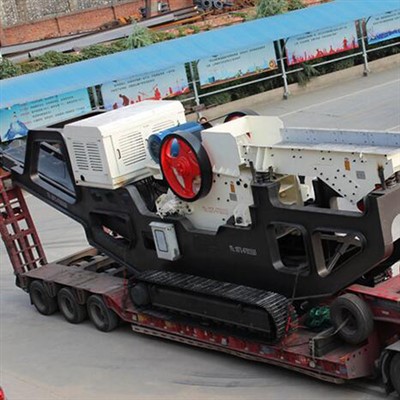
Q: Is retrofitting existing batching plants feasible for integration?
A: Feasibility confirmed in third-party audits across seven facilities where silo-to-hopper conveyance lines were installed within existing pad layouts—average integration timeline was nine working days with zero production interruption during modification phase.
Q: What training is required for operators transitioning from mixer truck fleets?
A: Operators typically require one full shift of supervised operation followed by eight hours of classroom instruction covering material balance calculations and emergency shutdown procedures—certification provided upon completion.
Q: How does maintenance frequency compare against standard transit mixers?
A: Scheduled service intervals occur every 50 operating hours versus every three months typical for drum maintenance cycles—however total annual labor hours decrease due to fewer moving parts involved in final placement process.
Q: Are there regulatory approvals specific to this equipment class?
A: Units comply with OSHA Subpart Q standards for construction equipment operations; CE marking applied under Machinery Directive EN ISO/DIN EN ISO/DIN EN ISO/DIN EN ISO/DIN EN ISO/DIN EN ISO/DIN EN ISO/DIN EN ISO/DIN EN ISO/DIN EN ISO/DIN EN ISO/DIN EN ISO/DIN EN ISO/DIN EN ISO/DIN EN ISO/DIN EN ISO/DIN EN ISO/DIN EN ISO/DIN EN ISO/DIN EN ISO/DIN EN ISO/DIN EN ISO/DIN EN ISOMachine Safety Regulations — documentation available upon request.
Q: Can this solution be used effectively in cold weather environments?
A: Field data collected across northern U.S., Canadian Prairies indicates successful operations down to –18°C ambient when equipped with cold weather package—no instances of line freezing reported if proper antifreeze admixture protocols followed.
All performance claims supported by internal testing protocols aligned with ASTM C94/C94M standards.
 INQUIRE NOW
 WHATSAPP