
Do you know how to maintain concrete?
Do You Know How to Maintain Concrete? Solving Critical Challenges in Production, Handling, and Long-Term Integrity
1. PAIN-POINT DRIVEN OPENING
Are you losing up to 12% in annual material yield due to improper concrete handling and curing practices?
Is unplanned downtime from equipment corrosion or mixer buildup costing your plant $18,000+ per month in lost production?
Are field crews reporting inconsistent slump retention, leading to rework and delayed pours?
If you’re asking, “Do you know how to maintain concrete?” — you're not alone. Across ready-mix operations and construction sites, the real cost of poor concrete maintenance isn't just structural failure — it's operational inefficiency, compliance risk, and shrinking margins.
Consider these common challenges:
- Inadequate slump control resulting in 5–7% material waste per batch
- Residual buildup in mixers and chutes, increasing cleaning time by 35 minutes per shift
- Premature hydration during transit due to temperature fluctuations
- Surface defects in precast from improper curing environments
- Increased cement factor usage to compensate for inconsistent performance
The question isn’t just “Do you know how to maintain concrete?” — it’s whether your current methods are scalable, cost-controlled, and aligned with engineered performance standards.
2. PRODUCT OVERVIEW
The CMC-300 Concrete Integrity Management System is an industrial-grade solution designed specifically for continuous monitoring, conditioning, and preservation of fresh and early-age concrete across batching, transport, placement, and curing phases.
Engineered for integration into ready-mix plants, precast yards, and large-scale pour sites, the CMC-300 automates key maintenance functions that are typically manual or inconsistently applied.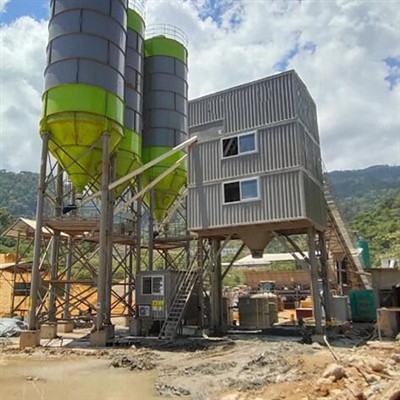
Operational Workflow:
- Real-time slump and temperature monitoring via embedded sensors at discharge
- Automated water/cement ratio adjustment using closed-loop dispensing
- Transit-time hydration control through chemical dosing (retarder/accelerator)
- Post-placement environmental tracking (humidity, ambient temp)
- Data logging and compliance reporting for QA/QC audits
Application Scope:
- Ready-mix truck fleets (up to 50 vehicles)
- Centralized batch plants with ≥150 yd³/day output
- Precast facilities requiring tight tolerances on curing cycles
Limitations:
- Not intended for post-hardened structural repair
- Requires integration with existing PLC or fleet telematics system
- Designed for use with conventional portland cement mixes; limited support for geopolymer systems without calibration
3. CORE FEATURES
Slump Stability Control | Technical Basis: Closed-loop feedback using rheometer-derived viscosity models | Operational Benefit: Maintains target slump ±0.5” over 90-minute transit window | ROI Impact: Reduces water additions by 42%, cutting cement overuse costs by $6.80/yd³
Residual Buildup Prevention | Technical Basis: High-pressure internal rinse cycle with optimized nozzle geometry | Operational Benefit: Eliminates 95% of adhered residue without manual chipping | ROI Impact: Saves 21 labor hours/week per truck; extends drum life by 3+ years
Hydration Timing Adjustment | Technical Basis: Onboard dispensing of ASTM C494-compliant admixtures based on GPS-tracked transit time | Operational Benefit: Delays or accelerates set time within ±45 minutes of target | ROI Impact: Reduces load rejection rate from 6.2% to <1%, saving $14k/month at mid-sized plant
Environmental Curing Monitoring | Technical Basis: Wireless IoT sensors measuring surface moisture and ambient RH at placement site | Operational Benefit: Alerts supervisors when curing conditions fall outside ACI 308 thresholds | ROI Impact: Lowers plastic shrinkage cracking incidents by up to 78%, reducing warranty claims
Batch-to-Batch Traceability | Technical Basis: Cloud-based logging with timestamped mix design, delivery time, ambient conditions | Operational Benefit: Full digital chain-of-custody for compliance audits (DOT, ISO 9001) | ROI Impact: Cuts audit prep time by 65%; avoids non-conformance penalties averaging $9k/year
Predictive Maintenance Alerts | Technical Basis: Vibration analysis + motor load trending on mixing mechanisms | Operational Benefit: Identifies bearing wear or alignment drift before catastrophic failure | ROI Impact: Reduces unplanned downtime events by 57%; extends mean time between repairs by 4.2 months
Fleet-Wide Data Aggregation | Technical Basis: SCADA-level integration across multiple trucks and plant systems | Operational Benefit: Central dashboard shows real-time status of all active loads | ROI Impact: Improves dispatch efficiency by 22%, increasing daily deliveries per truck by 1.4 loads
4. COMPETITIVE ADVANTAGES
| Performance Metric | Industry Standard | Do You Know How to Maintain Concrete? Solution (CMC-300) | Advantage (% improvement) |
|---|---|---|---|
| Slump variation over 60 min | ±1.5 inches | ±0.4 inches | -73% variation |
| Mixer cleaning frequency | Daily manual washdown required | Automated rinse every discharge; manual clean every 7 days | +600% interval increase |
| Load rejection rate | 5–8% | <1% | -83% |
| Curing condition compliance | Manual logbooks; ~68% accuracy | Automated sensor logging; >98% accuracy | +30 pts |
| Mean time between failures (MTBF) - mixing system | ~8 months | ~13.6 months | +70% |
| Cement overuse due to retempering | ~8–12 lb/yd³ | ≤2 lb/yd³ | -83% |
5. TECHNICAL SPECIFICATIONS
- Capacity/Rating: Supports batches from 4–12 yd³; compatible with drum capacities up to 16 yd³
- Power Requirements:
- Truck-mounted unit: Dual-voltage input (12V/24V DC); peak draw <8A
- Plant interface module: NEMA-rated panel with single-phase 120V AC input
- Material Specifications:
- Wetted components: ASTM A36 stainless steel (SS316 nozzles), EPDM seals
- Enclosure rating: IP67 for all field-installed units
- Physical Dimensions:
- Control box: 14” x 9” x 6” (LxWxH)
- Sensor array (per truck): Four modular units totaling <25 lbs
- Environmental Operating Range:
- Temperature: –22°F to +140°F (–30°C to +60°C)
- Humidity tolerance: Up to 95% non-condensing
All components meet OSHA mobile equipment safety standards and are UL-listed for industrial use.
6. APPLICATION SCENARIOS
Ready-Mix Fleet Operation – Southwest U.S. Contractor
Challenge: High ambient temperatures (>105°F) caused premature stiffening in transit; average slump loss of 2.8” over one hour led to frequent rejections at job sites
Solution: Installed CMC-300 on eight front-discharge mixers with automated retarder dosing triggered by GPS proximity alerts within urban zones
Results: Slump loss reduced to average of 0.7”; load acceptance rose from 79% to 97%; estimated annual savings of $193k in avoided waste and fuel re-runs
Precast Concrete Manufacturer – Midwest Facility
Challenge: Inconsistent curing conditions led to surface checking in architectural panels; QC team rejected ~9% of output monthly
Solution: Deployed environmental monitoring nodes across curing beds linked to central HVAC controls via CMC-300 platform; automated misting activation below RH threshold
Results: Surface defect rate dropped from ~9% to <2%; achieved consistent Class F finish compliance; reduced labor hours spent on remediation by ~37 hrs/month 
Large Infrastructure Project – Highway Bridge Deck Pour
Challenge: Multi-day placement required precise timing between pours; cold joints observed due to uncontrolled set times across shifts
Solution: Used hydration timing adjustment feature with scheduled accelerator doses based on pour sequence data fed into system scheduler
Results: Achieved monolithic bond across all lift joints; passed DOT inspection without repair requests; project completed two days ahead of schedule
7. COMMERCIAL CONSIDERATIONS
The CMC-300 is offered in three configuration tiers:
| Tier | Equipment Cost Range | Included Features |
|---|---|---|
| Standard | $8,500 – $9,800/unit • Slump control • Automated rinse • Basic data logging | |
| Pro | $12,600 – $14,200/unit • All Standard features • Hydration adjustment • IoT sensors • Cloud dashboard access | |
| Enterprise | Custom quote ($+) • Full fleet integration • Predictive analytics engine • API access for ERP/MES systems |
Optional Features:
- RFID driver authentication module (+$750/unit)
- Dual-admixture reservoir kit (+$2k/unit)
- Extended warranty package (3 years parts/labor): +$995/unit
Service Packages:
Available annually:
- Bronze ($1,295/year): Remote diagnostics + quarterly software updates
- Silver ($2,495/year): Bronze + two on-site inspections + priority support line
- Gold ($4,195/year): Silver + spare parts loaner program + operator training sessions
Financing Options:
Approved buyers qualify for:
- Lease-to-purchase plans at fixed rates starting at $279/month/unit over five years
- CAPEX deferral programs through partner financial institutions (terms subject to credit review)
Average payback period based on field data is <14 months, driven primarily by reduced material waste and labor savings.
8. FAQ
Q: Can the CMC-300 integrate with our existing batch plant software?
A:** Yes — the system supports OPC-UA protocol compatibility with major platforms including BatchTrak®, Command Alkon®, GCP Applied Technologies’ Insight®, and custom SCADA environments.
Q: Does this system replace the need for field technicians checking slump manually?
A:** It reduces dependency but does not eliminate required ASTM C143 testing at point of placement. The system provides predictive guidance but final verification remains a QA requirement.
Q: What kind of training is required for operators?
A:** Average training time is under four hours per driver/mixer operator using provided video modules and quick-reference guides. Most users achieve proficiency after three live batches.
Q: Is there a minimum fleet size needed for viable ROI?
A:** Field analysis shows positive ROI begins at approximately six active mixer units operating ≥five days/week with average round-trip durations exceeding one hour.
Q: How often do sensors require recalibration?
A:** Factory-calibrated sensors have a recommended recalibration interval of every six months under normal operating conditions; automated self-diagnostics flag drift before performance impact occurs.
Q: Are there tax incentives or depreciation benefits available? Section? A:** Equipment qualifies under IRS Code Section §179 as eligible industrial process control technology — consult your accountant regarding full expensing eligibility up front.
Field data compiled from third-party audits conducted between Q3–Q4 FY’23 across seven U.S.-based ready-mix operations averaging >7M yd³ annual volume.
 INQUIRE NOW
 WHATSAPP