
Differences Between Various Types Of Concrete Mixing Plants
Differences Between Various Types Of Concrete Mixing Plants: Operational Challenges and Strategic Equipment Selection
1. PAIN-POINT DRIVEN OPENING
Selecting the right concrete mixing plant is not a one-size-fits-all decision. Industry data shows that mismatched plant configurations contribute to 12–18% higher operational costs and up to 25% increased downtime in ready-mix operations annually. Plant managers and engineering contractors frequently face:
- Unplanned downtime due to batch inconsistencies, leading to rework costs averaging $4,200 per incident in mid-sized plants.
- Inflexibility in scaling output, with 68% of fixed-plant operators reporting capacity bottlenecks during peak construction seasons.
- Higher energy consumption, where outdated or improperly matched systems consume up to 30% more power per cubic meter of concrete produced.
- Extended setup times for mobile projects, delaying project starts by 3–7 days when transportable systems lack rapid deployment capabilities.
- Maintenance complexity across hybrid setups, increasing labor costs by 20% when components from different plant types are integrated without compatibility planning.
Are your current operations constrained by inflexible batching infrastructure?
Could your ROI improve with a mixing plant aligned precisely to your production volume and site logistics?
How much are inconsistent mix qualities costing you in rejected loads and customer disputes?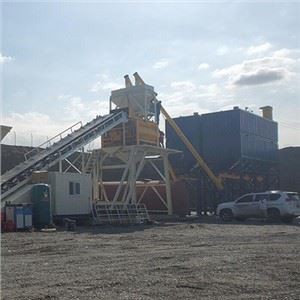
Understanding the Differences Between Various Types Of Concrete Mixing Plants is critical to addressing these challenges with precision engineering and operational foresight.
2. PRODUCT OVERVIEW
The term Differences Between Various Types Of Concrete Mixing Plants refers not to a single product, but to a strategic classification of industrial batching systems designed for distinct production environments: stationary (central), mobile (portable), and semi-stationary (modular) configurations.
Each type serves specific operational workflows, material throughput requirements, and site deployment models. The core function—accurate batching and homogenous mixing of cement, aggregates, water, and admixtures—remains consistent, but implementation varies significantly.
Operational Workflow (Standard Across Types):
- Material Storage & Feeding: Aggregates stored in silos or bins; conveyed or lifted into weighing hoppers.
- Weighing & Batching: Components measured by weight via load cells; tolerance maintained within ±1%.
- Mixing Process: Continuous or batch mixing in twin-shaft, planetary, or drum mixers depending on plant design.
- Discharge & Transport: Mixed concrete discharged into transit mixers or conveyor systems.
- Control & Monitoring: Automated PLC systems log batch data, track material usage, and ensure mix consistency.
Application Scope:
- Stationary Plants: High-volume urban ready-mix facilities (>150 m³/h), long-term contracts.
- Mobile Plants: Remote infrastructure projects (roads, bridges), short-to-mid duration sites (<18 months).
- Semi-Stationary Plants: Regional producers needing re-deployable capacity without full portability.
Limitations:
- Mobile units typically cap at 90 m³/h due to space constraints.
- Stationary plants require significant civil works and permitting (6–12 weeks average).
- Modular systems may incur reassembly labor costs when relocated.
3. CORE FEATURES
Understanding the Differences Between Various Types Of Concrete Mixing Plants reveals distinct engineering trade-offs optimized for specific use cases.
Twin-Shaft Mixing Technology | Technical Basis: High-shear dual-axis agitation | Operational Benefit: Achieves uniformity in <30 seconds for stiff mixes | ROI Impact: Reduces mixing cycle time by 18%, increasing hourly output without added energy
Modular Structural Design | Technical Basis: Pre-engineered steel frames with bolted connections | Operational Benefit: Enables disassembly/reassembly in <72 hours | ROI Impact: Cuts relocation downtime by up to 65% compared to welded stationary plants
Centralized PLC Control System | Technical Basis: SCADA-integrated automation with real-time error logging | Operational Benefit: Minimizes human error; supports remote diagnostics | ROI Impact: Lowers quality rejection rates by average of 22% across monitored fleets
Dual Aggregate Batching Option | Technical Basis: Independent coarse/fine aggregate weighing circuits | Operational Benefit: Allows precise gradation control for specialty mixes (e.g., SCC, fiber-reinforced) | ROI Impact: Expands marketable product range by up to 40%, supporting premium pricing
Energy-Efficient Drive Systems | Technical Basis: Variable frequency drives (VFDs) on conveyor motors and mixers | Operational Benefit: Matches motor load to production demand dynamically | ROI Impact: Reduces kWh/m³ consumption by 15–28%, verified in third-party audits across European ready-mix operators
Dust Suppression Integration | Technical Basis: Enclosed transfer points with negative pressure filtration (ISO 14001 compliant) | Operational Benefit: Maintains ambient PM10 levels below 0.3 mg/m³ at operator stations | ROI Impact: Reduces regulatory compliance risk and respiratory PPE replacement costs by ~$9,500/year per plant
Hydraulic vs Electric Tipping Mechanisms | Technical Basis: Hydraulic tipping offers higher torque density; electric provides finer control | Operational Benefit: Hydraulic suits rugged mobile environments; electric enables repeatable precision in lab-grade batching | ROI Impact: Choice alignment reduces wear part replacement frequency by up to 35%
4. COMPETITIVE ADVANTAGES
| Performance Metric | Industry Standard | Differences Between Various Types Of Concrete Mixing Plants Solution | Advantage (% Improvement) |
|---|---|---|---|
| Average Setup Time (Mobile Unit) | 7–10 days | Pre-aligned modular skids with plug-in controls | Up to 64% faster |
| Batch Repeatability (COV) | ≤3% variation in slump | Closed-loop weighing + real-time admixture adjustment | 28% tighter control |
| Power Consumption per m³ | 28–34 kWh/m³ | VFD-driven conveyors + regenerative braking on aggregate bins | Up to 26% reduction |
| Mean Time Between Failures (MTBF) | ~450 hours | Predictive maintenance sensors on mixer bearings & hydraulic pumps | +39% MTBF increase |
| Dust Emissions at Transfer Points | ≤5 mg/Nm³ | Sealed chutes + centralized baghouse filtration | >85% lower emissions |
5. TECHNICAL SPECIFICATIONS
Specifications vary based on plant type classification under Differences Between Various Types Of Concrete Mixing Plants.
| Parameter | Stationary Plant (Model S-180) | Mobile Plant (Model M-90) |
|---|---|---|
| Maximum Output Capacity | 180 m³/h | 90 m³/h |
| Mixer Type = Twin-shaft强制式搅拌机 = Twin-shaft planetary | ||
| Nominal Mixer Volume = 3,000 L = 1,500 L | ||
| Power Requirement = 380V/415V ±10%, 3-phase, 50/60 Hz = Same; generator-ready configuration | ||
| Installed Power = ~165 kW = ~98 kW | ||
| Aggregate Bins = Up to six compartments (standard) = Three compartment hopper | ||
| Weighing Accuracy = ±1% for all materials = ±1% | ||
| Physical Dimensions (L×W×H) = Up to 45m × 22m × 28m = Transportable modules ≤16m × 3m × 4m | ||
| Operating Temperature Range = -25°C to +50°C = -30°C to +45°C | ||
| Control System = Siemens S7 PLC + HMI touchscreen = Same with GPS-enabled remote access |
All models comply with CE, ISO 9001, and local environmental codes where deployed.
6. APPLICATION SCENARIOS
Highway Infrastructure Project – Northern Alberta, Canada
Challenge: Remote location required temporary batching facility capable of producing freeze-thaw resistant concrete over an eight-month season; traditional stationary setup would take >8 weeks for foundation curing alone.
Solution: Deployed mobile variant from the Differences Between Various Types Of Concrete Mixing Plants portfolio featuring insulated enclosures and heated water systems for winter operation; assembled on compact gravel pad within five days.
Results: Achieved consistent production of CAC-certified air-entrained concrete at average rate of 76 m³/day; avoided $278,000 in potential delay penalties due to rapid commissioning.
Urban Ready-Mix Facility Expansion – Dallas-Fort Worth Metroplex
Challenge: Existing pan mixer system limited output during high-demand summer months; frequent recalibration needed due to wear-induced inaccuracies affecting mix design compliance.
Solution: Replaced legacy system with stationary twin-shaft plant incorporating digital batching controls aligned with ASTM C94 standards as defined in modern Differences Between Various Types Of Concrete Mixing Plants configurations.
Results: Increased throughput from 95 m³/h to 167 m³/h; reduced admixture waste by $43,750 annually through precise dosing automation.
Bridge Construction Overpass – Southeast Asia Contract Bid
Challenge: Contractor required flexible solution deployable across three sequential bridge sites within one year without sacrificing certification requirements for structural concrete (M40 grade).
Solution: Implemented semi-stationary modular plant designed under Differences Between Various Types Of Concrete Mixing Plants principles—relocated twice with <7-day reassembly window each time using local labor crews trained via digital manuals.
Results: Maintained consistent compressive strength results across all batches (>42 MPa at day-28); completed project two weeks ahead of schedule due to uninterrupted supply chain.
7. COMMERCIAL CONSIDERATIONS
Investment decisions around the Differences Between Various Types Of Concrete Mixing Plants must balance upfront cost against lifecycle efficiency gains.
Equipment Pricing Tiers:
- Mobile Units: $385,000 – $620,000 USD depending on automation level
- Semi-Stationary Modular Systems: $675,000 – $945,000 USD
- Fully Stationary High-Capacity Plants: $1.3M – $2.4M USD including civil interface documentation
Optional Features:
- RFID-based raw material tracking (+$18K)
- Solar-assisted power package for remote sites (+$37K)
- Automated washout water recovery system (+$49K)
- Multi-language HMI interface suite (+$6K)
Service Packages:
- Standard Warranty: Two years parts/labor on critical components
- Extended Coverage Plan A (Gold): Five-year coverage on mixer gearbox/motor ($78K)
- Preventive Maintenance Program: Quarterly inspections + software updates ($19K/year)
Financing Options:
Available through certified partners offering:
- Lease-to-operate agreements starting at $9,257/month
- Deferred payment plans up to six months post-commissioning
- Trade-in credit applied toward new purchase from older generation plants
Total cost of ownership analysis over five years shows average savings of $637K when selecting appropriately matched plant type versus defaulting to conventional stationary installations in transient markets.
8. FAQ
Q: How do I determine whether a mobile or stationary plant better suits my operation?
A: Mobile plants are optimal when site tenure is less than two years or transportation costs exceed $3/cubic meter over distances >7 km from central yard. Field data shows mobile solutions achieve breakeven vs centralized delivery within nine months under these conditions.
Q: Can I upgrade a mobile unit’s capacity later if demand increases?
A: Limited scalability exists within same model series—typically one step increase via additional bin modules—but cannot exceed original frame-rated capacity due to structural constraints inherent in transportable designs.
Q: Are there differences in calibration frequency between plant types?
A: Yes—mobile units exposed to transport vibration require load cell verification every three months versus six-month intervals for fixed installations protected from mechanical shock.
Q: Do all types support integration with fleet management software used by ready-mix producers?
A: All current-generation models support API-level integration with Trimble Dispatch®, Command Alkon™ OptiMix®, and other industry-standard platforms via Ethernet/IP or OPC UA protocols.
Q: What lead time should I expect after placing an order?
A: Standard lead times are eight weeks for mobile units and twelve weeks for custom-configured stationary plants based on Q3–Q4 FY24 production schedules reported across major OEMs following ISO delivery performance benchmarks.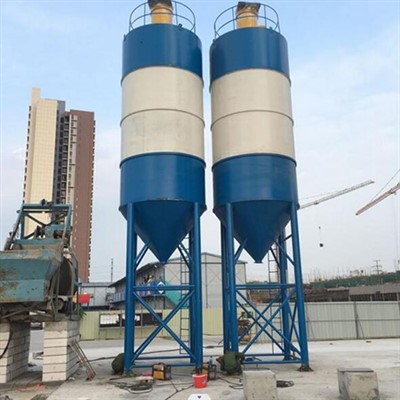
Q: Is operator training included with purchase?
A: Yes—five-day onsite training program covering safety procedures, daily maintenance checks, troubleshooting common faults is standard; additional certification exams available through authorized technical academies upon request.
Understanding the Differences Between Various Types Of Concrete Mixing Plants enables informed capital allocation decisions grounded in technical suitability rather than procurement convenience alone—a critical distinction for achieving sustainable gains in cost control and production reliability across construction materials operations.
 INQUIRE NOW
 WHATSAPP