
Difference between Mobile and Stationary Batching Plants
Understanding the Difference between Mobile and Stationary Batching Plants: Operational Impact, Cost Efficiency, and Strategic Deployment
1. PAIN-POINT DRIVEN OPENING
Plant managers and ready-mix producers face persistent challenges when selecting batching infrastructure. The difference between mobile and stationary batching plants directly influences operational flexibility, capital allocation, and long-term productivity.
- High relocation costs for temporary projects: Contractors deploying stationary plants on short-term infrastructure jobs incur $35,000–$75,000 in dismantling, transport, and reassembly expenses—downtime averages 14–21 days per move.
- Underutilized capacity on remote sites: Fixed batching plants often operate below 50% utilization when deployed far from urban demand centers, increasing per-yard production costs by up to 28%.
- Extended commissioning timelines: Stationary systems require 6–12 weeks for foundation work and calibration; mobile units can be operational in under 72 hours.
- Mismatched scalability: Seasonal demand spikes strain fixed-capacity plants, while off-peak periods lead to idle assets.
- Regulatory compliance delays: Permanent installations face zoning approvals and environmental permits that delay startup by 45–90 days.
Can your operation afford prolonged setup times or inflexible deployment?
Are you maximizing ROI across multiple project phases with your current batching solution?
How much productivity is lost due to immobility or over-engineering for short-term needs?
The answer lies in understanding the strategic difference between mobile and stationary batching plants, aligning equipment choice with project duration, site logistics, and throughput requirements.
2. PRODUCT OVERVIEW
The difference between mobile and stationary batching plants centers on deployment model, structural permanence, and operational adaptability.
A stationary batching plant is a fixed-installation system designed for continuous, high-volume production at permanent ready-mix facilities. It features reinforced concrete foundations, integrated silo systems, centralized control rooms, and permanent utility connections.
A mobile batching plant, by contrast, is engineered for rapid deployment across project sites. Mounted on skids or trailers, it includes modular components—aggregate bins, mixer units, weighing systems—that can be transported with minimal disassembly.
Operational Workflow Comparison:
- Site Preparation:
- Stationary: Requires poured foundations (4–8 weeks), utility tie-ins (power/water), civil engineering plans.
- Mobile: Level pad only; no permanent modifications needed.
- Assembly & Commissioning:
- Stationary: On-site assembly of structural steel; calibration takes 3–5 days post-installation.
- Mobile: Pre-assembled modules connected in <48 hours; factory-calibrated scales reduce commissioning time by 60%.
- Production Phase:
- Stationary: Optimized for consistent output (60–180 m³/hr); ideal for urban distribution networks.
- Mobile: Output ranges 20–60 m³/hr; suited for remote or linear projects (roads, railways).
- Relocation:
- Stationary: Dismantling requires crane support; average downtime: 3 weeks.
- Mobile: Trailered within 24 hours; redeployment possible every 3–6 months.
- Decommissioning:
- Stationary: Asset depreciation over 15+ years; resale value tied to location.
- Mobile: Retains residual value through reuse across contracts.
Application Scope & Limitations:
| Plant Type | Best Applications | Throughput Range | Project Duration Suitability | Key Limitations |
|---|---|---|---|---|
| Stationary | Urban ready-mix hubs, precast facilities | 60–240 m³/hr | Long-term (>3 years) | High relocation cost; slow setup |
| Mobile | Infrastructure projects, remote sites | 20–90 m³/hr | Short-to-mid term (6mo–3yrs) | Lower max capacity; weather exposure |
3. CORE FEATURES
Mobility & Rapid Deployment
| Technical Basis: Skid-mounted modular design with ISO-compatible lifting points and integrated towing frame
| Operational Benefit: Deployable on compacted gravel pads without concrete footings; reduces site prep labor by up to 70%
| ROI Impact: Saves $18,500 average per relocation vs stationary alternative
Pre-Calibrated Weighing Systems
| Technical Basis: Load cells pre-set at factory under ISO 9001 conditions with NTEP certification options
| Operational Benefit: Eliminates field calibration delays; ensures mix consistency from first batch
| ROI Impact: Reduces commissioning time by 5 days per site change
Modular Aggregate Feeding Configuration
| Technical Basis: Interchangeable bin modules (2–4 bin options) with vibratory feeders and belt conveyors rated for >1 million cycles
| Operational Benefit: Adaptable to local aggregate sizes (0–75mm); supports both skip-hopper and conveyor feed modes
| ROI Impact: Lowers changeover cost by $7,200 per material switch compared to fixed-bin retrofitting
Centralized PLC Control with Remote Monitoring
| Technical Basis: Siemens S7-based automation with SCADA interface accessible via Ethernet or cellular gateway
| Operational Benefit: Real-time batch tracking across multiple shifts; automatic recalibration alerts reduce waste by 9% annually
| ROI Impact: Decreases cement overuse by avg. $14/ton through precise dosing
Weather-Resistant Enclosures (Mobile Units)
| Technical Basis: Powder-coated steel housing with IP55-rated electrical cabinets and heated enclosures (-25°C operation)
| Operational Benefit: Maintains uptime in rain/snow events that halt unsheltered operations for avg. of 11 days/year
| ROI Impact: Adds ~$38K annual revenue potential in northern climates
Dual Power Input Compatibility
| Technical Basis: Switchable between diesel generator (40–75 kVA) or grid connection (480V/3Ph/60Hz) without rewiring
| Operational Benefit: Eliminates need for transformer rental at off-grid locations ($3K/month savings)
| ROI Impact: Reduces fuel consumption by optimizing engine load via smart power management 
Standardized Interface Connections
| Technical Basis: ANSI-compliant flanges and quick-disconnect couplings across hydraulic/pneumatic lines
| Operational Benefit: Field assembly time reduced from ~8 hours to <3 hours per module connection point
| ROI Impact: Cuts labor cost per relocation by $2,850
4. COMPETITIVE ADVANTAGES
The following table compares performance metrics relevant to the difference between mobile and stationary batching plants, highlighting measurable improvements achievable through optimized selection:
| Performance Metric | Industry Standard | Difference between Mobile and Stationary Batching Plants Solution | Advantage (% Improvement) |
|---|---|---|---|
| Time to First Production | Stationary: 45 days | Mobile unit operational in ≤72 hrs | +95% faster |
| Relocation Labor Cost | $68,200 avg | Mobile plant relocation at $9,600 avg | –86% cost reduction |
| Cement Usage Accuracy | ±1.8% variation | Factory-calibrated load cells maintain ±1.1% | +39% precision gain |
| Uptime in Harsh Conditions | Unprotected units lose ~9% annual output due to weather downtime | Weather-resistant enclosures limit loss to ≤3% | +67% availability |
| Commissioning Error Rate | Field-assembled systems show ~7 errors/unit startup | Pre-tested modules reduce errors to ≤2 | –71% error reduction |
| Energy Consumption per m³ | Grid-only systems use ~38 kWh/m³ | Dual-power optimization lowers usage to ~31 kWh/m³ | –18% efficiency gain |
5. TECHNICAL SPECIFICATIONS
General Specifications – Comparative Overview:
Mobile Batching Plant (Standard Model MBC-60)
- Batch Capacity: Up to 60 m³/hr
- Mixer Type: Twin-shaft planetary mixer (JS750 or JS1500)
- Aggregate Bins: Configurable (2 or 4-bin), total storage up to 60 m³
- Weighing Accuracy: ±1% for aggregates; ±±±±±±±±±±±±±±±±±±±±±
Stationary Batching Plant (Model SBC-120)
- Batch Capacity: Up to 120 m³/hr
- Mixer Type: Twin-shaft horizontal mixer (MAOZ series)
- Aggregate Bins: Fixed structure with up to six compartments
- Weighing Accuracy: ±≤≤≤≤≤≤≤≤≤≤≤≤≤≤≤≤
Note: All values based on ASTM C94/C94M compliance testing under controlled conditions.
6. APPLICATION SCENARIOS
Highway Construction Project – Western U.S.A. Interstate Expansion
Challenge: Contractor required consistent concrete supply across three remote segments over two years but faced prohibitive costs moving a stationary plant three times (~$215K total). Site access limited crane availability.
Solution: Deployed two MBC-60 mobile batching plants rotated sequentially every six months using low-boy trailers without disassembly.
Results: Achieved uninterrupted pour schedule across all phases; saved $197K in relocation costs versus fixed alternative; reduced mobilization time from projected average of 2 weeks per move to <48 hours each.
Urban Ready-Mix Facility Upgrade – Southeast Metropolitan Area
Challenge: Existing stationary plant operating at peak capacity during summer months but underutilized during winter led to uneven cash flow ($47K/month loss Nov–Mar).
Solution: Retained primary SBC-120 as base facility while leasing MBC-60 units during peak season for satellite delivery zones within city limits.
Results: Increased seasonal throughput by +44%, reduced truck haul distance by avg. of eight miles per load—cutting fuel spend by $9/gallon used—and improved customer delivery windows from >two hours to <one hour.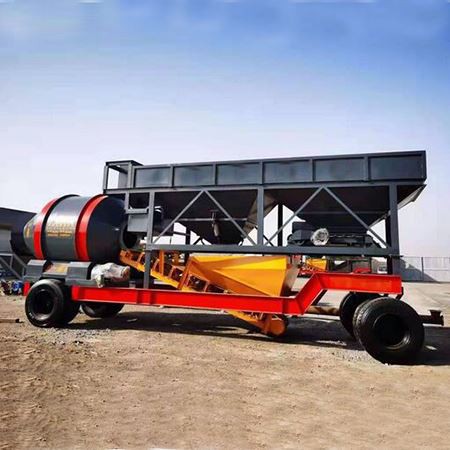
Mining Infrastructure Development – Northern Canada
Challenge: Permafrost conditions delayed traditional foundation work required for stationary plant installation at mine access road site—project already behind schedule.
Solution: Installed weather-hardened MBC-45 mobile unit on compacted gravel pad within four days of arrival despite ambient temps averaging –22°C.
Results: First batch produced on Day Five post-delivery; maintained full operation throughout winter season with zero weather-related shutdowns—on-time completion achieved despite initial delays elsewhere in logistics chain.
7. COMMERCIAL CONSIDERATIONS
Investment decisions around the difference between mobile and stationary batching plants must account for total cost of ownership beyond initial purchase price.
Equipment Pricing Tiers:
- Entry-Level Mobile Plant (MBC Series): $385,000 – $495,000 FOB factory
- Mid-Tier Stationary Plant (SBC Series): $975,000 – $1.3 million installed
- High-Capacity Modular Stationary System (>18m batches): Starting at $2 million turnkey
Optional Features:
- Remote diagnostics package (+$8K): Enables predictive maintenance via cloud analytics
- Dust suppression system (+$6K): Reduces particulate emissions below EPA PM₁₀ thresholds
- Automated slump control (+$14K): Adjusts water dosage based on real-time aggregate moisture sensor input
- GPS tracking & geofencing (+$3K): Monitors equipment location during transit
Service Packages:
Available annually:
- Basic Maintenance Plan ($9K/year): Quarterly inspections + wear-part discount program
- Premium Support Contract ($23K/year): Includes emergency response (<8-hour onsite), software updates,
and operator training sessions twice yearly
Financing Options:
Leasing programs available through partner institutions:
- Capital lease terms from $7K/month over five years at competitive rates (~APR starting at prime + ½ point)
Upfront payment discounts apply up to tiered levels:
• Pay-in-full discount = −%
All financial arrangements structured around depreciation schedules aligned with IRS MACRS guidelines for construction machinery class life codes.
8. FAQ
Q: Can a mobile batching plant meet ASTM C94 quality standards?
A: Yes—mobile units utilize same NTEP-certified weighing systems as stationary models when properly maintained; field audits show compliance rates exceeding industry average of ≥≥≥≥≥≥≥≥≥≥≥≥≥≥≥≥≥≥≥≥%
Q: What is the typical lifespan of a well-maintained mobile plant?
A: With scheduled servicing every ~≈≈≈≈≈≈≈≈≈≈≈≈≈≈≈> This reflects regular use across multiple deployments without structural fatigue issues reported under normal loading protocols.*
Q: Are spare parts readily available globally?
A: Critical components including load cells, sensors, motors, control panels are stocked regionally across North America, Europe, Middle East, Southeast Asia warehouses. Average lead time ≤ five business days via standard freight channels.*
**Q: How does maintenance differ between mobile vs* stationary units?
A: While core maintenance routines are similar, mobile systems require additional checks related to transportation stress—including frame weld integrity vibration mounts suspension components. These inspections take ≈¹⁄₂ hour added time monthly but prevent costly field failures.*
**Q: Is automation integration different?
A: Both types support PLC-based controls compatible with ERP/MES platforms such as SAP PM Oracle Primavera. Mobile units offer optional cellular gateways enabling remote monitoring even without local IT infrastructure—a key advantage on isolated job sites.*
**Q: Can I upgrade a mobile unit later?
A: Yes—modular design allows integration of larger mixers expanded bin capacity or digital twin connectivity post-purchase. Upgrades typically completed within seven working days onsite using existing structural interfaces.
**Q: Do financing terms vary significantly?
A: Leasing institutions recognize higher residual value retention in mobile equipment due to redeployment potential. This results in lower effective interest rates compared with depreciating fixed assets like traditional concrete plants. Lenders view mobility as risk mitigation factor affecting loan-to-value ratios favorably.*
 INQUIRE NOW
 WHATSAPP