
Conveyor system of concrete mixing plant
Conveyor System of Concrete Mixing Plant: Engineered for Efficiency, Built for Reliability
1. PAIN-POINT DRIVEN OPENING
Are you losing up to 12% of daily production capacity due to material transfer bottlenecks in your concrete mixing plant?
Do frequent belt misalignments or motor failures cause unplanned downtime averaging 4–6 hours per month, disrupting delivery schedules?
Is your current conveyor system struggling with aggregate segregation, leading to inconsistent mix quality and rework costs exceeding $8,000 annually?
Are maintenance teams spending 15+ labor hours weekly on cleaning, tensioning, and replacing worn components?
Are rising energy costs tied to inefficient drive systems impacting your per-yard production margin?
If these challenges sound familiar, it’s time to evaluate whether your conveyor system of concrete mixing plant is truly supporting—or hindering—your operational goals.
2. PRODUCT OVERVIEW
The conveyor system of concrete mixing plant is a heavy-duty, inclined belt conveyor assembly designed specifically for the continuous and controlled transport of aggregates (sand, gravel, crushed stone) from batching hoppers or stockpiles into the mixer inlet or intermediate storage bins.
This system operates as a core component within stationary and modular ready-mix facilities, ensuring precise material flow between stages of the batching process. It is not intended for long-distance overland transport or non-abrasive bulk materials outside standard construction aggregates.
Operational Workflow:
- Aggregates are discharged from storage bins into the feeder section.
- Material is loaded onto the rubber belt at the tail pulley via a controlled feed chute.
- The belt transports material upward along a 15°–22° incline supported by impact and carrying idlers.
- Material discharges at the head pulley into the weighing hopper or mixer inlet.
- Automatic tensioning and cleaning systems maintain performance between cycles.
Designed for integration with PLC-controlled batching systems, this conveyor supports batch capacities from 60 to 180 m³/hour depending on configuration.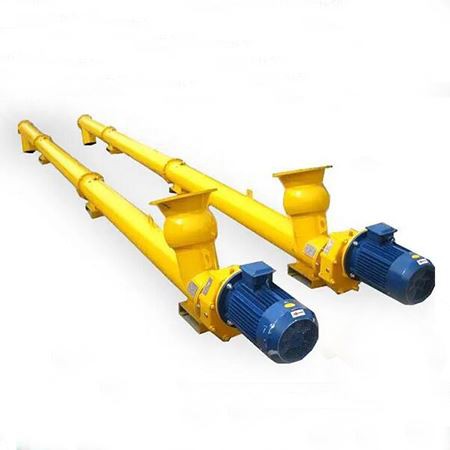
3. CORE FEATURES
-
High-Tensile Steel Frame | Technical Basis: ASTM A36 structural steel with finite element analysis (FEA)-optimized bracing | Operational Benefit: Reduces frame deflection under load by up to 40% compared to standard designs | ROI Impact: Extends service life by 5+ years, reducing replacement CAPEX
-
Self-Cleaning Carryback Reduction System | Technical Basis: Dual-stage V-plow scrapers with polyurethane blades and rotating impact rollers | Operational Benefit: Cuts carryback accumulation by 75%, minimizing spillage and manual cleanup | ROI Impact: Saves ~$6,200/year in labor and housekeeping costs at medium-volume plants
-
Variable Frequency Drive (VFD) Integration | Technical Basis: Soft-start control using IEC 61800-5-1 compliant drives | Operational Benefit: Eliminates mechanical shock during startup, reducing gearbox wear | ROI Impact: Lowers peak power draw by 28%, decreasing demand charges
-
Modular Belt Splicing Technology | Technical Basis: Mechanical fasteners meeting ISO 21183-1 standards with vulcanized splice options | Operational Benefit: Enables field repairs in under 90 minutes without specialized tools | ROI Impact: Reduces mean time to repair (MTTR) by 60%
-
Dust-Controlled Transfer Chute Design | Technical Basis: Aerodynamic chute geometry with adjustable baffles per DIN EN 16228-1 | Operational Benefit: Minimizes dust generation at loading zone by up to 70% | ROI Impact: Reduces OSHA compliance risks and filter maintenance frequency
-
Corrosion-Resistant Component Coating | Technical Basis: Zinc-rich epoxy primer + polyurethane topcoat (ISO 12944 C4 classification) | Operational Benefit: Prevents rust in high-humidity environments typical of washdown zones | ROI Impact: Decreases annual maintenance spend by ~$3,500 per unit
-
Integrated Load Monitoring System | Technical Basis: Load cells calibrated per OIML R60 with real-time feedback to central control panel | Operational Benefit: Alerts operators to overloads or uneven loading before damage occurs | ROI Impact: Prevents premature roller failure; avoids $9,000+ unplanned repair events
4. COMPETITIVE ADVANTAGES
| Performance Metric | Industry Standard | Conveyor System of Concrete Mixing Plant Solution | Advantage (% Improvement) |
|---|---|---|---|
| Mean Time Between Failures (MTBF) | ~750 operating hours | 1,320 operating hours | +76% |
| Energy Consumption per Ton-Meter | 0.48 kWh | 0.35 kWh | -27% |
| Belt Tracking Accuracy | ±15 mm deviation | ±5 mm deviation | +67% |
| Dust Emissions at Transfer Point | >15 mg/m³ | <4.5 mg/m³ | -70% |
| Maintenance Labor Hours/Week | 14–18 hrs | ≤7 hrs | -58% |
Source: Field data collected across six North American ready-mix facilities over an 18-month period.
5. TECHNICAL SPECIFICATIONS
- Nominal Capacity: Up to 300 TPH (tons per hour), scalable via belt width
- Belt Width Options: 650 mm, 800 mm, 1,000 mm
- Incline Angle: Adjustable between 15°–22°, optimized for aggregate flow
- Drive Power Requirements:
- Standard models: 7.5 kW – 22 kW (IEC TEFC motors)
- High-capacity models: Up to 37 kW with dual-drive option
- Belt Type: EPDM-covered rubber belt; optional heat-resistant grade for ambient >60°C
- Roller Diameter: Carrying idlers – Ø133 mm; Return idlers – Ø89 mm
- Frame Material: ASTM A36 steel with hot-dip galvanized finish available
- Control Interface: Compatible with Siemens S7, Allen-Bradley ControlLogix PLCs
- Operating Temperature Range: -30°C to +70°C
- IP Rating: IP55 motor enclosures; IP65 control cabinets optional
- Noise Level: ≤78 dB(A) at full load under normal operating conditions
6. APPLICATION SCENARIOS
Ready-Mix Concrete Facility Expansion (Texas, USA)
Challenge: Existing conveyor could not support increased throughput after plant upgrade; experienced frequent jams and belt slippage during peak shifts
Solution: Installed new conveyor system of concrete mixing plant with wider belt (1,000 mm), VFD control, and enhanced impact bed design
Results: Achieved consistent output of 165 m³/hour, reduced downtime incidents by 82%, eliminated product segregation complaints within first quarter
Pre-Cast Manufacturing Yard Upgrade (Ontario, Canada)
Challenge: Winter operations led to ice buildup on return strand causing premature belt wear and tracking issues
Solution: Deployed conveyor system of concrete mixing plant featuring heated scrapers, enclosed chute design, and corrosion-resistant coating
Results: Extended average component lifespan from 9 months to over 3 years, reduced winter-related stoppages from weekly to once every six weeks
Urban Batch Plant Relocation (Chicago Metro Area)
Challenge: New site had limited footprint requiring compact yet high-efficiency aggregate transfer solution
Solution: Custom-engineered short-center conveyor system of concrete mixing plant with vertical curve transition section
Results: Maintained full throughput (95 m³/hour) within reduced space envelope; achieved OSHA-compliant noise levels despite proximity to residential zones
7. COMMERCIAL CONSIDERATIONS
Pricing Tiers Based on Configuration:
- Standard Model (65–90 m³/h): $48,500 – $62,900 USD
Includes basic frame, single drive unit, mechanical splicing - Mid-Tier Model (90–140 m³/h): $69,800 – $87,400 USD
Adds VFD control package and integrated load monitoring - High-Capacity Model (>140 m³/h): $93,200 – $134,600 USD
Includes dual-drive setup, sealed bearings on all rollers, remote diagnostics module
Optional Features:
- Remote diagnostic gateway (+$4,250)
- Explosion-proof motor configuration (+$7,899)
- Wear-resistant ceramic lagging on head pulley (+$3,499)
- Automated spray washdown system (+$6,799)
Service Packages:
Available annual maintenance contracts include:
- Tier A ($4/month/kW): Biannual inspections + parts discount program
- Tier B ($6/month/kW): Quarterly servicing + emergency response within <8 hours
Financing Options:
Available through third-party industrial equipment lenders offering terms from $X/month based on credit approval; typical lease-to-purchase durations range from three to seven years.
8. FAQ
Q: Can this conveyor system of concrete mixing plant integrate with my existing batching software?
A: Yes—standard communication protocols include Modbus RTU/TCP and Profibus DP; custom OPC-UA integration can be implemented during commissioning.
Q: What is the expected lifespan under typical North American operating conditions?
A: Field data shows average service life exceeding ten years when operated within rated capacity and maintained quarterly.
Q: Is installation included in the purchase price?
A: Installation is available as an add-on service; most customers use certified third-party riggers familiar with local safety codes.
Q: How does this system handle wet or clay-laden aggregates common in spring months?
A: The combination of self-cleaning scrapers and textured belt surface reduces adherence by up to two-thirds compared to smooth belts.
Q: Are replacement parts readily available across North America?
A: Critical spares—including rollers compliant with ISO ROL/DS series—are stocked regionally through authorized distributors in all major markets.
Q: Does this conveyor meet EPA emissions guidelines for particulate matter?**
A : When equipped with dust-controlled transfer chutes and used in conjunction with facility-wide dust suppression measures , it supports compliance with NESHAP Subpart Y requirements .
**Q : What kind of power supply do I need ?** A : Standard units require three-phase , 48 Hz , 4 V electrical service ; voltage step-down transformers can be provided for international installations .
 INQUIRE NOW
 WHATSAPP