
Concrete Mixer Manufacturing
Concrete Mixer Manufacturing Solutions for Industrial Production Efficiency
Operational Challenges in Concrete Mixer Manufacturing
Concrete mixer manufacturing demands precision, durability, and efficiency—yet many operations face persistent hurdles:
- Batch Inconsistency: Poor mixing uniformity leads to 5–15% material waste per cycle, increasing raw material costs.
- Mechanical Wear: Standard drum liners degrade after 20,000 cycles, requiring costly downtime for replacements.
- Energy Overconsumption: Conventional mixers consume up to 30% excess power due to inefficient motor load management.
- Maintenance Complexity: Disassembly for cleaning/repairs can halt production for 8–16 hours per incident.
- Regulatory Non-Compliance: Outdated designs fail emissions standards, risking fines or operational shutdowns.
Are your mixers delivering consistent batches while minimizing downtime and energy costs?
Product Overview: Heavy-Duty Industrial Concrete Mixers
Equipment Type: Twin-shaft forced-action mixers for high-volume production (1–12 m³ batches).
Operational Workflow: 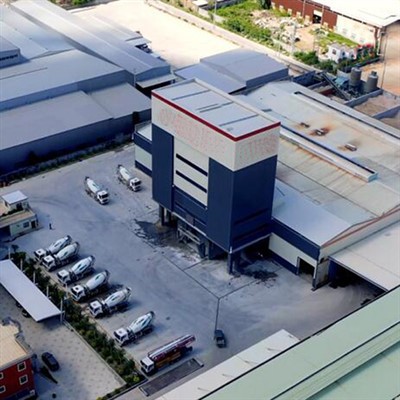
- Material loading via automated weigh-batching system
- High-shear mixing with programmable cycle times (45–120 seconds)
- Discharge through hydraulically controlled gates
- Automated cleaning cycle between batches
- Real-time performance monitoring via integrated sensors
Applications: Ready-mix plants, precast concrete manufacturing, infrastructure projects requiring >500 CY/day output. 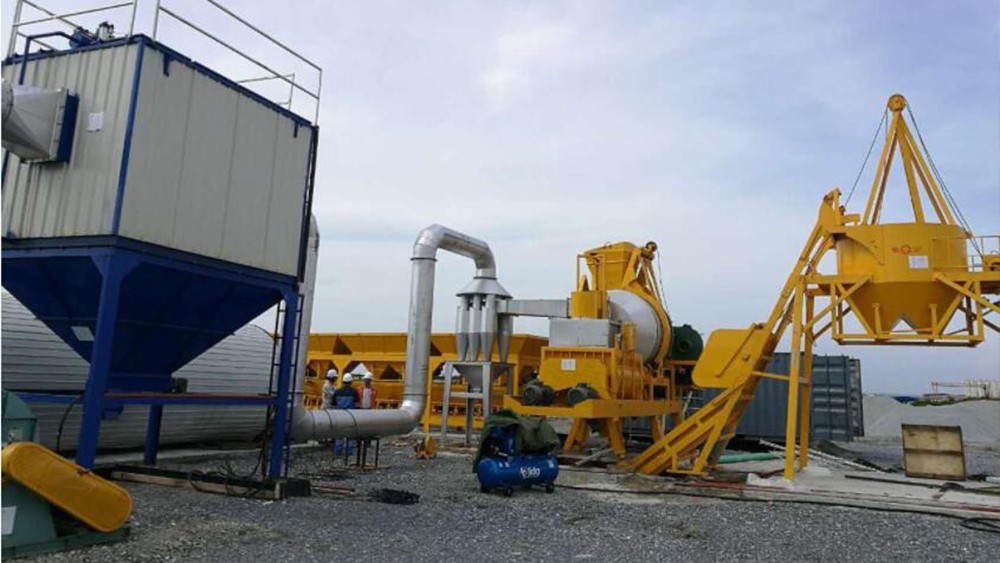
Limitations: Not suitable for mobile applications or mixes with >75mm aggregate without modification.
Core Features Engineered for Performance
Dual Counter-Rotating Shafts | Technical Basis: Forced shear mixing kinematics | Operational Benefit: Achieves ASTM C94 compliance in 30% less time | ROI Impact: Reduces energy use by 22% per m³ vs. single-shaft designs
Hardox® Liner System | Technical Basis: 500 Brinell abrasion-resistant steel | Operational Benefit: Extends service life to 50,000 cycles before replacement | ROI Impact: Lowers liner replacement costs by $18,000 annually
Smart Load Adaptation | Technical Basis: Variable frequency drive torque monitoring | Operational Benefit: Auto-adjusts power draw based on mix viscosity | ROI Impact: Cuts peak energy demand by 17%
Quick-Release Drum Access | Technical Basis: Modular bolted flange design | Operational Benefit: Reduces maintenance window from 12 hours to <4 hours | ROI Impact: Saves $2,400 per service event in labor costs
EPA Tier 4 Final Drivetrain | Technical Basis: Selective catalytic reduction (SCR) technology | Operational Benefit: Complies with global emissions standards without performance loss | ROI Impact: Eliminates $45k+ in potential non-compliance penalties
Competitive Advantages Backed by Data
| Performance Metric | Industry Standard | Our Concrete Mixer Manufacturing Solution | Advantage (%) |
|---|---|---|---|
| Mixing Cycle Time | 90 seconds | 65 seconds | -27% |
| Liner Service Life | 20k cycles | 50k cycles | +150% |
| Energy Consumption | 8 kWh/m³ | 6.2 kWh/m³ | -22% |
| Maintenance Frequency | Every 750 hours | Every 1,500 hours | -50% |
Technical Specifications
- Capacity Range: 1m³ to 12m³ batch sizes
- Power Requirements: Electric motors (75–400 HP), hydraulic systems (15 GPM @2500 PSI)
- Materials: Hardox® liners (6–12mm thickness), Ni-hard wear plates at discharge points
- Dimensions: Base footprint of L5m x W3m x H4m (for standard models)
- Operating Range: -20°C to +50°C ambient temperature tolerance with optional heating/cooling packages
Proven Applications Across Industries
Precast Concrete Manufacturer Challenge Needed consistent mix quality across six production lines Solution Implemented four twin-shaft concrete mixer manufacturing units with automated batching controls Results Achieved ASTM C94 compliance on all batches reduced waste by $280k annually
Highway Construction Contractor Challenge Required rapid-cycle mixing for slipform paving operations Solution Deployed high-speed concrete mixer manufacturing systems with integrated hydration monitors Results Increased daily output from yards/day maintained compressive strength variance under ±150 psi
Commercial Considerations
Base Pricing Structure:
- Entry-level units start at $250k USD
- Mid-range production models priced at $350k-$575k
- Custom configurations available above $600k
Optional Features:
- Remote diagnostics package (+$18k)
- Ultra-high wear liner upgrade (+$32k)
 INQUIRE NOW
 WHATSAPP