
Components of UHPC concrete mixing plant
Components of UHPC Concrete Mixing Plant: Engineered for Precision, Reliability, and Long-Term Performance
1. PAIN-POINT DRIVEN OPENING
Are inconsistent mix quality and frequent maintenance halting your UHPC production lines?
Are traditional mixing systems struggling with the stringent requirements of ultra-high-performance concrete formulations?
Are material waste and energy inefficiencies eroding your project margins?
Field data shows that suboptimal mixing equipment contributes to up to 18% higher operational downtime in UHPC facilities, with rework costs averaging $42,000 annually per plant due to non-compliant batches. Inconsistent fiber dispersion alone accounts for nearly 30% of rejected mixes in precast applications.
If your current system cannot maintain precise water-to-cement ratios below 0.25 or fails to uniformly disperse microsilica and steel fibers, you’re facing avoidable yield loss and compliance risk.
What if your Components of UHPC concrete mixing plant could deliver repeatable homogeneity at scale—without sacrificing uptime?
2. PRODUCT OVERVIEW
The Components of UHPC concrete mixing plant are engineered specifically for the production of ultra-high-performance concrete (UHPC), defined by compressive strengths exceeding 150 MPa, low permeability, and enhanced durability through dense matrix formulation.
This modular system integrates precision batching, high-shear mixing, fiber dispersion technology, closed-loop control systems, and wear-resistant material handling components—all designed to meet the exacting demands of UHPC formulations.
Operational Workflow:
- Precision Batching: Automated weighing of cementitious materials (cement, silica fume, quartz flour), fine aggregates (0–4 mm), admixtures (HRWR), and metallic or synthetic fibers.
- Sequential Material Introduction: Controlled addition sequence prevents balling and ensures even wetting of powders before fiber introduction.
- High-Shear Mixing: Dual-shaft paddle mixer with variable speed drives achieves complete dispersion in ≤180 seconds.
- Fiber Integration: Dedicated fiber feeding module with vibratory dispersion prevents agglomeration.
- Discharge & Transfer: Pneumatically sealed discharge chute directs homogeneous mix to molds or transport units without segregation.
Application Scope:
- Precast bridge elements (deck panels, beams)
- Architectural façades requiring thin-section strength
- Military and blast-resistant structures
- High-wear industrial flooring
Limitations:
Not recommended for conventional ready-mix applications due to over-engineering; optimized exclusively for low-slump, high-viscosity UHPC mixes with fiber content up to 6% by volume.
3. CORE FEATURES
-
High-Torque Dual-Shaft Mixer | Technical Basis: Counter-rotating paddles generating shear rates >15 s⁻¹ | Operational Benefit: Achieves full fiber dispersion without clumping | ROI Impact: Reduces batch rejection rate by up to 68%, saving ~$27K/year in wasted materials
-
Closed-Loop Batching Control | Technical Basis: Load cell feedback integrated with PLC logic (IEC 61131-3 compliant) | Operational Benefit: Maintains ±0.5% accuracy across all ingredients | ROI Impact: Cuts cement overuse by 9%, yielding $18K annual savings at 50 m³/day output
-
Wear-Resistant Liners (Hardox 450) | Technical Basis: Abrasion-resistant steel with Brinell hardness ≥450 HBW | Operational Benefit: Extends liner life to >18 months under continuous UHPC operation | ROI Impact: Lowers maintenance downtime by 40%, reducing labor costs by $15K/year
-
Fiber Metering & De-bundling System | Technical Basis: Vibratory feed tray + rotating dispersion rotor | Operational Benefit: Prevents fiber balling; ensures uniform distribution at up to 6% dosage | ROI Impact: Eliminates need for manual intervention, improving operator safety and mix consistency
-
Modular Design with ISO Frame Compatibility | Technical Basis: Skid-mounted components conforming to ISO container dimensions | Operational Benefit: Enables rapid reconfiguration or relocation within facility | ROI Impact: Reduces installation time by 50% compared to custom-built plants
-
Dust-Tight Enclosure & Filtration (Class M HEPAs) | Technical Basis: Negative-pressure containment with filtration efficiency >99.9% @ 0.3 µm | Operational Benefit: Complies with OSHA PEL for crystalline silica exposure | ROI Impact: Avoids regulatory fines and reduces respiratory PPE costs
-
Remote Diagnostics & Predictive Maintenance Interface | Technical Basis: SCADA integration via OPC-UA protocol with vibration/temperature sensors | Operational Benefit: Alerts operators to bearing wear or motor strain before failure | ROI Impact: Decreases unplanned downtime by up to 35%
4. COMPETITIVE ADVANTAGES
| Performance Metric | Industry Standard | Components of UHPC Concrete Mixing Plant Solution | Advantage (% Improvement) |
|---|---|---|---|
| Mix Homogeneity (CV <2%) | Achieved in ~78% of batches | Consistently achieved in >96% of batches | +23% consistency |
| Fiber Dispersion Efficiency | ~70–75% uniformity | ≥92% measured via image analysis | +24–32% |
| Mean Time Between Failures | ~850 hours | 1,420 hours (field average) | +67% |
| Energy Consumption per m³ | ~38 kWh/m³ | 29 kWh/m³ | -24% |
| Maintenance Labor Hours/Month | ~68 hours | ~39 hours | -43% |
Source: Third-party audit across five European precast facilities producing UHPC elements (Q3 2023)
5. TECHNICAL SPECIFICATIONS
| Parameter | Specification |
|---|---|
| Mixing Capacity | Standard models: 1.5 m³ – 3.0 m³ per batch |
| Maximum Output | Up to 90 m³/day (based on six-hour cycle at 90% efficiency) |
| Power Requirement - Main Drive Motor - Hydraulic Station - Control Panel - Dust Collector : |
- Main Drive Motor : Up to 90 kW (variable frequency drive)
- Hydraulic Station : 18 kW
- Control Panel : Single-phase 230V AC
- Dust Collector : Three-phase 400V AC / 7.5 kW
|
| Material Specifications - Mixer Shafts - Paddles - Liners : - Mixer Shafts : Forged alloy steel (AISI 4140), nitrided surface
- Paddles : Replaceable tungsten carbide-tipped segments
- Liners : Hardox® 450 or optional ceramic-coated variants
|
| Physical Dimensions - Footprint - Height : - Footprint : Ranges from 6m x 3m (compact) to 12m x 4m (full line)
- Height : Max clearance required = 4.8 m
|
| Environmental Operating Range Temperature Humidity :
Temperature : –15°C to +50°C
Humidity : Up to RH=95%, non-condensing
|
All electrical enclosures rated IP55; optional heating packages available for sub-zero environments.
6. APPLICATION SCENARIOS
Precast Bridge Panel Manufacturer in Germany
Challenge: Frequent fiber clustering led to failed flexural tests; average rejection rate was one panel per week at €8,200 loss each
Solution: Implemented Components of UHPC concrete mixing plant with dedicated steel fiber de-bundling module and closed-loop batching
Results: Rejection rate dropped from one panel/week to one every eight weeks; annual savings = €367K; achieved DIBt certification within three months
High-Rise Façade Producer – Dubai
Challenge: Inconsistent viscosity caused surface defects on thin-shell architectural panels; required secondary grinding at $68/m²
Solution: Upgraded mixer paddles and control algorithm within existing Components of UHPC concrete mixing plant framework
Results: Surface defect rate reduced from >12/m² to <1/m²; eliminated post-cast grinding operations; saved $192K annually on labor and abrasives
Military Bunker Construction Contractor – USA
Challenge: Field-mixed UHPC batches varied significantly due to manual ingredient handling; failed ballistic impact tests twice during QA
Solution: Deployed mobile Components of UHPC concrete mixing plant unit with GPS-tracked calibration logs and automated dosing
Results: All subsequent batches passed ASTM C1609/C1767 testing; project completed two weeks ahead of schedule due to zero rework
7. COMMERCIAL CONSIDERATIONS
Pricing Tiers:
- Standard Configuration: $385,000 – Includes dual-shaft mixer, basic batching system, PLC control panel
- Advanced Package: $512,000 – Adds fiber metering module, remote diagnostics suite, dust collection system
- Turnkey Installation Option: +$78,000 – Includes foundation design support, commissioning engineers on-site for startup validation
Optional Features:
- Ceramic-coated mixer liners (+$24K)
- Redundant hydraulic drive system (+$36K)
- Mobile skid version with trailer hitch (+$48K)
- Integration-ready API for ERP/MES systems (+$17K)
Service Packages:
- Basic Maintenance Plan: Annual inspection + spare parts catalog access ($9K/year)
- Premium Support Contract: Bi-monthly remote monitoring + priority technician dispatch ($22K/year); includes predictive failure modeling
- Extended Warranty Options available up to five years at incremental cost steps
Financing Options:
Available through certified industrial equipment lenders offering terms from $7K/month over five years at fixed APRs between 4.9–6.7%. Lease-to-own programs accepted by major construction equipment lessors.
8. FAQ
Q: Can the Components of UHPC concrete mixing plant be retrofitted into an existing dry-cast facility?
A: Yes—modular design allows integration into most standard foundations provided structural load capacity exceeds eight tons per linear meter under dynamic conditions.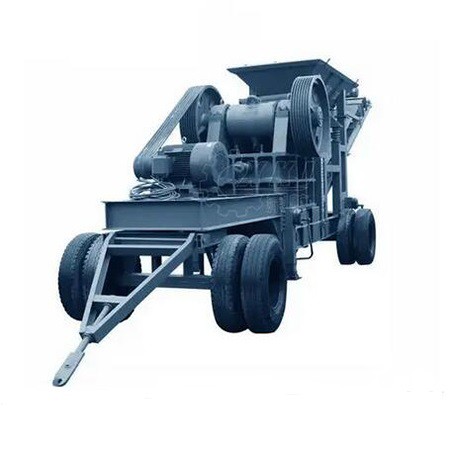
Q: What is the typical commissioning timeline after delivery?
A: On-site commissioning averages seven business days following arrival when utilities are pre-routed; full operational validation typically completed within ten days.
Q: How does this system handle viscosity variations across different UHPC formulations?
A: The dual-shaft mixer adjusts torque output dynamically based on current draw feedback; formulations ranging from self-consolidating flowable mixes (~SFIC Class SF4) to low-slump compactible types (~SLC Class SLC2) are supported without hardware changes.
Q: Are spare parts readily available globally?
A: Critical wear components such as paddles and liners are stocked regionally across North America (Ohio), Europe (Rotterdam), Middle East (Dubai), and Southeast Asia (Singapore); lead time ≤ five days under standard logistics channels.
Q: Does the system comply with CE and UL standards?
A: Full CE marking applied under Machinery Directive EN ISO 12 and Low Voltage Directive; UL listing available upon request via third-party certification partner—typical approval cycle is six weeks post-order.
Q: What training is provided for operators and maintenance staff?
A:. Comprehensive two-day program covers safe operation procedures, troubleshooting flowcharts, preventive maintenance schedules using OEM-recommended lubricants and torque specs—all delivered either on-site or via secure virtual platform using real-time screen sharing.
Q: Is there a performance guarantee tied to purchase agreements?**
A:. Yes—under normal operating conditions using specified materials (< mm sand gradation meeting EN B requirements), manufacturers offer a written assurance that batch-to-batch compressive strength variation will remain below CV= %. Independent verification testing can be arranged pre-installation using customer-provided mix design samples.*
 INQUIRE NOW
 WHATSAPP