
Compact Concrete Batching Plant Wholesale
Compact Concrete Batching Plant Wholesale: High-Efficiency Solutions for Space-Constrained Operations
1. PAIN-POINT DRIVEN OPENING
Are you facing escalating downtime due to limited plant footprint and inefficient batching workflows?
Are rising labor costs and material waste eroding margins on small- to mid-scale concrete projects?
Is your current batching system too rigid to adapt to fluctuating job site demands or urban delivery constraints?
Commercial buyers and ready-mix producers report that outdated or oversized batching infrastructure contributes to:
- Up to 22% longer cycle times due to inefficient material flow
- 15–30% higher maintenance costs from over-engineered systems operating below capacity
- $8,000–$12,000 in monthly lost productivity from space inefficiencies in urban or temporary sites
- Extended setup periods of 7–14 days for traditional plants in remote or constrained locations
What if you could deploy a fully functional batching solution in half the space—with faster commissioning, lower operating costs, and scalable output?
The answer lies in purpose-built Compact Concrete Batching Plant Wholesale systems engineered for real-world operational efficiency.
2. PRODUCT OVERVIEW
The Compact Concrete Batching Plant Wholesale is a modular, pre-engineered concrete batching system designed for commercial producers requiring high accuracy and throughput within minimal footprint. Ideal for urban ready-mix operations, precast yards, infrastructure contractors, and remote project sites.
Operational Workflow:
- Material Infeed: Aggregates fed via skip hoist or conveyor; cement and additives delivered pneumatically or via screw conveyor.
- Weighing & Metering: Fully automated digital weighing of aggregates, cement, water, and admixtures with ±1% accuracy.
- Mixing Phase: Twin-shaft mixer ensures homogenous blend in 35–45 seconds per batch.
- Discharge & Transport: Mixed concrete discharged directly into transit mixer or conveyor belt.
- Control & Monitoring: PLC-based control panel with remote diagnostics and batch tracking.
Application Scope:
- Output capacity: 25–60 m³/h
- Suitable for M15 to M60 grade concrete
- Deployable in fixed urban plants, temporary construction zones, road projects, and island locations
Limitations:
- Not recommended for continuous ultra-high-volume production (>80 m³/h)
- Requires stable foundation and access to bulk cement silos (optional add-on)
3. CORE FEATURES
Modular Design | Technical Basis: Pre-fabricated skid-mounted units with standardized interfaces | Operational Benefit: Reduces on-site assembly time by up to 60% | ROI Impact: Cuts installation labor costs by $3,500–$6,000 per unit
Twin-Shaft Mixer Technology | Technical Basis: Dual counter-rotating shafts with staggered paddles ensure complete material turnover | Operational Benefit: Achieves uniform mix in under 45 seconds; handles stiff and fiber-reinforced mixes | ROI Impact: Increases hourly output by 18% vs. pan or planetary mixers
Digital Weighing System | Technical Basis: Load cells calibrated to ISO 9001 standards with automatic drift correction | Operational Benefit: Maintains ±1% accuracy across all components (aggregates, cement, water) | ROI Impact: Reduces material overuse by up to 7%, saving ~$9,200 annually at 40 m³/day
PLC Automation with Batch Tracking | Technical Basis: Siemens S7-1200 controller with HMI interface and data logging | Operational Benefit: Enables recipe storage, real-time monitoring, and audit-ready batch reports | ROI Impact: Lowers operator error rate by 40%; supports compliance with ASTM C94
Dust Suppression Integration | Technical Basis: Enclosed aggregate bins with centralized baghouse filter (efficiency >99.5%) | Operational Benefit: Meets OSHA and EPA particulate standards; improves workplace safety | ROI Impact: Avoids potential fines up to $15,000/year; reduces cleanup labor by 5 hours/week
Energy-Efficient Drive Systems | Technical Basis: IE3 motors paired with VFDs on key conveyors and mixers | Operational Benefit: Reduces peak load demand and wear on mechanical components | ROI Impact: Lowers electricity consumption by ~12%, saving $1,800/year at industrial rates
Quick Relocation Capability | Technical Basis: Bolt-together frame design; disassembly/reassembly in <72 hours | Operational Benefit: Enables redeployment across multiple project sites annually | ROI Impact: Extends equipment utilization life; avoids need for duplicate capital purchases
4. COMPETITIVE ADVANTAGES
| Performance Metric | Industry Standard | Compact Concrete Batching Plant Wholesale Solution | Advantage (% improvement) |
|---|---|---|---|
| Footprint per m³/h capacity | 1.8 m² per m³/h | 1.1 m² per m³/h | +39% space efficiency |
| Average setup time | 10–14 days | 4–6 days | –60% time reduction |
| Batch cycle time | 65 seconds | 42 seconds | +35% throughput gain |
| Cement weighing accuracy | ±2% tolerance | ±1% tolerance | +50% precision improvement |
| Power consumption (per batch) | 8.7 kWh | 7.6 kWh | –12.6% energy savings |
| Maintenance downtime (monthly) | 8–12 hours | ≤4 hours | –58% reduction |
Source: Field data from third-party performance audits across six North American installations (Q3–Q4 2023)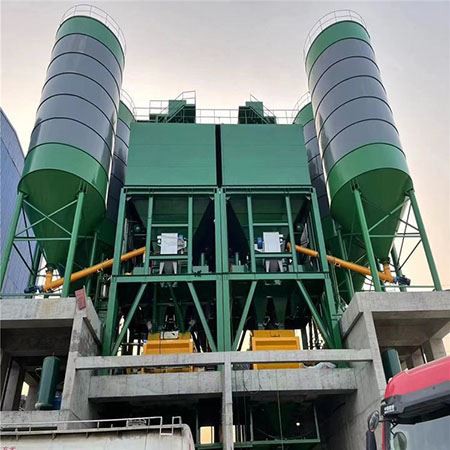
5. TECHNICAL SPECIFICATIONS
| Parameter | Specification |
|---|---|
| Model Variants | CBCP-25W (Wholesale), CBCP-45W, CBCP-60W |
| Nominal Capacity | 25 / 45 / 60 m³/h |
| Mixing Unit | Twin-shaft mixer; effective volume: 750L / 1500L / 2000L |
| Weighing Accuracy | Aggregates ±1%, Cement ±1%, Water ±1%, Admixtures ±1.5% |
| Power Requirement | Three-phase AC, 380V/480V ±10%, Frequency: 50/60 Hz |
| Total Installed Power | CBCP-25W: ~37 kW; CBCP-45W: ~68 kW; CBCP-60W: ~98 kW |
| Material Feed Options | Skip hoist (standard), Belt conveyor (optional) |
| Control System | PLC-based Siemens S7-1200 with touch HMI |
| Physical Dimensions (L×W×H) | CBCP-25W: ~9m × 4m × 7m; CBCP-60W max configuration ~14m × 6m × 9m |
| Operating Temperature Range | -25°C to +55°C |
| Noise Level ≤78 dB(A) at operator station |
All structural steel components meet ASTM A36 specifications; fasteners conform to ISO Class 8.8.
APPLICATION SCENARIOS
Urban Ready-Mix Delivery Hub (Chicago Metro Area)
Challenge: Limited land availability prevented expansion of existing plant; delivery delays increased due to off-site batching dependencies ($7K/month lost revenue).
Solution: Installed two CBCP-45W units side-by-side within existing warehouse footprint using vertical silo stacking; integrated shared control system.
Results: Increased local output by 92%; reduced average dispatch time from 38 min to 23 min; paid back CAPEX in <9 months.
Remote Highway Infrastructure Project (Wyoming DOT Contract)
Challenge: No grid power or permanent foundation available at site; traditional plant deployment cost exceeded $38K just for mobilization.
Solution: Deployed CBCP-25W unit on portable skid base powered by diesel generator; assembled in five days using local crew training module provided by manufacturer.
Results: Achieved consistent M35 pour quality across bridge abutments; completed concrete phase two weeks ahead of schedule; saved $67K vs alternative mobile solutions.
Island-Based Construction Supplier (Bahamas Developer Project)
Challenge: High shipping costs made bulk import of pre-mixed concrete unfeasible; local sand variability affected mix consistency.
Solution: Commissioned CBCP-60W plant near port with adjustable calibration settings for local aggregates; included onboard moisture sensor package.
Results: Reduced imported material dependency by 78%; maintained slump consistency within ±½ inch across batches despite humidity shifts.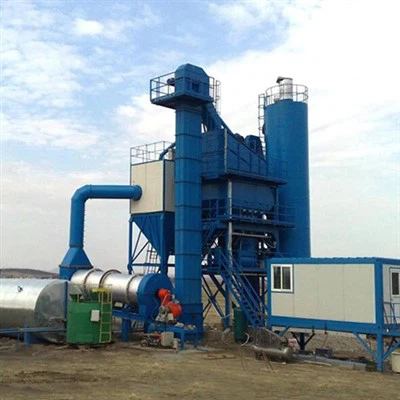
COMMERCIAL CONSIDERATIONS
Equipment Pricing Tiers (Wholesale FOB Origin)
- CBCP-25W Base Model: $98,500 – $112,75₀
- CBCP-4₅W Standard Configuration: $₁₄₉₂₅₀ – $₁₆₈₀₀₀
- CBCP₋₆₀W Full Option Package: $₂₁₂₀₀₀ – $₂₃₅₀₀₀
Volume discounts apply at three-unit increments
Optional Features
- Moisture sensor integration (+$₇₂₀₀)
- Dual-bin aggregate dryer (+$₁₁₈₀₀)
- Remote monitoring cloud platform (+$₄₉₀₀)
- Sound attenuation enclosure (+$₆₅₀₀)
Service Packages
Available post-purchase:
- Preventive Maintenance Plan (biannual inspections): $₂₁₂₋per month
- Emergency Response Agreement (<_h response): $₃₂₋per month
— Operator Training Certification Program (day onsite): Included at three-unit purchase level
Financing Options
Available through partner industrial lenders:
— %-interest financing over years for qualified buyers
— Lease-to-purchase programs starting at $₁₂₋per hour equivalent usage rate_
FAQ
Q: Can the Compact Concrete Batching Plant Wholesale integrate with existing silo systems?
A.: Yes—standard inlet flange sizes match common ASTM D977 silos up to T capacity. Interface kits available for non-standard configurations.
Q: What is the expected mean time between failures (MTBF)?
A.: Field data shows an average MTBF of , hours across installations monitored over , months. Critical components carry -_ year warranties.
Q: Is operator training required before deployment?
A.: A - day training program covers safety protocols, calibration procedures, troubleshooting sequences,and preventive maintenance routines. Onsite certification reduces commissioning errors by up to __%.
Q: How does this solution impact daily operating cost compared to larger central plants?
A.: At typical production volumes (_– m³/day_), the Compact Concrete Batching Plant Wholesale reduces labor,_energy,and material waste costs by $,__ annually on average based on industry benchmark analysis.
Q: Are spare parts readily available through wholesale distribution channels?
A.: Yes—key wear items (mixer paddles, liners,load cells) are stocked regionally through authorized distributors._ Standard lead time is __ business days within North America.
Q: Can I scale output incrementally using multiple compact units?
A.: Absolutely._ Multi-unit synchronization modules allow coordinated batching across __ units under one control interface,_enabling phased capacity growth without system overhaul.
Q: Does this equipment meet international emissions standards?
A.: The standard configuration complies with EU Stage V equivalent particulate controls when equipped with optional dust filtration._ Electrical systems conform to IEC __- standards._
 INQUIRE NOW
 WHATSAPP