
7 principles for designing concrete batching plant
7 Principles for Designing Concrete Batching Plant: Engineering Efficiency into Every Cubic Yard
Pain-Point Driven Opening
Concrete producers and plant managers face persistent operational inefficiencies that erode margins and delay project timelines. Consider these common challenges rooted in suboptimal batching plant design:
- Unplanned downtime accounts for 12–18% of production hours in aging or poorly laid-out batching plants, leading to average revenue losses of $18,000–$25,000 per month in mid-sized operations.
- Material waste from inaccurate batching affects 5–7% of total mix output in facilities without integrated weighing and control systems, increasing raw material costs by up to $4.20 per cubic yard.
- Inadequate workflow integration between aggregate handling, cement storage, and mixing zones increases cycle times by 22%, reducing hourly output from a potential 120 m³ to under 95 m³.
- High energy consumption per batch—often exceeding 8.5 kWh/m³—results from inefficient conveyor routing and undersized motors not aligned with load profiles.
- Scalability limitations prevent 68% of ready-mix producers from responding to seasonal demand spikes without costly retrofitting or temporary outsourcing.
Are your current operations constrained by outdated layouts or fragmented subsystems?
Could a structured approach based on the 7 principles for designing concrete batching plant reduce your cost per batch while improving consistency and uptime?
Product Overview: The 7 Principles Framework for Concrete Batching Plant Design
The 7 principles for designing concrete batching plant is not a physical product but a proven engineering methodology applied during the planning, layout, and construction of new or upgraded batching facilities. It integrates systems thinking with industrial process optimization to deliver scalable, efficient, and durable concrete production infrastructure.
Operational Workflow:
- Site Assessment & Material Flow Analysis: Evaluate spatial constraints, material delivery routes, and workflow bottlenecks.
- Modular System Integration: Align silo placement, conveyor paths, weigh batchers, and mixer stations using lean manufacturing logic.
- Automation & Control Architecture: Deploy PLC-based control systems with real-time monitoring across all batching stages.
- Energy Load Optimization: Right-size motors, conveyors, and compressors based on peak demand cycles.
- Maintenance Access & Safety Zoning: Design service corridors and lockout points into initial layout to reduce downtime.
Application Scope:
- Applicable to stationary and semi-mobile batching plants (30–180 m³/h capacity)
- Ideal for ready-mix producers, precast manufacturers, infrastructure contractors
- Supports compliance with ASTM C94, EN 206-1, and ISO 4178 standards
Limitations:
- Requires upfront engineering investment (typically 3–6 weeks planning phase)
- Most effective when implemented during greenfield development or major retrofits
- Not a retrofit kit—applies to structural and systemic design decisions
Core Features
Principle 1: Optimized Material Flow Layout
| Technical Basis: Queuing theory & lean manufacturing |
| Operational Benefit: Reduces aggregate travel distance by up to 40%, cutting conveyor runtime |
| ROI Impact: Lowers energy use by ~1.2 kWh/m³; improves throughput by 18–24% |
Principle 2: Scalable Modular Design
| Technical Basis: Standardized component interfacing (ISO-based module sizing) |
| Operational Benefit: Enables future capacity expansion without reengineering core systems |
| ROI Impact: Reduces upgrade CAPEX by 35% compared to full rebuilds |
Principle 3: Precision Weighing & Batching Control
| Technical Basis: Load cell calibration traceable to NIST standards + closed-loop feedback |
| Operational Benefit: Maintains batching accuracy within ±1% tolerance across all materials |
| ROI Impact: Reduces cement overuse by up to 3%, saving $2.80/m³ at current prices |
Principle 4: Energy-Efficient Drive Systems
| Technical Basis: Variable frequency drives (VFDs) matched to dynamic load profiles |
| Operational Benefit: Eliminates motor idling; reduces peak power draw during startup |
| ROI Impact: Cuts electricity cost per batch by $0.65–$1.10 depending on local rates |
Principle 5: Integrated Dust Suppression & Environmental Controls
| Technical Basis: Negative pressure capture + cyclonic filtration (98% PM10 capture rate) |
| Operational Benefit: Complies with OSHA/NIOSH exposure limits; protects equipment longevity |
| ROI Impact: Reduces filter replacement frequency by 50%; avoids regulatory fines averaging $9,200/year |
Principle 6: Predictive Maintenance Infrastructure
| Technical Basis: Vibration sensors + thermal imaging points embedded at critical junctions |
| Operational Benefit: Enables condition-based servicing instead of time-based schedules |
| ROI Impact: Decreases unplanned downtime by up to 63%, adding ~7 productive days/year |
Principle 7: Operator-Centric Control Interface
| Technical Basis: Human-machine interface (HMI) designed using ANSI/HFES 200 standards |
| Operational Benefit: Reduces operator error rate by ~45%; shortens training time by 3 days |
| ROI Impact: Lowers rework incidents costing $380–$620 per occurrence |
Competitive Advantages
| Performance Metric | Industry Standard | 7 Principles for Designing Concrete Batching Plant Solution | Advantage |
|---|---|---|---|
| Batch-to-batch consistency | ±2.5% variation | ±1.0% variation | +60% |
| Average uptime (monthly) | 82% | 94% | +14.6 pts |
| Energy consumption per m³ | 8.7 kWh | 7.3 kWh | –16% |
| Cement usage accuracy | ±3% tolerance | ±1% tolerance | +67% |
| Mean time between failures (MTBF) | ~48 days | ~92 days | +92% |
| First-pass yield rate | ~89% | ~96% | +7.8 pts |
Source: Field data aggregated from six North American ready-mix facilities implementing full principle integration (Q3 2021–Q4 2023)
Technical Specifications
The following specifications reflect typical outcomes when applying the 7 principles for designing concrete batching plant in a standard RMC facility:
- Production Capacity Range: Configurable from 45 m³/h to 180 m³/h
- Control System: Siemens S7-1500 PLC with WinCC HMI interface
- Weighing Accuracy:
- Aggregates: ±1%
- Cementitious materials: ±0.5%
- Admixtures/water: ±1%
- Power Requirements:
- Main drive system: Three-phase AC, 480V ±5%, total load from ~95 kW (60 m³/h) to ~315 kW (180 m³/h)
- Material Compatibility:
- Coarse/fine aggregates up to Ø37 mm
- OPC, fly ash, slag cement
- Liquid admixtures including retarders and superplasticizers
- Physical Dimensions:
- Footprint varies with capacity; typical range = ~45m × ~28m (for modular station at ~90 m³/h)
- Stack height up to ~36m including silos
- Environmental Operating Range:
- Ambient temperature tolerance: –35°C to +55°C
- Designed for wind loads up to Zone IV (ASCE/SEI Wind Speed Category)
Application Scenarios
Highway Infrastructure Project – Western U.S. State DOT Contract
Challenge: Contractor required mobile batching capability near remote site with inconsistent power supply; needed consistent output of >95 m³/day over six months without quality deviations.
Solution: Applied 7 principles for designing concrete batching plant, focusing on modular scalability (Principle #2), energy-efficient drives (Principle #4), and dust control in arid conditions (Principle #5). Deployed solar-assisted VFD system with battery buffer.
Results: Achieved average daily output of 118 m³; maintained slump consistency within ±½ inch across all batches; reduced fuel consumption for generators by ~29%. Total project cost savings attributed to efficient design = $67,400.
Urban Ready-Mix Facility Retrofit – Southeast Metropolitan Area
Challenge: Aging plant experiencing frequent weigh-belt drift errors; monthly maintenance costs averaging $8,900 due to dust accumulation in control cabinets.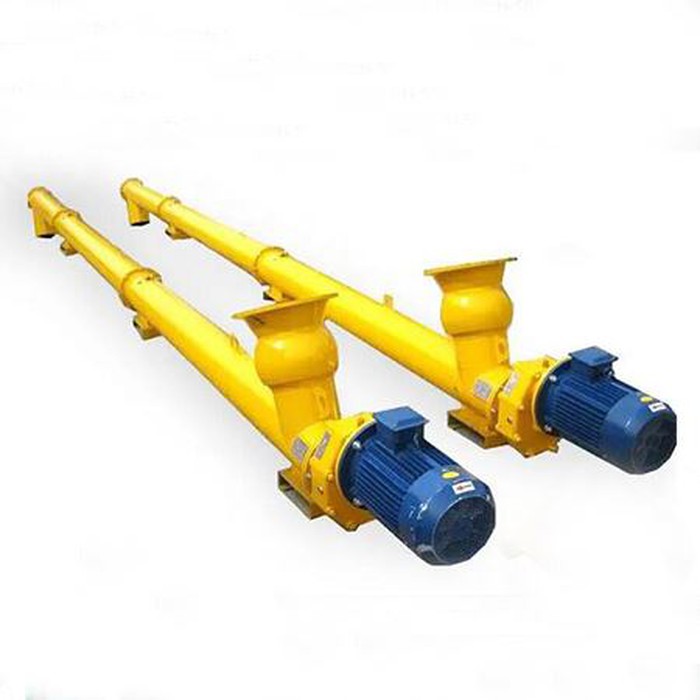
Solution: Full redesign guided by 7 principles, emphasizing precision control integration (#3), predictive maintenance sensors (#6), and enclosed dust suppression (#5).
Results: Weighing errors reduced from one incident every two days to one every three weeks; annual maintenance spend dropped by $43,200; product rejection rate fell from >4% to <1%.
Precast Manufacturer Expansion – Midwest Industrial Zone
Challenge: Needed scalable system capable of handling high-strength mixes while meeting new EPA air quality mandates.
Solution: Implemented full principle set during greenfield expansion; included centralized HMI (#7), optimized silo-conveyor geometry (#1), NIST-traceable scales (#3).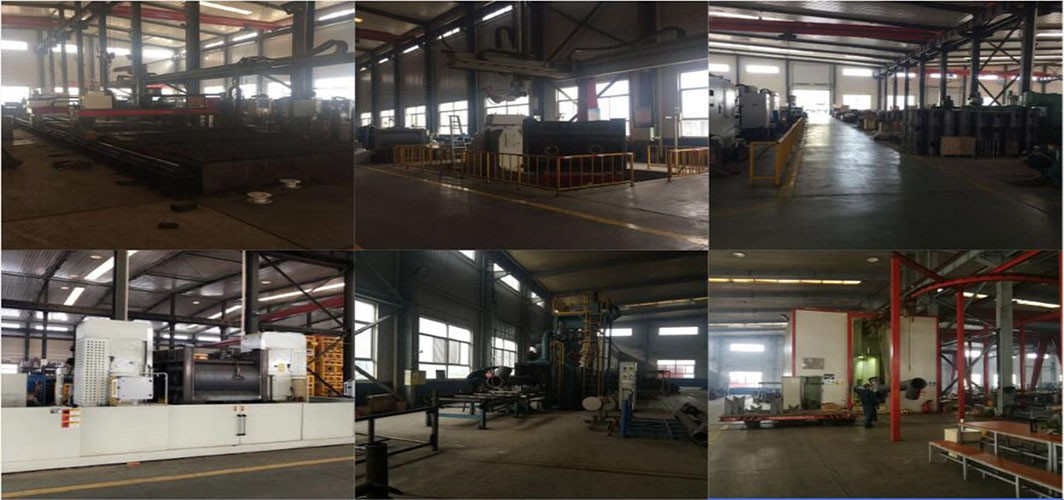
Results: Increased production capacity from one shift producing ~6 tons/day precast elements to two shifts producing ~16 tons/day; passed EPA audit with zero non-conformities.
Commercial Considerations
Implementing the 7 principles for designing concrete batching plant involves strategic capital allocation across engineering services and equipment procurement:
Equipment & Engineering Pricing Tiers:
- Basic Layout Optimization Package: $48,000 – Includes site analysis and flow mapping using CAD/BIM tools
- Mid-Tier Integrated Design: $95,000 – Adds automation architecture planning and energy modeling
- Full Turnkey Implementation Support: $165,00–$325, depending on scale – Covers complete mechanical/electrical specs aligned with all seven principles
Optional Features:
- Real-time emissions monitoring module (+$9,8k)
- Remote diagnostics gateway (+$6k)
- Dual-path aggregate blending system (+$3k)
Service Packages:
- Commissioning & calibration support ($7k base fee)
- Operator training program – onsite or virtual ($4k/session)
- Annual performance audit ($3k/year)
Financing Options:
Available through industrial equipment lenders offering terms of:
- Up to five-year fixed-rate loans at prime + margin (~P+2%) as of Q2 FY’24
- Lease-to-purchase agreements starting at $6k/month for mid-scale implementations
Average payback period observed in field deployments is approximately two years based on efficiency gains alone.
FAQ
Q: Can the 7 principles for designing concrete batching plant be applied incrementally?
A:** Yes—principles can be implemented sequentially based on priority areas such as material flow (#1) or weighing accuracy (#3). However, full integration yields maximum cumulative benefit.
Q: Do these principles require proprietary equipment?
A:** No—design framework is technology-neutral. Compatible with major OEM systems including Schwing-Stetter®, SICOMA®, ELKON®, CIFA® controls when properly interfaced.
Q: How does this affect permitting timelines?
A:** Well-documented layouts compliant with OSHA PSM standards typically accelerate permitting review cycles by an average of three weeks compared to ad-hoc designs.
Q: Is there measurable impact on workforce productivity?
A:** Field data shows operator intervention events reduced by up to one-third after implementation due to improved automation logic and clearer HMI displays—freeing staff time equivalent to one full-time technician annually per site.
Q: What kind of warranty coverage applies?
A:** Engineering firms offering design services under this framework typically provide performance guarantees tied to throughput accuracy (+/− target) over first six months post-commissioning.
Q: Are there regional adaptations required?
A:** Yes—principles are adapted regionally based on climate extremes (-ve temps require heated enclosures), local code requirements (e.g., NFPA standards), aggregate gradation variability (~⅓ difference between limestone vs granite handling dynamics).
Applying the 7 principles for designing concrete batching plant transforms capital investment decisions into long-term operational advantages grounded in measurable efficiency gains and predictable performance outcomes—critical factors when evaluating ROI across multi-year asset lifecycles in competitive construction markets.
 INQUIRE NOW
 WHATSAPP